
Who Is Liable for an Injury at an Airport in Florida?
When you are injured at a Florida airport, the first question is almost always the hardest: who is actually responsible? A modern airport is a patchwork of overlapping operators. The terminal may be owned by a county government, cleaned by a private janitorial contractor, secured by another company, screened by a federal agency, and partly controlled by the airlines at the gates. Each of these parties carries its own insurance and its own legal defenses, and identifying the right one — often more than one — is the foundation of every successful airport injury claim.
For a free consultation with a Florida Airport Injury Lawyer, call (855) 529-0269.
The Airport Authority or Government Operator
Most of Florida’s major airports are operated by government bodies. Miami International Airport is run by the Miami-Dade Aviation Department, a department of Miami-Dade County. Fort Lauderdale-Hollywood International Airport is operated by the Broward County Aviation Department. Tampa International Airport is operated by the Hillsborough County Aviation Authority, and Orlando International Airport is operated by the Greater Orlando Aviation Authority. When a hazard exists in a common area of the terminal — a wet floor, a broken escalator, poor lighting, a defective moving walkway — the government operator is frequently the primary responsible party.
Florida courts have allowed injured travelers to pursue premises liability claims against these government airport operators. Florida courts apply ordinary premises-liability principles to government airport operators. In slip-and-fall cases involving transitory substances at Florida airports, plaintiffs must demonstrate that the airport authority had actual or constructive knowledge of the dangerous condition and failed to remedy it — the same standard applied to private business establishments under Florida Statute § 768.0755. The key point for injured travelers is that a government-operated airport can be held responsible for negligently maintained conditions… — but only if the special procedural rules described below are followed.
Florida’s Sovereign Immunity Statute and What It Means for You
Because these airports are government-operated, claims against them are controlled by Florida’s limited waiver of sovereign immunity, Florida Statutes § 768.28. This statute is a double-edged sword. On one hand, it allows you to sue a government entity for the negligence of its employees acting within the scope of their jobs. On the other, it imposes limits and hurdles that do not exist in ordinary cases:
The statute caps the damages recoverable from a government entity. For many years the cap was $200,000 per person and $300,000 per incident. As of mid-2026, those caps remain $200,000 per person and $300,000 per incident.Legislation (HB 301) to raise the caps passed the Florida House in 2025 but failed in the Senate .A successor bill (HB 145) passed both chambers in March 2026 and raises the caps to $350,000 per person and $500,000 per incident for claims that accrue on or after October 1, 2026, while claims accruing before that date remain subject to the $200,000/$300,000 limits. Amounts above the cap can be pursued only through a separate legislative claims bill, a slow and uncertain process. The statute also requires a formal written pre-suit notice of claim served on both the appropriate government agency and the Florida Department of Financial Services before a lawsuit can be filed, and it gives the government a 180-day window to investigate — unless the claim is denied in writing before those 180 days expire. . Government employees themselves are generally immune from personal liability unless they acted in bad faith or with malicious or wanton disregard for safety.
This is why two otherwise similar falls — one in a private store, one in a government-run airport terminal — can follow completely different legal paths. An experienced lawyer identifies the issue immediately and protects the deadlines that a government defendant will otherwise use to defeat the claim.
Click to contact a Florida airport injury lawyer today.
Private Contractors at the Airport
Airports outsource enormous amounts of work. Janitorial and cleaning crews, escalator and elevator maintenance companies, construction and renovation contractors, baggage handling companies, parking and shuttle operators, and private security firms all operate inside Florida airports under contract. When one of these private companies causes or fails to fix a hazard — a cleaning crew that leaves a wet floor unmarked, a maintenance company that ignores a faulty escalator — that company can be held liable under ordinary Florida negligence and premises liability law. Critically, claims against private contractors are not subject to the sovereign immunity damage caps. This is one of the most important reasons to investigate an airport injury thoroughly: a claim that looks capped at first may involve a private contractor whose full insurance is available.
The Airlines
Airlines control specific parts of the airport — ticketing areas, gate seating, jet bridges, and the boarding process. When an injury happens because of an airline’s negligence, such as a fall on a poorly maintained jet bridge, an overcrowded gate area, or improper assistance for a passenger who requested wheelchair help, the airline can be the responsible party. Airline claims are governed by their own body of law and are handled separately from claims against the airport operator.
For a free legal consultation with a Chalik & Chalik lawyer serving Florida, call (855) 529-0269.
The TSA and the Federal Government
Injuries that occur at the security checkpoint, or that otherwise involve federal employees, are not handled under Florida’s sovereign immunity statute. Instead they fall under the Federal Tort Claims Act, which requires an injured person to first file an administrative claim with the responsible federal agency before filing suit. The administrative claim must be filed within two years of the date of injury.If the agency denies the claim in writing, the injured person then has six months from the date the denial is mailed to file suit in federal court. If the agency simply fails to respond within six months, the claimant may treat the claim as denied and file suit at any time after that. The Third Circuit sitting en banc, have confirmed that TSA screening officers qualify as law enforcement officers for purposes of the FTCA’s law enforcement proviso, meaning the federal government can be held liable for certain intentional torts — such as assault, battery, false imprisonment, and malicious prosecution — committed by TSA screeners. Standard negligence claims arising from conditions at TSA checkpoints proceed under the FTCA’s general negligence waiver, subject to its own defenses including the discretionary function exception. . Federal claims also differ from state claims in a way that can greatly benefit an injured traveler: the Florida sovereign immunity damage caps do not apply to claims brought against the federal government. Determining whether your injury supports a state claim, a federal claim, or both is a technical analysis our firm performs early in every airport case.
Why Multiple Parties Often Share Responsibility
In many airport injuries, responsibility is shared. A fall on a wet floor in a terminal might involve both the government operator (which controls the space) and the private janitorial contractor (which created or failed to mark the hazard). Pursuing every responsible party matters not only for proving the case but for maximizing recovery, because non-government defendants are not protected by the statutory caps. Identifying and correctly pleading against each party — while meeting the strict government notice deadlines — is precisely the work an experienced Florida Airport Injury Lawyer does from day one.
Can You Sue an Airport in Florida?
Yes. Travelers can and do sue Florida airports, but doing so successfully requires following the sovereign immunity rules: serving the correct written notice, naming the correct government entity, respecting the investigation period, and filing within the deadlines. The process is demanding and unforgiving of mistakes, which is why these claims should be handled by a lawyer experienced with government defendants.
Contact Chalik & Chalik
If you were hurt at a Florida airport and are not sure who is responsible, let us figure it out. Chalik & Chalik will investigate the ownership and contracts behind the hazard, identify every liable party, and pursue full compensation while protecting every deadline. Call or text (855) 529-0269 or use the online form for a free consultation. There is no fee unless we win. Available 24/7. Se habla español.



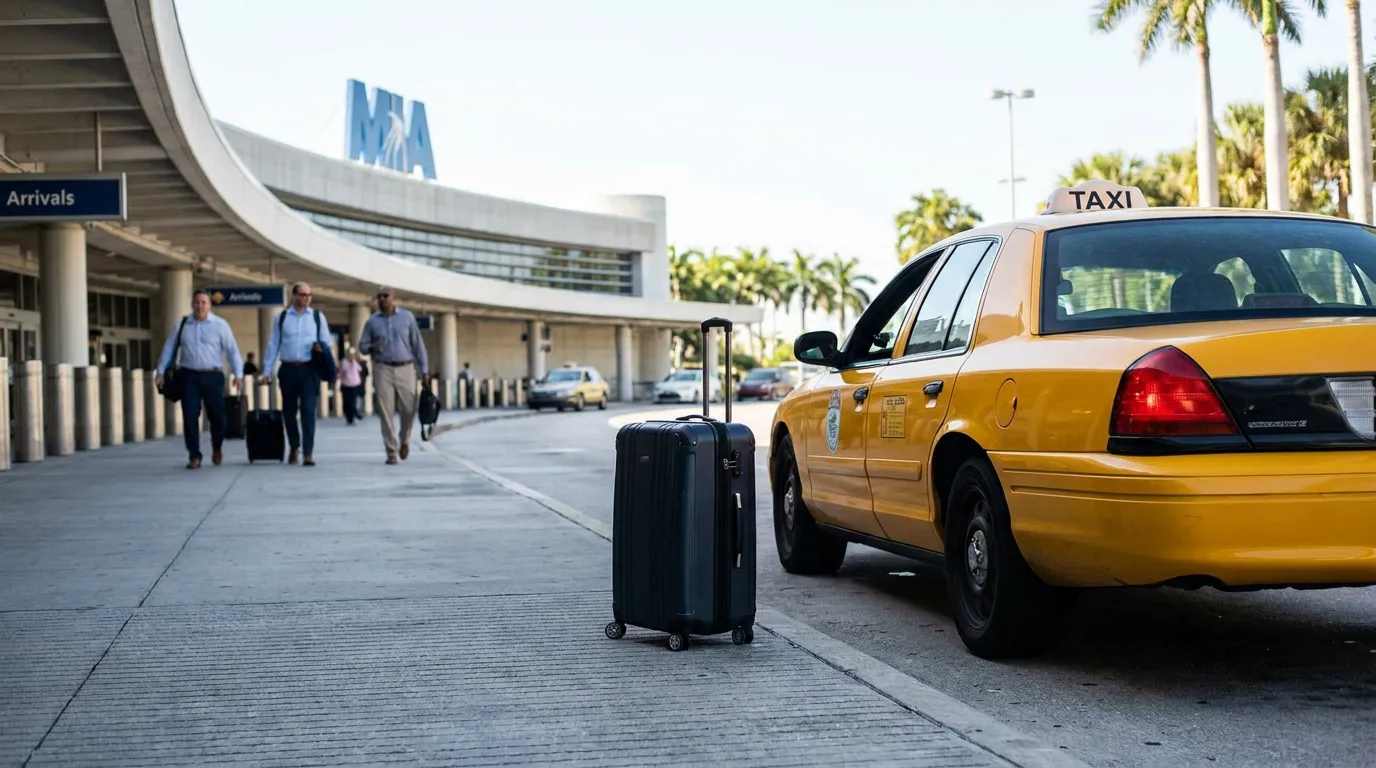 $300,000 Per-Incident Cap and Miami Airport Accident Government Claims
Understanding Florida’s Damage Caps After a Government Airport Injury Key Takeaways: Injuries at government-operated Miami airports fall under Florida Statute 768.28, which waives sovereign immunity but caps recovery at $200,000 per person and $300,000 per incident. All claims from a single event cannot exceed $300,000 regardless of actual losses or insurance coverage. Amounts above the...
 Chalik & Chalik Injury Lawyers Win $275K Settlement for Amputee Victim
The personal injury attorneys at Chalik & Chalik Injury Lawyers believe that everyone, no matter their circumstances, deserves the opportunity to receive consummate and compassionate legal representation in the wake of a personal emergency. We demonstrated this dedication while representing a 66-year-old client contending with the loss of a foot after a serious infection. Our...
 Can a Personal Injury Settlement Disqualify a Ft Lauderdale Resident From SSI?
How a Lump-Sum Injury Recovery Can Collide With Federal Benefits Key Takeaways: Yes, a personal injury settlement can disqualify a Ft. Lauderdale resident from SSI, at least temporarily, because SSI is a federal, means-tested program with strict resource caps of $2,000 for an individual and $3,000 for a couple. A lump sum generally counts as...
 What to Consider When You Hire a Personal Injury Lawyer
If you were injured in an accident due to someone else’s negligence in the state of Florida, you may be facing astronomical medical bills, lost wages, and pain and suffering. These obstacles are important in terms of what to consider when you hire a personal injury lawyer. You may feel overwhelmed dealing with medical appointments,...
 How to File a Dog Bite Report in Miami
If you were bitten by a dog in Miami, you should file a dog bite report through Miami-Dade County Animal Services. The county offers the option to report the incident online or by calling 311. Filing a report of the incident is essential. You want a record of the details collected as soon as possible,...
 What to Do If You’re Injured in a Department Store?
If you’re injured in a department store, you should seek medical attention, document your accident and injuries, and get in touch with a personal injury law firm. A Fort Lauderdale personal injury lawyer will advise you on each step of the legal process, ensure you understand your legal options, and build a solid case on...
 Guide to Florida Admiralty and Maritime Law
From commercial shipping to personal injury claims, maritime law plays a crucial role in ensuring safe and fair maritime commerce and travel. You may also want to know more about maritime law if you were injured while working at sea. A Florida personal injury lawyer can act as your guide to Florida admiralty and maritime...
 How Do You Respond to a Low Settlement Offer?
Personal injury claims do not always end up in court. Settlements on claims are commonly agreed upon by parties to avoid going to trial. If you are in a car accident or suffer an injury that entitles you to damages, the other party may approach you with a settlement offer. But how do you respond...