
What Should You Do After a Slip and Fall in Ft Lauderdale?
A slip and fall accident can happen in seconds, but the steps you take immediately afterward can determine whether you receive fair compensation for your injuries. Whether you’ve fallen at a grocery store, restaurant, hotel, or shopping mall in Ft Lauderdale, knowing what to do protects your legal rights under Florida’s premises liability laws. With Florida’s recent tort reform reducing the statute of limitations to two years, taking the right actions quickly is critical. The evidentiary requirement that a business had actual or constructive knowledge of a dangerous condition has been in place since 2010 under Florida Statute 768.0755 and was not changed by the 2023 reforms.
If you’ve been injured in a fall and need immediate legal guidance, the team at Chalik & Chalik Injury Lawyers is ready to help protect your rights. Call 954-476-1000 for a free consultation or contact us now to discuss your case with attorneys experienced in handling Ft Lauderdale premises liability claims.
Immediate Steps to Take at the Scene
The moments following your fall are crucial for both your health and any future legal claim. Your immediate priority should be assessing your injuries while preserving evidence of the hazardous condition. Even if adrenaline makes you feel okay initially, serious injuries like concussions, spinal damage, or internal bleeding may not show symptoms right away.
Never leave the scene without reporting your fall to management or security. Under Florida’s premises liability statute for transitory foreign substances in business establishments, you must prove the business had actual or constructive knowledge of the dangerous condition. Creating an official incident report establishes documented proof of when and where your accident occurred, making it harder for the property owner to deny knowledge of the hazard.
Request emergency medical attention if you’re experiencing severe pain, difficulty moving, or any head trauma. Even minor falls can result in traumatic brain injuries, herniated discs, or fractures that worsen without prompt treatment. Having paramedics evaluate you creates vital medical documentation linking your injuries directly to the fall.
???? Pro Tip: Ask any store employees or witnesses if they know how long the hazardous condition existed before your fall. Their statements about seeing water on the floor "for the past hour" or noticing torn carpeting "for weeks" can prove constructive knowledge under Florida law.
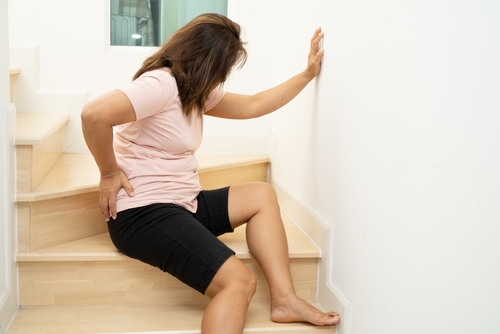
Document Everything: Your Evidence Checklist
Thorough documentation serves as the foundation for proving your slip and fall claim under Florida’s strict evidentiary requirements. Since businesses often clean up hazards quickly after an accident, capturing evidence immediately protects your ability to demonstrate negligence. Your phone camera becomes your most valuable tool.
Critical Evidence to Capture:
• The hazardous condition – Multiple angles showing the spill, torn carpet, uneven surface, or poor lighting
• Your injuries – Visible cuts, bruises, swelling, or torn clothing
• The surrounding area – Wide shots showing lack of warning signs or barriers
• Your footwear – Condition of your shoes to counter inappropriate footwear claims
• Time stamps – Screenshots of your phone’s time/date
• Surveillance cameras – Note locations of any security cameras that may have recorded your fall
Write down or voice-record detailed notes about how your accident happened while your memory remains fresh. Include which direction you were walking, what you were doing immediately before falling, and exactly how you landed. These contemporaneous notes carry significant weight during legal proceedings.
Collect contact information from every witness, including other customers and employees who saw your fall or the hazardous condition beforehand. Witness testimony proving the dangerous condition existed long enough that staff should have discovered it helps establish the constructive knowledge required under Florida law.
Seek Medical Attention: Why Timing Matters
Delaying medical treatment after your fall can severely damage both your health and your legal claim. Insurance companies routinely argue that gaps in treatment mean your injuries weren’t serious or resulted from something other than the fall. Seeking prompt medical care creates an unbroken chain of documentation linking your injuries directly to the incident.
Tell your doctor exactly how your injuries occurred, ensuring they document the slip and fall incident in your medical records. When healthcare providers understand your injuries resulted from a fall on someone else’s property, they can properly evaluate you for common fall-related injuries like concussions, spinal compression, torn ligaments, and fractures.
Common Slip and Fall Injuries Requiring Treatment:
Head injuries and concussions require immediate evaluation even without visible wounds. Falls remain the most common cause of traumatic brain injuries, and millions of fall-related emergency department visits are reported annually, many of which involve head trauma that worsens without prompt care. Victims who strike their heads during a slip and fall can develop long-term cognitive problems, memory issues, and chronic headaches, making immediate evaluation essential even when no visible wound is present.
Back and spinal injuries often worsen without proper care, potentially causing permanent disability. The sudden impact of falling can herniate discs, compress vertebrae, or damage the spinal cord. Following your doctor’s treatment plan demonstrates you’re mitigating your damages.
Follow all medical advice and attend every recommended appointment. Under Florida’s duty to mitigate damages doctrine, failing to follow medical treatment could reduce your compensation if the defense argues you worsened your own injuries through neglect; this is separate from Florida’s comparative negligence rules, which determine fault percentages for the accident itself.
Report the Incident to Property Management
Creating an official record with property management establishes crucial documentation that you promptly reported the dangerous condition. Many businesses have specific incident report procedures, and following them properly preserves your claim while preventing the property owner from later denying knowledge of your accident.
Request a copy of any incident report for your records and verify all information is accurate before signing. If management refuses to create a report or provide a copy, document their refusal in writing. Send a follow-up email or certified letter to the property owner detailing your fall, injuries, and their employee’s failure to document the incident.
???? Pro Tip: Take photos of any incident report before leaving the scene, as businesses sometimes "lose" reports documenting their negligence. If staff claim they don’t have authority to create reports, ask for their supervisor and note who refused to document your accident.
Understanding Your Legal Rights Under Florida Law
Florida’s premises liability laws underwent significant changes in 2023 that directly impact slip and fall victims in Ft Lauderdale. The new laws reduce your time to file from four years to just two years. However, the requirement to prove that business establishments had actual or constructive knowledge of hazardous conditions has been in place since 2010 under Florida Statute 768.0755 and was not changed by the 2023 tort reform; the 2023 changes focused primarily on negligent security cases involving criminal acts by third parties.
Modified Comparative Negligence Rules
Under Florida’s modified comparative negligence rule (Florida Statute 768.81(6)), a party may not recover damages if found to be more than 50% at fault. This makes documenting the property owner’s negligence essential, as insurance companies aggressively argue victims should have seen obvious hazards. Showing the dangerous condition wasn’t open and obvious or that inadequate lighting prevented you from seeing it becomes crucial.
The burden of proof rests entirely on you to demonstrate the business had actual or constructive knowledge of the dangerous condition. For transitory substances like spills, you must prove either that employees knew about the hazard or that it existed long enough they should have discovered it through reasonable inspections.
Proving Constructive Knowledge
Circumstantial evidence can establish constructive knowledge when direct proof is unavailable. If the spilled liquid appeared dirty or had footprints through it, this suggests it had been present for an extended period. Similarly, if similar conditions regularly occur, the foreseeability can prove constructive knowledge.
Time stamps on receipts, security footage, or witness observations help establish how long a hazard existed. The longer a dangerous condition remains unaddressed, the stronger your argument that reasonable inspections would have discovered it.
The Role of a Slip and Fall Attorney in Ft Lauderdale
Navigating Florida’s complex premises liability laws while recovering from injuries presents overwhelming challenges for accident victims. An attorney experienced in handling fall injury cases understands how to build compelling evidence demonstrating negligence while protecting you from insurance company tactics designed to minimize your claim.
Preserving evidence before it disappears requires immediate action that injured victims often cannot handle alone. Businesses routinely delete surveillance footage, repair hazardous conditions, and lose documentation unless legally compelled to preserve it. Attorneys can send preservation letters preventing destruction of crucial evidence.
Insurance companies begin building their defense immediately, often contacting victims within hours seeking recorded statements. These adjusters appear helpful while actually gathering ammunition to argue you caused your own fall. Having legal representation protects you from making statements that could devastate your claim.
???? Pro Tip: Never give recorded statements to insurance adjusters without consulting an attorney first. Even innocent comments about "not paying attention" or "walking quickly" can be twisted to shift blame onto you.
Common Mistakes That Can Hurt Your Claim
Many slip and fall victims unknowingly take actions that severely damage their legal rights to compensation. Understanding these common pitfalls helps you avoid mistakes that insurance companies exploit to deny or reduce legitimate claims.
Waiting Too Long to Take Action
Delaying documentation, medical treatment, or legal consultation weakens every aspect of your claim. Evidence disappears, witnesses forget details, and injuries may be attributed to other causes. With Florida’s shortened two-year statute of limitations, procrastination can completely bar your recovery.
Admitting Fault or Downplaying Injuries
Making statements like "I should have been more careful" or "I’m fine" can devastate your claim. Insurance adjusters record these admissions and use them to argue you caused your own accident or exaggerated your injuries. Stick to factual descriptions without accepting blame or minimizing your pain.
Posting on Social Media
Insurance companies monitor accident victims’ social media accounts for evidence contradicting injury claims. Photos showing physical activities or positive status updates get twisted to argue you’re not as injured as claimed. Set all accounts to private and avoid posting anything related to your accident or activities.
Accepting Quick Settlement Offers
Initial settlement offers rarely cover the full extent of your damages, especially before you know your complete medical needs. Once you accept a settlement, you cannot seek additional compensation even if your injuries prove more serious than initially diagnosed. Consulting qualified legal counsel ensures you understand the true value of your claim before accepting any offer.
Frequently Asked Questions
How long do I have to file a slip and fall lawsuit in Florida?
Under Florida’s current statute of limitations, you have two years from the date of your slip and fall accident to file a lawsuit. This deadline, reduced from four years by 2023 tort reform, applies to all negligence claims including premises liability cases. Missing this deadline typically bars you from any recovery.
What if the property owner claims they didn’t know about the hazard?
Florida law recognizes both actual and constructive knowledge of dangerous conditions. Even if the owner didn’t actually know about a specific spill or hazard, you can prove constructive knowledge by showing the condition existed long enough that reasonable inspections should have discovered it, or that similar conditions regularly occurred making them foreseeable.
Can I still recover damages if I’m partially at fault for my fall?
Florida follows modified comparative negligence rules under Florida Statute 768.81(6). You can recover damages as long as you are 50% or less at fault (a party found to be more than 50% at fault may not recover), though your compensation reduces by your percentage of fault. For example, if you’re found 30% at fault, you’d receive 70% of your total damages.
What damages can I recover in a Ft Lauderdale slip and fall case?
Florida law allows recovery for medical expenses, lost wages, pain and suffering, and other accident-related costs. This includes past and future medical treatment, lost earning capacity if you cannot return to work, and non-economic damages for physical pain, emotional distress, and loss of enjoyment of life.
Taking Action to Protect Your Rights After a Fall
The steps you take immediately after a slip and fall in Ft Lauderdale directly impact your ability to recover fair compensation for your injuries. From documenting the hazardous condition and seeking prompt medical care to understanding Florida’s negligence laws and avoiding common mistakes, each action either strengthens or weakens your premises liability claim.
If you’ve suffered injuries in a slip and fall accident, don’t navigate Florida’s complex legal landscape alone. The attorneys at Chalik & Chalik Injury Lawyers bring extensive experience handling premises liability claims throughout Ft Lauderdale and understand what it takes to prove negligence and maximize your recovery. Call 954-476-1000 today for a free consultation or contact us online to discuss how we can help protect your rights and pursue the compensation you deserve.


When a Ft Lauderdale Restaurant Did Not Cause the Spill, Can It Still Be Held Responsible? Key Takeaways: A Ft Lauderdale restaurant can be liable for a slip and fall even if it did not create the spill, provided it had actual or constructive notice of the hazard. Florida law under Fla. Stat. §768.0755 requires...

Common Injuries That May Support a Slip and Fall Claim in Ft Lauderdale Slip and fall accidents at Ft Lauderdale businesses can cause injuries ranging from minor bruises to life-altering trauma. If you slipped on a wet floor at a grocery store, tripped over debris at a hotel, or fell in a poorly maintained parking...

Fall accidents send roughly 8.9 million people to the emergency room each year, according to the National Safety Council (NSC). As one of the leading causes of unintentional injuries, it’s important for everyone to know where the dangers lie and take the simple yet necessary precautions to prevent injuries. Common Places for Slip and Fall...

After a Painful Fall in Miami: Understanding Your Next Steps After a sudden fall in a Miami business, your first concern is injury severity—but once medical bills arrive, you may wonder if the property owner bears responsibility. Florida law requires businesses to maintain safe premises, yet proving negligence in slip and fall cases involves specific...

Filing a slip and fall lawsuit helps you hold a property owner or business manager responsible for the injuries you suffered. When dangerous conditions cause harm, you have the right to pursue compensation through the court system. The legal process begins when you file a formal complaint against the person or business responsible for maintaining...

If you slipped, fell, and got hurt, you might be wondering if you have a valid personal injury claim and the right to pursue fair compensation. In many slip and fall cases, it comes down to whether a property owner knew (or should have known) about a dangerous condition and didn’t fix it in a...

What you do after a fall in a supermarket may affect your legal options, if the fall was the result of another’s negligence. The most important things to do after you slip and fall in a South Florida supermarket are to check yourself for injuries and protect a potential claim by reporting your accident. Protect...

If you slip and fall at a dollar store, these are the following steps you should take to ensure your health and possibly support your personal injury or premises liability claim: You should check for injuries and get immediate medical attention to address them. You should collect evidence while still inside the store by taking...