
What Is a Transitory Foreign Substance in a Miami Slip Case?
A transitory foreign substance is any temporary hazard, such as a spilled liquid, fallen food, or leaking condensation, that appears on a business floor and creates a dangerous condition. If you slipped and fell in a Miami grocery store, hotel lobby, or restaurant, this legal term may determine your claim’s success. Under Florida Statute 768.0755, injured persons must prove the business had actual or constructive knowledge of the dangerous condition and should have taken action to remedy it. Understanding what counts as a transitory foreign substance and how Florida law treats it helps you determine whether you have a viable case.
If you were hurt in a slip and fall incident, Chalik & Chalik Injury Lawyers can help. Call 954-476-1000 or reach out to our team today to discuss your situation.
How Florida Law Defines a Transitory Foreign Substance
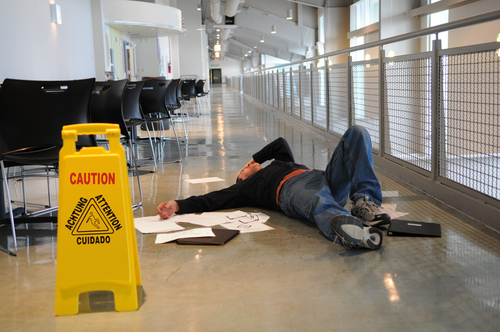
A transitory foreign substance is a temporary and often unpredictable hazard that does not belong on a walking surface. Common examples include water puddles near entrances, broken jars in grocery aisles, grease drippings near restaurant kitchens, or soap residue on hotel bathroom floors. The substance is not a permanent feature, it appeared at some point, and someone with property control should have addressed it.
Florida’s statutory framework addresses these hazards directly under Florida Statute 768.0755. This statute governs premises liability for transitory foreign substances in business establishments and places the burden of proof on the injured person. Your claim will generally rise or fall based on what the business knew or should have known about the hazard.
Why the "Knowledge" Requirement Matters for Your Slip and Fall in Miami
Florida law does not hold a business automatically liable simply because you fell on its property. Under Section 768.0755(1), you must prove the business establishment had actual or constructive knowledge of the dangerous condition and should have taken action to remedy it.
Actual knowledge means the business was directly aware of the hazard. An employee may have seen the spill and failed to clean it. Constructive knowledge means the business should have known about the condition even if no employee personally witnessed it.
How Constructive Knowledge Is Established
Constructive knowledge can be proven through circumstantial evidence in two primary ways. Under Section 768.0755(1)(a)-(b), a claimant may show the dangerous condition existed long enough that, in ordinary care, the business should have known about it. Alternatively, the claimant may demonstrate the condition occurred with regularity, making it foreseeable. If a freezer consistently leaked water onto the floor every afternoon, that pattern could establish constructive knowledge even if no employee saw the puddle on the day you fell.
💡 Pro Tip: After a slip and fall, immediately ask the store manager whether any prior complaints or incident reports exist for the same area. Repeat hazards in the same location can support a claim that the condition occurred with regularity and was therefore foreseeable.
The Shift in Florida Slip and Fall Law: From 768.0710 to 768.0755
Florida’s legal standards for slip and fall claims have changed significantly, directly affecting your rights today. Before 2010, Florida Statute 768.0710 (enacted in 2002) governed slip and fall cases involving transitory foreign substances. Under that statute, the burden of proof was on the plaintiff to prove the business acted negligently by failing to exercise reasonable care in maintenance, inspection, repair, warning, or mode of operation; importantly, actual or constructive notice of the transitory foreign substance was explicitly not a required element of proof. While 768.0710 was comparatively less burdensome on plaintiffs than the current 768.0755 in this respect, it was enacted after the Florida Supreme Court’s decision in Owens v. Publix to shift the burden back to plaintiffs.
Under 768.0710, the burden of proof differed for injured claimants. Plaintiffs needed to show the business acted negligently by failing to exercise reasonable care in maintenance, inspection, repair, warning, or operations. Actual or constructive notice of the transitory foreign substance was explicitly not required.
What Changed and Why It Matters Today
The legislature repealed Section 768.0710 in 2010 and replaced it with Section 768.0755. Effective July 1, 2010, the new statute requires injured persons to affirmatively prove the business had actual or constructive knowledge of the hazard. For Miami slip and fall claims today, your evidence must directly address what the business knew or should have known.
| Factor | Former Law (768.0710) | Current Law (768.0755) |
|---|---|---|
| Burden of proof | Business’s failure to use reasonable care | Plaintiff must prove business had knowledge |
| Notice requirement | Not required | Actual or constructive knowledge required |
| Standard | Duty of reasonable care | Knowledge of condition plus failure to act |
| Effect on plaintiffs | More favorable | More demanding threshold |
💡 Pro Tip: Because the current law requires you to prove what the business knew, preserving evidence quickly is essential. Request surveillance footage, photograph the scene, and identify witnesses before evidence disappears.
What Evidence Can Strengthen a Slip and Fall Claim in Miami
Building a strong premises liability case in Miami requires targeted evidence connecting the business to knowledge of the hazard. Courts examine the totality of circumstances, so thorough documentation strengthens your position.
Consider collecting:
- Photographs or video of the substance, surrounding area, lighting, and warning signs (or lack thereof)
- Surveillance camera footage showing how long the substance was present
- Witness statements from customers or employees who saw the condition
- Maintenance and inspection logs revealing the business’s cleaning schedule
- Incident reports filed with the store or property manager
Timing and Preservation Are Critical
The longer you wait to gather evidence, the harder proving your case becomes. Surveillance footage is frequently overwritten within days. Witnesses forget details. Maintenance logs may be altered or discarded. Acting promptly to secure this information can significantly impact the outcome of your claim.
💡 Pro Tip: If a store employee mops up the spill immediately after your fall, note the employee’s name and the time. This can help establish that the business became aware of the hazard, and the timing may reveal how long the substance was there before anyone acted.
Common Defenses Businesses Raise in Wet Floor Injury Cases in Miami
Businesses and insurers frequently challenge slip and fall claims by arguing they had no knowledge of the transitory foreign substance. If a store can show it had a reasonable inspection routine and the spill occurred moments before the fall, it may argue constructive knowledge did not exist.
Another common defense involves disputing causation or arguing comparative fault. Under Florida’s modified comparative negligence system, as revised by 2023 tort reform legislation, your recovery may be reduced proportionally to your share of fault, and you may be barred from recovery if you are found more than 50 percent at fault. A business may argue you were partially responsible by walking through an obviously wet area while distracted. Understanding these defenses early allows you to build a more complete factual record.
💡 Pro Tip: Even if you think the fall was partly your fault, do not assume your case has no value. Florida’s comparative fault system may still allow you to recover damages if the business bears a greater share of responsibility for the hazard.
How a Slip and Fall Attorney in Miami Can Help Protect Your Claim
Navigating Section 768.0755 without legal guidance can leave you at a disadvantage. Proving a business had constructive knowledge requires strategic evidence gathering and legal analysis. A slip and fall attorney in Miami can investigate your fall, identify the right evidence, and present your claim effectively.
Insurance companies representing businesses often move quickly to minimize exposure. They may contact you for a recorded statement, offer a low settlement, or argue the hazard was open and obvious. Early legal representation helps ensure your rights remain protected and critical evidence is preserved.
Frequently Asked Questions
1. What qualifies as a transitory foreign substance under Florida law?
Any temporary hazard on a business floor that is not a permanent fixture may qualify. Examples include spilled liquids, dropped food, tracked-in rainwater, leaked refrigerant, and cleaning solution residue. The substance must have created a dangerous condition that foreseeably could cause injury.
2. How long does a substance need to be on the floor before a business should have known about it?
There is no fixed time period set by statute. Courts evaluate whether the condition existed long enough that, in ordinary care, the business should have discovered it. Factors such as foot traffic, store layout, and inspection frequency all play a role.
3. Can I still file a claim if I did not see what I slipped on?
Yes, you may still have a viable claim. Surveillance footage, witness testimony, and post-incident investigation can help identify the substance. Not personally observing the hazard before falling does not automatically bar your claim.
4. What should I do immediately after a slip and fall in a Miami store?
Report the incident to the store manager, seek medical attention, and document everything. Take photos, note the time, ask for witness contact information, and request the store preserve surveillance footage. These steps can significantly strengthen your case. Review additional Florida slip and fall law resources to learn more about your rights.
5. Does it matter if the store had "wet floor" signs posted?
Warning signs can affect your claim but do not automatically eliminate liability. Courts consider whether signs were visible, properly placed, and sufficient to warn of the specific hazard. Sign presence may also indicate the business had knowledge of the dangerous condition.
💡 Pro Tip: Even if a warning sign was posted, photograph its exact placement. A sign placed far from the actual hazard or facing the wrong direction may not provide adequate warning under the circumstances.
Protecting Your Rights After a Slip and Fall in Miami
A transitory foreign substance may seem minor, but the injuries it causes can be life-changing. Florida law under Section 768.0755 requires you to meet a specific evidentiary burden, and taking action quickly to preserve evidence and understand your legal options strengthens your position. Every case depends on its unique facts, so obtaining a thorough evaluation is an important first step.
If you suffered a slip and fall injury at a Miami business, Chalik & Chalik Injury Lawyers is ready to review your case. Call 954-476-1000 or contact us now to get started.