
Can a Ft Lauderdale Hotel Be Held Liable for a Slip and Fall?
Yes, a Ft Lauderdale hotel can be held liable for a slip and fall if you can show the hotel knew or should have known about the dangerous condition that caused the accident. Florida law treats hotel guests as "invitees," meaning the property owner owes them the highest duty of care. If you slipped on a wet pool deck, tripped over damaged carpeting, or fell on a slick lobby floor, the hotel may bear legal responsibility for your injuries. Understanding Florida premises liability law is the first step toward protecting your right to compensation.
If you were hurt in a hotel fall and need guidance, Chalik & Chalik Injury Lawyers can help. Call 954-476-1000 or reach out online to discuss your case today.
Why Hotels Owe Guests a High Duty of Care
Under Florida premises liability law, the level of care a property owner must provide depends on the visitor’s legal classification. Hotel guests are classified as "invitees" because they enter for a commercial purpose. This classification triggers the highest standard of protection under the law. The hotel must regularly inspect its premises for potential dangers, make prompt repairs when hazards are identified, and warn guests of conditions that could cause harm.
This duty extends to all areas a guest might reasonably access: lobbies, elevators, stairwells, pool areas, restaurants, fitness centers, parking garages, and guest room bathrooms. When a hotel fails to maintain these spaces in a reasonably safe condition, it may be liable for resulting injuries.
💡 Pro Tip: If you fall in a hotel, report the incident to management immediately and request a written incident report. This creates an official record that can support your claim later.
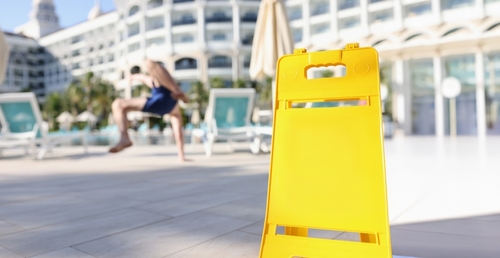
What Florida Law Requires You to Prove in a Hotel Slip and Fall
Florida places a specific burden of proof on slip and fall victims injured in business establishments. Under Florida Statute 768.0755, if a person slips on a transitory foreign substance in a business establishment, the injured person must prove the business had actual or constructive knowledge of the dangerous condition and should have taken action to remedy it.
Actual Knowledge vs. Constructive Knowledge
Actual knowledge means the hotel knew about the hazard. For example, if a guest reported a spill to staff and no one cleaned it, that demonstrates actual knowledge. Constructive knowledge can be established through circumstantial evidence in two ways:
- The dangerous condition existed for such a length of time that, in the exercise of ordinary care, the hotel should have known of it.
- The condition occurred with regularity and was therefore foreseeable.
These two paths give injured guests meaningful options for building a case. If a hotel pool area routinely accumulates standing water and the hotel never places mats or warning signs, that pattern of regularity may satisfy the constructive knowledge requirement.
💡 Pro Tip: Photographs and timestamps are powerful evidence. If you fall in a hotel, use your phone to photograph the hazard, the surrounding area, and your injuries as soon as safe to do so.
How Comparative Fault Affects Your Hotel Injury Claim in Florida
Florida follows a modified comparative fault system, which means your own actions at the time of the fall matter. Under Florida Statute 768.81, as amended by HB 837, a claimant’s contributory fault reduces damages awarded in proportion to the claimant’s percentage of fault. However, a plaintiff who is greater than 50% at fault is barred from recovering any damages.
This is a significant shift from prior law. Before HB 837 took effect on March 24, 2023, Florida used a pure comparative negligence system that allowed recovery regardless of the plaintiff’s percentage of fault. Now, if your fault exceeds 50%, you could lose your right to compensation entirely.
| Factor | Before HB 837 | After HB 837 (Current Law) |
|---|---|---|
| Fault system | Pure comparative negligence | Modified comparative negligence |
| Plaintiff greater than 50% at fault | Recovery reduced but allowed | Recovery completely barred |
| Statute of limitations (negligence) | Four years | Two years |
| Fault apportionment | By percentage of each party’s fault | By percentage of each party’s fault |
💡 Pro Tip: Insurance adjusters may try to use your statements against you to inflate your percentage of fault. Avoid giving recorded statements to the hotel’s insurer before consulting with a slip and fall attorney in Ft Lauderdale.
Common Defenses Hotels Use Against Slip and Fall Claims
Hotels and their insurance carriers frequently raise several defenses to avoid paying injury claims. Understanding these defenses can help you and your legal team prepare a stronger case.
Open and Obvious Doctrine
The hotel may argue the hazard was so obvious that you should have seen and avoided it. For example, a clearly visible wet floor sign or large puddle in a brightly lit area could be characterized as open and obvious. However, this defense does not automatically defeat a claim, particularly if the hotel could have eliminated the hazard entirely.
Assumption of Risk
Another common defense is that you voluntarily assumed the risk of injury. If you were engaging in an activity with inherent risks, such as using a pool or hot tub, the hotel may contend you accepted those risks. The strength of this defense depends on whether the hotel still failed to address an unreasonable hazard beyond the normal risks.
Statute of Limitations
Under current Florida law, the statute of limitations for a negligence action is two years from the date of injury. HB 837 reduced this deadline from the previous four-year window, and the shorter period applies to causes of action accruing after March 24, 2023. Missing this deadline generally results in losing the right to file a lawsuit.
💡 Pro Tip: Do not assume you have plenty of time to act. Evidence disappears quickly. Surveillance footage is often overwritten within days, and witness memories fade. Consulting a Ft Lauderdale injury attorney early can help preserve critical evidence.
Additional Legal Theories That May Apply to Your Slip and Fall Attorney in Ft Lauderdale Case
Florida Statute 768.0755 is not the only basis for holding a hotel accountable. The statute does not affect any common-law duty of care owed by a person or entity in possession or control of a business premises. Other theories of liability, such as negligent maintenance, negligent security, or failure to train staff, may also apply depending on the circumstances.
Damages in a Florida hotel slip and fall case may include medical expenses, lost income, and pain and suffering. In rare cases involving intentional misconduct or gross negligence supported by clear and convincing evidence, punitive damages may be available under Florida Statute 768.72.
For more information about these cases, visit our slip and fall claims resource for additional insights.
Steps to Protect Your Hotel Slip and Fall Claim
Taking the right actions after a fall can make or break your case. The following steps can help you build a solid foundation:
- Report the fall to hotel management and request a written incident report before leaving the property.
- Photograph the scene, including the hazard, lighting conditions, any warning signs (or lack thereof), and your visible injuries.
- Collect contact information from witnesses who saw the fall or the condition that caused it.
- Seek medical attention promptly, even if injuries seem minor, as some conditions worsen over time.
- Avoid giving recorded statements to the hotel’s insurance company without legal counsel.
Preserving evidence early is critical. Hotels may repair hazards, clean up spills, or allow surveillance footage to be overwritten shortly after an incident. An experienced slip and fall lawyer in Ft Lauderdale can send a spoliation letter demanding evidence preservation.
💡 Pro Tip: Keep a detailed journal of your symptoms, medical appointments, and how your injuries affect daily life. This personal record can support your claim for pain and suffering damages.
How Premises Liability Law Applies to Ft Lauderdale Hotels Specifically
Ft Lauderdale’s tourism-driven economy means hotels see heavy foot traffic year-round, increasing the likelihood of slip and fall hazards. Wet pool decks, freshly mopped lobby floors, uneven outdoor walkways, and poorly lit stairwells are common sources of injuries. Florida premises liability law holds parties in control of property accountable for hazardous conditions.
The fact that a hotel operates in a high-traffic tourist area may strengthen a plaintiff’s case. A hotel that knows its property sees constant guest activity has even more reason to conduct frequent inspections, maintain adequate staffing for cleanup, and implement safety protocols.
Frequently Asked Questions
1. How long do I have to file a hotel slip and fall lawsuit in Florida?
Under current Florida law, the statute of limitations for a negligence claim is two years from the date of injury. This shortened deadline took effect under HB 837 for causes of action accruing after March 24, 2023. Acting quickly is essential to preserving your rights.
2. What if I was partially at fault for my fall in a Ft Lauderdale hotel?
Florida’s modified comparative fault system reduces your damages based on your percentage of responsibility. However, if you are found greater than 50% at fault, you are barred from recovering any compensation. Partial fault does not eliminate your claim but affects the amount you may receive.
3. What kind of evidence helps prove a hotel knew about a dangerous condition?
Maintenance logs, surveillance footage showing how long a hazard existed, prior incident reports involving similar conditions, and witness testimony can all help establish the hotel had actual or constructive knowledge of the danger.
4. Can I recover punitive damages in a Florida hotel slip and fall case?
Punitive damages are available only in limited circumstances. You must present clear and convincing evidence that the hotel engaged in intentional misconduct or gross negligence. Standard negligence alone is generally not sufficient.
5. Does the hotel’s insurance company have to offer me a fair settlement?
There is no legal requirement that an insurer offer a settlement you consider fair. Insurance companies often attempt to minimize payouts or deny claims altogether. Having legal representation can help level the playing field during negotiations.
Protecting Your Rights After a Hotel Fall in Ft Lauderdale
A slip and fall at a Ft Lauderdale hotel can lead to serious injuries, unexpected medical costs, and significant disruption to your life. Florida law provides a path to hold negligent hotels accountable, but the burden falls on you to prove the hotel’s knowledge of the hazard and act within legal deadlines. Understanding the proof requirements, comparative fault rules, and available damages puts you in a stronger position to pursue deserved compensation.
If you or a loved one suffered injuries in a hotel fall, Chalik & Chalik Injury Lawyers is ready to help you evaluate your claim. Call 954-476-1000 or contact us today to schedule a consultation and take the first step toward holding the responsible parties accountable.