
Proving Negligence After a Cruise Ship Injury in Miami
If you or a loved one suffered an injury aboard a cruise ship departing from Miami, understanding what evidence you need to prove negligence can make or break your claim. Cruise lines are classified as common carriers under maritime law, meaning they owe passengers a heightened duty of care. However, proving a cruise operator breached that duty requires more than showing you were hurt. You must gather specific evidence demonstrating the cruise line knew about or created the hazardous condition causing your injury. The process involves navigating federal maritime law, applicable Florida statutes, and contractual provisions in your passenger ticket. This guide covers the key evidence types, legal standards, and practical steps for building a strong cruise injury case in Miami.
If you need guidance, Chalik & Chalik Injury Lawyers can help you understand your options. Call 954-476-1000 or reach out online to get started.

Understanding the Cruise Line Duty of Care
Personal Injury Lawyer, Near You
(855) 529-0269Cruise lines are not held to the same standard as an ordinary business; they are held to a higher one. As common carriers, cruise operators owe passengers a duty requiring reasonable care under the circumstances to promote passenger safety throughout the voyage. This means taking reasonable steps to prevent foreseeable injuries, maintain safe premises, properly train crew members, and warn passengers of known dangers.
The legal standard, however, does not make cruise lines insurers of passenger safety. The law acknowledges cruise operators cannot foresee every hazard and only holds them liable for hazards they should reasonably have known about or directly created. Courts evaluate whether a "reasonably careful ship operator" would have identified and addressed the danger. This distinction shapes every piece of evidence you need to collect.
What the Injured Passenger Must Show
To prove negligence, the injured passenger must establish that the cruise operator either had knowledge of the unsafe condition or created the hazardous condition leading to the injury. You generally need to show four things:
- The cruise line owed you a duty of care
- The cruise line breached that duty through action or inaction
- The breach directly caused your injury
- You suffered actual damages as a result
💡 Pro Tip: Write down everything you remember about your injury as soon as possible. Details like time, location onboard, weather conditions, and crew member names can become critical evidence later.
How a Cruise Ship Accident Attorney in Miami Builds Your Case
Click to contact Chalik & Chalik's personal injury lawyers today
Successfully proving negligence requires identifying witnesses, utilizing expert testimony, and providing sufficient evidence of the operator’s failure to uphold safety standards. An experienced Miami cruise accident lawyer will systematically build a case by collecting and preserving evidence before the cruise line can limit access.
Photographs, Medical Records, and Witness Statements
For a free legal consultation call
(855) 529-0269The foundation of any cruise injury case starts with documentation gathered at or near the time of the incident. Photos of the hazardous condition, your injuries, and the surrounding area carry significant weight. Medical records from the ship’s infirmary and follow-up treatment establish causation and damages. Witness statements from fellow passengers or crew members who saw the incident or dangerous condition corroborate your account. Knowing how to document injuries on a cruise ship departing Miami is essential to preserving your claim.
Incident Reports and Post-Accident Investigations
Florida law requires reporting and documentation of vessel collisions, accidents, and casualties under Sections 327.30 and 327.301 of the Florida Statutes. While these mandatory reports are required, Florida Statute §327.301 limits the use of certain mandatory vessel accident reports in civil or criminal trials. Under Florida evidentiary law, post-accident tests and investigations are generally not classified as "subsequent remedial measures" under F.S. §90.407 (which bars only post-event corrective actions like repairs), but internal investigation findings and mandatory reports may still be protected or subject to evidentiary restrictions. Moreover, cruise ship injury cases are primarily governed by federal maritime law, and some internal investigation materials may be privileged or otherwise protected from disclosure. As a result, not all internal reports will be freely admissible, though relevant materials may become discoverable in litigation depending on privileges and applicable law.
💡 Pro Tip: Request a copy of the ship’s incident report before disembarking. Cruise lines are not always forthcoming with these documents, and having a formal request on record strengthens your position.
Florida’s Dangerous Instrumentality Doctrine and Vessel Operations
Florida law classifies vessels as dangerous instrumentalities under Section 327.32 of the Florida Statutes, which requires vessel operators to exercise the highest degree of care to prevent injuries. This classification primarily imposes vicarious liability on vessel owners for negligent operation and underscores that operating a vessel carries inherent risks demanding greater caution. However, in cruise ship cases governed by federal maritime law, state-law doctrine applicability may be limited by federal preemption.
Florida statutes also mandate specific standards for vessel operation, including prohibitions on reckless or careless operation under Section 327.33. If a cruise operator violates these statutory vessel safety standards, the violation may serve as evidence of negligence per se, meaning the court can treat the statutory violation as proof of negligence without additional reasonableness analysis.
| Type of Evidence | Why It Matters | Where to Find It |
|---|---|---|
| Photographs and video | Documents the hazardous condition and your injuries | Your phone, security cameras onboard |
| Medical records | Links your injury to the incident and shows damages | Ship infirmary, shoreside hospitals |
| Witness statements | Corroborates your account of how the injury occurred | Fellow passengers, crew members |
| Incident and accident reports | Required by Florida law; may be statutorily restricted from admission in court | Ship’s officer, cruise line records |
| Post-accident investigation findings | May be subject to evidentiary restrictions or privilege; potentially discoverable in litigation | Cruise line internal files, discovery |
| Maintenance and inspection logs | Shows whether the cruise line knew of the hazard | Cruise line records obtained in litigation |
💡 Pro Tip:Florida Statute §76.32 allows plaintiffs to seek attachment (seizure) of a vessel when damages result from negligent navigation or management within Florida’s territorial jurisdiction. This remedy may provide additional leverage, though specific procedural requirements must be met.
When the Cruise Line Claims You Were at Fault
Cruise lines frequently argue comparative negligence, asserting that the passenger’s own carelessness contributed to the injury. For instance, a cruise operator may claim an obstruction was obvious and should have been avoided. Under Florida law (F.S. §90.407), evidence of measures taken after an incident to make it safer is generally not admissible to prove negligence. However, exceptions exist: such evidence can be admitted for proving ownership, control, feasibility of precautionary measures, or impeachment.
Cruise ship injury claims are typically governed by federal maritime law, which applies a pure comparative fault standard, meaning recovery is reduced by your percentage of fault but not barred entirely unless you are 100% at fault. This differs from Florida’s modified comparative negligence framework, which bars recovery for plaintiffs found more than 50% at fault in state-law actions.
The impeachment exception becomes particularly valuable when a cruise line makes strong claims about safety protocols. Florida courts have approved using subsequent remedial measures to impeach witnesses who claimed lack of knowledge of a hazard. In Carnival Cruise Line v. Rosania, 546 So. 2d 736 (Fla. 3d DCA 1989), a dissent argued that if a cruise line claims an obstruction was obvious as a comparative negligence defense, the plaintiff should be able to introduce post-accident remedial measures to counter that claim.
💡 Pro Tip: If the cruise line changed anything at the location where you were injured after your accident, document it if possible. Even if it cannot prove negligence directly, it may be admissible for other purposes at trial.
Critical Deadlines and Contract Provisions You Cannot Ignore
Cruise ship passenger tickets often contain contractual provisions that limit liability and dramatically shorten the time you have to file a claim. While general maritime law provides a three-year statute of limitations for personal injury claims, your passenger ticket may impose a contractual deadline as short as one year for filing suit and may require written notice within six months. Missing these windows can permanently bar your claim.
Forum Selection Clauses
Royal Caribbean, for example, requires all disputes to be prosecuted in the U.S. District Court for the Southern District of Florida in Miami-Dade County. Many major cruise lines have similar provisions directing litigation to specific Miami courts. These clauses are generally enforceable, which is why retaining a cruise ship accident attorney in Miami who understands these procedural requirements matters from day one.
- Review your passenger ticket contract as soon as possible after an injury
- Note any shortened deadlines for providing written notice to the cruise line
- Identify the required forum (court) for filing your lawsuit
- Preserve all ticket documents, boarding passes, and correspondence
💡 Pro Tip: Courts interpret deadline extensions and tolling exceptions narrowly in maritime cases. Do not assume you have more time than your ticket contract states. Consult an attorney promptly to protect your rights.
Frequently Asked Questions
1. What is the most important evidence in a cruise ship negligence case in Miami?
The most critical evidence includes photographs of the hazardous condition, medical records linking your injuries to the incident, and witness statements. Post-accident investigation materials may help support your claim, but they can be subject to statutory restrictions (for example, F.S. §327.301) or privilege and are not automatically admissible. Each case is different, so evidence weight varies depending on circumstances.
2. How long do I have to file a cruise ship injury claim?
The deadline depends on your passenger ticket contract. While general maritime law provides a three-year statute of limitations, many cruise lines contractually shorten this to one year for filing suit, often requiring written notice within six months. Courts typically enforce these shortened deadlines, so reviewing your ticket terms immediately after an injury is essential.
3. Can a cruise line use my own actions against me?
Yes. Cruise lines frequently raise comparative negligence defenses. Because cruise ship claims are typically governed by federal maritime law, pure comparative fault generally applies, meaning your recovery is reduced in proportion to your share of fault but not eliminated unless you are entirely at fault. Specific standards may depend on the claims asserted and applicable law, so consulting an attorney is important.
4. Does it matter which court my cruise injury case is filed in?
It often matters significantly. Many cruise lines include forum selection clauses requiring lawsuits to be filed in specific courts, frequently the U.S. District Court for the Southern District of Florida. Filing in the wrong court can result in dismissal, so understanding these contractual terms early is critical.
Protecting Your Claim Starts With the Right Evidence
Building a successful cruise injury negligence case in Miami requires prompt action, thorough documentation, and understanding both maritime law and contractual terms in your passenger ticket. From establishing the cruise line’s duty of care to navigating evidentiary rules around post-accident investigations and remedial measures, every detail matters. The legal landscape favors passengers who act quickly and preserve evidence before it disappears.
If you were injured on a cruise ship and need help determining your next steps, Chalik & Chalik Injury Lawyers is ready to review your case. Call 954-476-1000 or contact us today to discuss your situation.
Call or text Chalik & Chalik
(855) 529-0269 Can Crew Members Sue for Injuries on Ft Lauderdale Cruise Ships?
Your Rights as an Injured Cruise Ship Crew Member Start with a Cruise Ship Accident Attorney in Ft Lauderdale When you work aboard a cruise ship departing from Fort Lauderdale’s Port Everglades, suffering an injury can leave you uncertain about your rights. Unlike passengers, crew members face complex maritime laws determining how they seek compensation....
 What Is DOHSA and How Does It Affect Cruise Claims in Florida?
Understanding the Death on the High Seas Act and Its Impact on Florida Cruise Claims If a loved one suffers a fatal injury aboard a cruise ship sailing more than three nautical miles from the U.S. coastline, a federal law called the Death on the High Seas Act (DOHSA) may govern your family’s legal rights....
 What Is a Forum Selection Clause in a Miami Cruise Case?
What Is a Forum Selection Clause in a Miami Cruise Case? When you purchase a cruise ticket, you’re entering into a complex legal contract that dictates where you can file a lawsuit if something goes wrong. Hidden in the fine print is a forum selection clause, a provision that can dramatically impact your legal rights...
 Should Passengers Report Injuries to Cruise Ship Medical Staff?
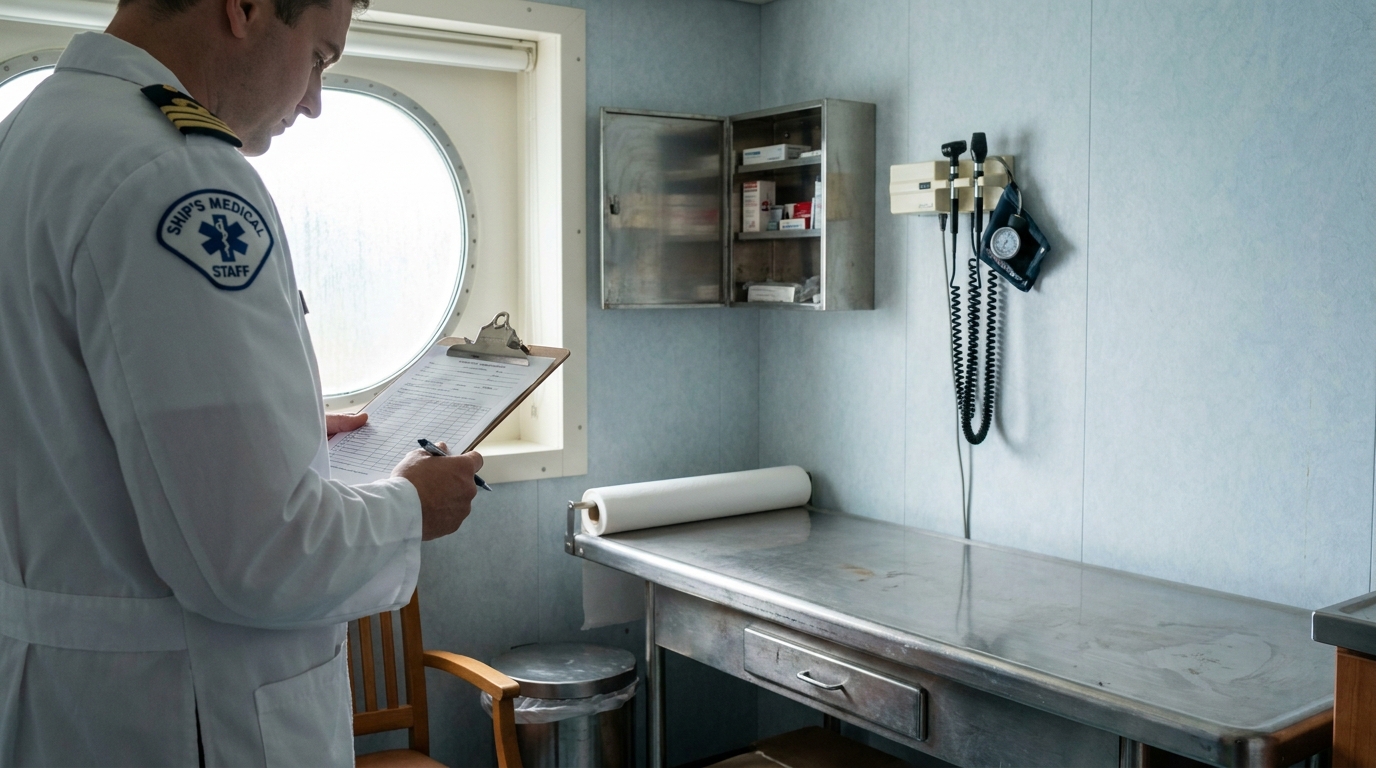
Why Reporting Your Cruise Ship Injury Could Make or Break Your Claim Key Takeaways: Always report injuries to cruise ship medical staff to create an official record linking your injury to a specific incident aboard the vessel. This documentation serves dual purposes under maritime law: it proves your harm and may establish the cruise line’s...