
Can a Passenger Sue for a Balcony or Railing Injury on a Cruise?
Yes, a cruise passenger who suffers a balcony or railing injury may have grounds to file a lawsuit against the cruise line under federal maritime law. These claims require proof that the cruise line knew or should have known about a dangerous condition and failed to act. If you or a loved one was hurt due to a defective railing, unstable balcony fixture, or unsafe deck feature on a cruise departing from Port Everglades or elsewhere, you may be entitled to compensation for medical expenses, lost income, and pain and suffering. However, pursuing these claims involves unique legal rules, compressed deadlines, and contractual limitations that differ significantly from standard personal injury cases on land.
If you need guidance after a cruise ship injury, Chalik & Chalik Injury Lawyers can help you evaluate your options. Call 954-476-1000 or contact us today to discuss your situation.
How Maritime Law Applies to Cruise Ship Balcony and Railing Injuries
Cruise ship accidents, including those involving balcony and railing defects, fall under maritime (admiralty) law. This legal framework combines federal statutes and common law principles that take precedence over state personal injury laws. Even when a court has jurisdiction based on diversity of citizenship, federal maritime law governs substantive issues in cruise injury cases, as established in Everett v. Carnival Cruise Lines, 912 F.2d 1355 (11th Cir. 1990).
Understanding this distinction matters for any injured passenger. Maritime law developed historically to protect shipping interests, and its principles differ from consumer-oriented protections in modern state statutes. As the Center for Justice and Democracy has noted, these older principles can create obstacles for passengers pursuing legitimate claims. Building a successful railing accident cruise ship case in Florida requires knowledge of maritime-specific rules around duty, notice, and causation.
Cruise Lines Owe Passengers a Duty of Care
As common carriers, cruise lines owe passengers a duty of care to ensure passenger safety. This duty extends to maintaining all vessel areas, including balconies, railings, and deck features, in reasonably safe condition. When a cruise line fails to inspect, repair, or warn passengers about a known hazard, it may breach that duty and open itself to liability.

Personal Injury Lawyer, Near You
(855) 529-0269Proving Cruise Ship Railing Negligence in Court
To recover compensation for a balcony or railing injury, you must prove the cruise line was negligent. Under federal maritime law, this means demonstrating the cruise line had actual or constructive notice of the dangerous condition. Notice is always required as a prerequisite to liability, even when the cruise line itself created or maintained the hazard; a plaintiff cannot bypass the notice requirement simply by alleging the cruise line negligently created the condition. The court in Everett v. Carnival Cruise Lines required the plaintiff to show the cruise line knew about the defect or should have discovered it through reasonable inspection.
The Notice Requirement
Cruise ticket contracts typically require that the cruise line had advance "notice" of a defect before liability can attach. If a railing was loose, corroded, or improperly installed, you need evidence the cruise line knew about the problem or that the defect existed long enough that reasonable maintenance should have uncovered it. Photographs, maintenance logs, prior passenger complaints, and crew inspection records can all serve as evidence of constructive or actual notice.
💡 Pro Tip: Request a copy of the ship’s maintenance and inspection records for the area where your injury occurred as early as possible. These documents may become harder to obtain over time and can contain critical evidence of the cruise line’s prior knowledge of the defect.
Comparative Negligence May Reduce Your Recovery
Even if the cruise line was negligent, your own actions could reduce your recovery. Maritime law applies comparative negligence principles, meaning a court may assign a percentage of fault to both parties. In Everett v. Carnival Cruise Lines, 912 F.2d 1355 (11th Cir. 1990), the 11th Circuit reversed the district court and remanded for a new trial, holding that the jury instruction was erroneous because it allowed liability without requiring the plaintiff to prove that Carnival had actual or constructive notice of the dangerous condition. The case did not result in a comparative negligence fault apportionment of 55%/45%. Leaning on, climbing, or misusing a railing could affect your share of fault, but does not necessarily bar your claim entirely.
💡 Pro Tip: Avoid giving recorded statements to the cruise line’s representatives after an accident. Anything you say could later be used to argue that you contributed to the incident and reduce your compensation.
What a Cruise Ship Accident Attorney in Ft Lauderdale Can Help You Prove
A successful cruise ship balcony accident requires connecting the cruise line’s negligence to your specific injuries through clear evidence. In a 2015 case, a jury awarded $21.5 million after a cruise line was found negligent for a malfunctioning automatic door that caused a brain injury, demonstrating that juries hold cruise lines accountable for defective ship features when evidence supports negligence.
An experienced cruise ship accident attorney in Ft Lauderdale understands how to build this chain of evidence under maritime law. From retaining marine engineers to inspect the railing or balcony structure to gathering surveillance footage and witness statements, thorough investigation forms the foundation of a strong claim. Because many cruise lines are headquartered in Florida and require litigation in this state, working with a Port Everglades cruise injury attorney who handles these cases regularly can be a meaningful advantage.
Click to contact Chalik & Chalik's personal injury lawyers today
Critical Deadlines for Filing a Maritime Injury Claim in Florida
Shortened Filing Windows in Your Ticket Contract
Most passengers do not realize that their cruise ticket is a binding legal contract containing terms that dramatically shorten the time to take legal action. These terms and conditions, often buried in hyperlinks and written in dense legalese, typically require a notice of claim within six months of the incident and a lawsuit filed within one year. These deadlines are far shorter than standard statutes of limitations for personal injury claims.
The ticket contract may also dictate where your lawsuit must be filed. Many cruise companies maintain headquarters in Florida, so forum selection clauses frequently require that all lawsuits be brought in Miami or another Florida venue, regardless of where the passenger lives or where the ship departed.
💡 Pro Tip: Locate and read your cruise ticket contract immediately after an injury. The clock on your filing deadlines starts running on the date of the incident, not the date you return home or complete medical treatment.
For a free legal consultation call
(855) 529-0269Steps to Protect Your Rights After a Cruise Deck Railing Injury in Ft Lauderdale
Taking the right steps immediately after an injury can determine whether your claim succeeds. Evidence on a cruise ship can disappear quickly as the vessel is cleaned, repaired, or moved to another port. Acting promptly helps preserve the proof you need.
Follow these steps after a balcony or railing injury on a cruise:
- Report the incident to the ship’s guest services or security office and request a written copy of the incident report
- Seek medical attention from the ship’s medical center and keep all treatment records
- Document the scene by photographing and videoing the defective railing, broken fixtures, wet surfaces, or other contributing factors
- Collect names and contact information from witnesses who saw the incident
- Preserve your cruise ticket contract and all booking documents
Do not rely solely on the cruise line’s internal investigation. Their reports may minimize the severity or omit details favorable to your claim. Your independent documentation serves as evidence you fully control.
Damages You May Recover in a Balcony Injury Cruise Ship Lawsuit
If your claim succeeds, you may be entitled to several categories of compensation under maritime law. The specific damages depend on the severity of your injuries, the impact on your daily life, and the strength of evidence supporting each category. The following table outlines types of damages commonly pursued in cruise ship accident claims:
| Type of Damages | What It Covers |
|—|—|
| Medical Expenses | Hospital stays, surgeries, rehabilitation, medication, and future medical care |
| Lost Wages | Income lost during recovery, including sick days and vacation time used |
| Loss of Earning Capacity | Reduced ability to earn income in the future due to lasting injuries |
| Pain and Suffering | Physical pain, emotional distress, and diminished quality of life |
| Punitive Damages | Additional damages in cases involving gross negligence or willful misconduct |
💡 Pro Tip: Keep a detailed daily journal of your symptoms, medical appointments, and how your injuries affect routine activities. This personal record can strengthen your claim for non-economic damages like pain and suffering.
Frequently Asked Questions
1. Can I sue a cruise line if I fell from or was injured by a balcony railing?
You may be able to sue the cruise line if the railing was defective, improperly maintained, or failed to meet safety standards. You generally need to show the cruise line had notice of the dangerous condition or negligently created it. An attorney experienced in maritime law can evaluate whether the evidence supports your claim.
2. How long do I have to file a lawsuit after a cruise ship railing injury?
Cruise ticket contracts typically require a notice of claim within six months and a lawsuit filed within one year of the incident. These deadlines are strictly enforced by courts and are much shorter than most state personal injury statutes of limitations. Missing either window can permanently bar your claim.
3. Does it matter if I was partially at fault for my cruise ship injury?
It may reduce your recovery, but does not necessarily prevent you from filing a claim. Maritime law applies comparative negligence, so a court may assign a percentage of fault to each party and reduce your damages accordingly. You can still recover compensation for the cruise line’s share of responsibility.
4. Where do I have to file my cruise injury lawsuit?
Your cruise ticket contract likely contains a forum selection clause requiring you to file in a specific court, often in Florida. Many cruise lines are headquartered near Miami, so lawsuits are frequently required to be filed in the Southern District of Florida regardless of where the ship departed or where you live.
5. What evidence should I collect after a railing injury on a cruise?
Photograph the defective railing, your injuries, and the surrounding area immediately. Also obtain a copy of the incident report, keep all medical records, and save your ticket contract. Witness contact information and personal notes about the incident are also valuable.
Protect Your Claim After a Cruise Balcony or Railing Injury
A cruise ship balcony or railing injury can lead to serious consequences that demand prompt legal attention. Maritime law provides a path to compensation, but imposes strict requirements around notice, evidence, and filing deadlines that can catch passengers off guard. Understanding these rules early gives you the strongest foundation for a successful claim. Visit our blog for additional cruise ship accident legal help and resources on protecting your rights after an injury at sea.
If you or a loved one was injured due to a defective railing or balcony on a cruise, Chalik & Chalik Injury Lawyers is ready to help you pursue the compensation you deserve. Call 954-476-1000 or reach out to our team online to discuss your case today.
Call or text Chalik & Chalik
(855) 529-0269 What Is DOHSA and How Does It Affect Cruise Claims in Florida?
Understanding the Death on the High Seas Act and Its Impact on Florida Cruise Claims If a loved one suffers a fatal injury aboard a cruise ship sailing more than three nautical miles from the U.S. coastline, a federal law called the Death on the High Seas Act (DOHSA) may govern your family’s legal rights....
 What Happens If a Cruise Injury Deadline Is Missed in Florida?
Missing a cruise injury deadline in Florida can mean losing your right to compensation entirely. Cruise ship accidents fall under maritime (admiralty) law, which operates differently from standard personal injury claims on land. While the normal statute of limitations for admiralty matters is three years, cruise ticket contracts frequently reduce this to one year. If...
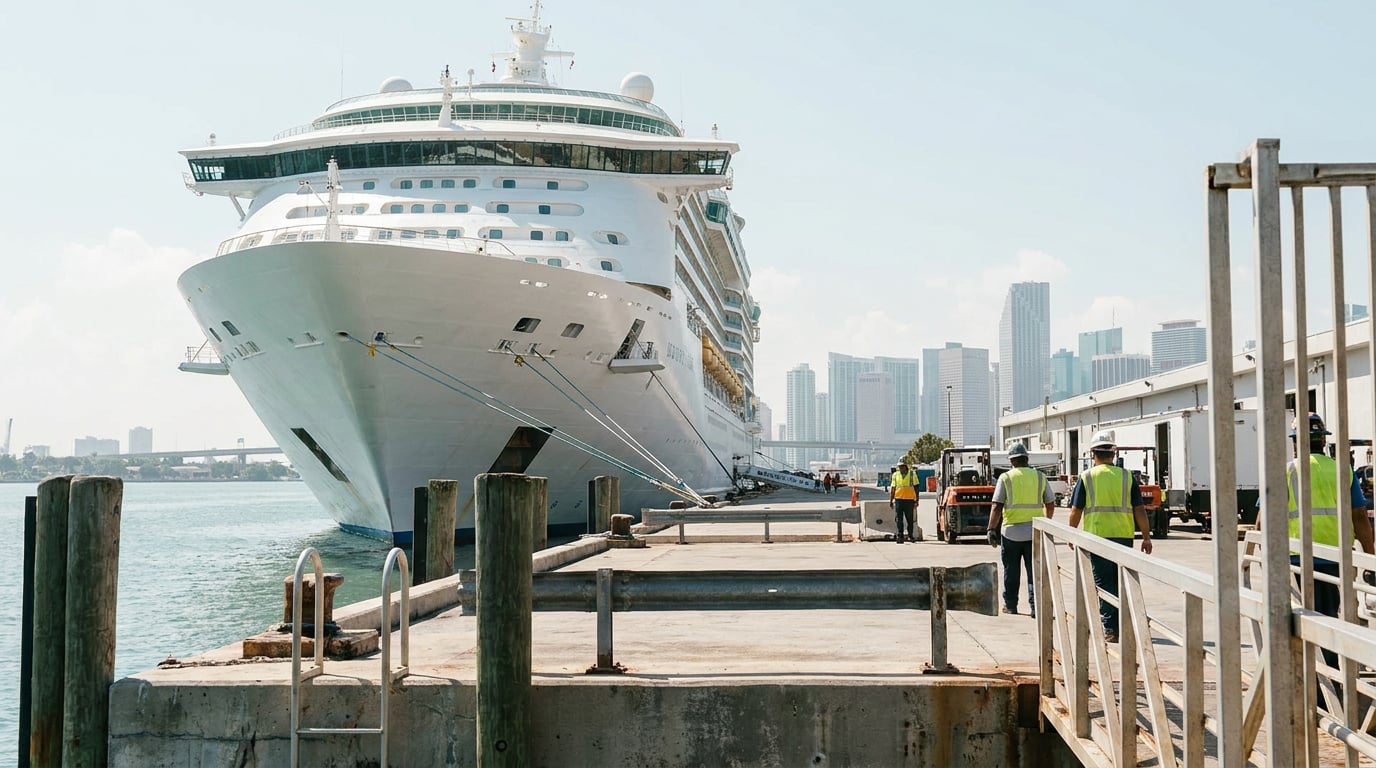 More Than 37 Million Cruised in 2025: Miami Injury Rights
With 37 Million Passengers Setting Sail, What Are Your Injury Rights in Miami? Key Takeaways: Cruise ship injury claims fall under federal maritime law, which overrides Florida state personal injury rules. Passengers typically have only one year from injury date to file a lawsuit under their ticket contract, per 46 U.S.C. § 30526. Cruise lines...
 Is a Cruise Line Liable for Food Poisoning Under Maritime Law?
Is a Cruise Line Liable for Food Poisoning Under Maritime Law? Falling ill from food poisoning on a cruise ship raises an immediate question: can the cruise line be held responsible? The answer depends on specific facts, but cruise lines may be liable for foodborne illness under maritime law when passengers can show the company...