
Understanding How a Disability Lump Sum Can Threaten Your Benefits
Key Takeaways:Protecting an SSDI lump sum in Plantation, Florida means depositing qualifying back-pay funds into a state-authorized ABLE account, sheltering them from resource counts while remaining available for disability-related expenses. Large past-due payments can push recipients over resource limits for means-tested programs like SSI and Medicaid. Florida’s ABLE program, created under Fla. Stat. § 1009.986 and administered through Fla. Admin. Code R. 19B-18.002, offers Medicaid recovery protections. Eligibility requires disability onset before age 46 (raised from age 26 effective January 1, 2026 under the ABLE Age Adjustment Act). The IRS lump-sum election method may reduce taxes on retroactive benefits. Because these rules are technical and fact-specific, individualized legal and tax guidance produces the best results.
Receiving a large back payment should feel like relief, not a new source of stress. For many disabled residents of Plantation, a lump sum settlement social security disability award represents months or years of past-due benefits finally paid at once. That windfall can push a person over the resource limits for means-tested programs, which is why planning tools like an ABLE account matter. The solution: deposit qualifying funds into a state-authorized ABLE account so they are sheltered from certain resource counts while remaining available for disability-related expenses.
If you are weighing your options after an approval, reach Chalik & Chalik Injury Lawyers by calling 954-476-1000 or using the firm’s online contact form to discuss your situation.
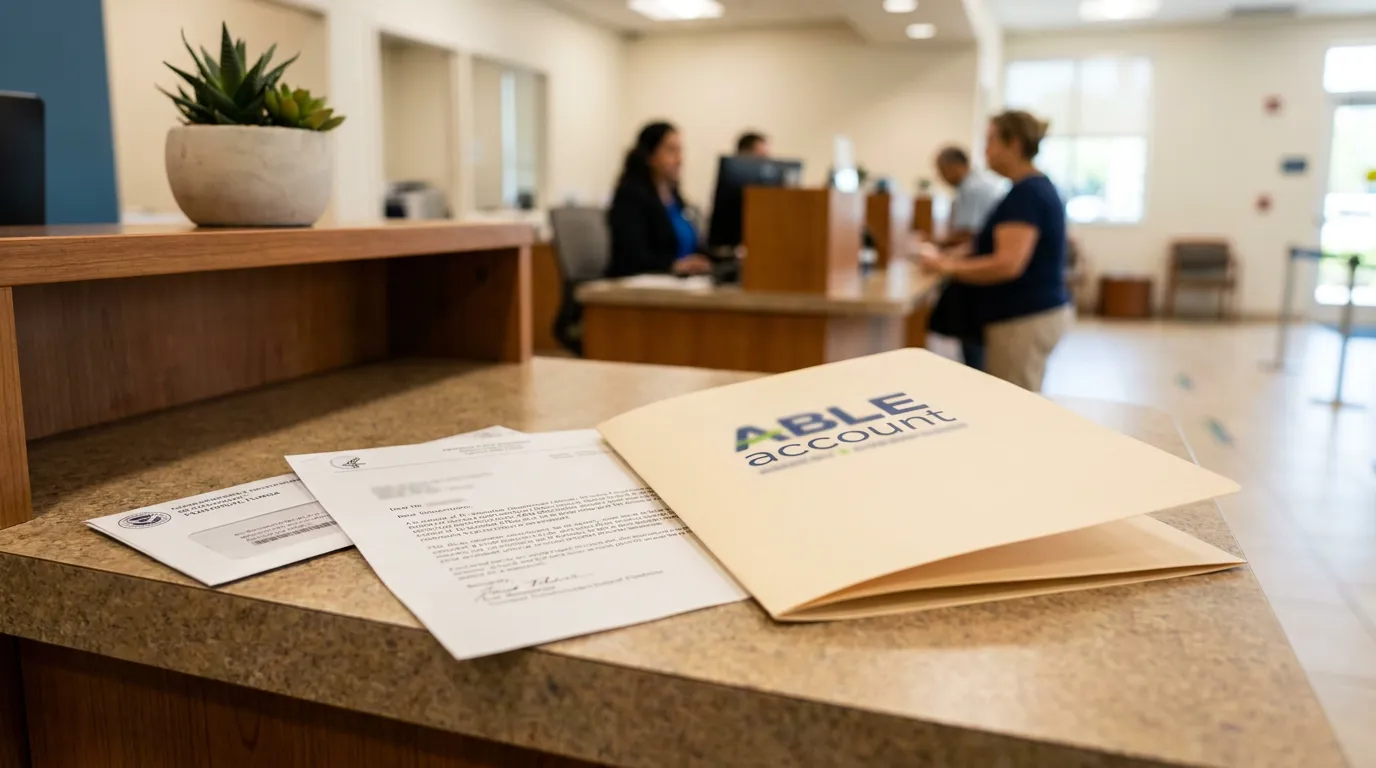
Why a Lump Sum Settlement Social Security Disability Award Needs Protection
Back pay accumulates for reasons largely outside a claimant’s control. If you win on appeal, a process that can take a year or more, Social Security will make good on benefits you would have received had you been approved earlier. That delay means approved applicants often receive a substantial retroactive payment.
The size of the payment creates the risk. Past-due payments can go back as far as your original application date if the SSA determines you met its disability definition when you filed. A payment reaching back that far can be significant, and for anyone relying on Supplemental Security Income (SSI) or Medicaid, holding too much in countable resources may affect eligibility. This risk applies to means-tested programs like SSI; SSDI itself has no asset limit.
Federal rules recognize that large past-due payments deserve special handling. The Social Security Administration’s Program Operations Manual System addresses this in POMS SI 02101.020, which covers large past-due SSI payments paid by installments for a living individual. This section addresses paying retroactive SSI benefits in installments rather than a single lump sum, illustrating why sheltering funds can support ongoing resource-limit eligibility.
💡 Pro Tip: Keep documentation showing the source and date of your back payment. Tracing where sheltered funds originated helps if your eligibility is ever reviewed.
What an ABLE Account Actually Is Under Florida Law
An ABLE account is a state-authorized, tax-advantaged savings vehicle for eligible individuals with disabilities. Under Fla. Stat. § 1009.986(1), the Legislature’s intent is to establish a qualified ABLE program to encourage tax-exempt savings to pay for qualified disability expenses of eligible individuals with disabilities. That statutory purpose is the foundation for using an ABLE account to protect a disability lump sum in Plantation.
The program operates through a state-supervised structure. Under Fla. Stat. § 1009.986(10), the Florida Prepaid College Board shall adopt rules to administer this section, with Florida ABLE, Inc. governing operations. Fla. Stat. § 1009.986(1)-(2) requires implementation consistent with federal law and defines an ABLE account as one maintained under the Florida ABLE program, ensuring Florida accounts follow federal ABLE rules relevant to SSDI and SSI eligibility. Companion sections, Fla. Stat. §§ 1009.987 and 1009.988, address public records exemptions and other administrative matters. Review the Florida ABLE program statute for the full framework.
Confirming Eligibility Before You Deposit
Eligibility is a threshold step, not an afterthought. Rule 19B-18.002(1)(f) requires information to determine the basis of a beneficiary’s eligibility for an ABLE Account. Eligibility is tied to disability onset before age 46 under federal ABLE law (raised from age 26 effective January 1, 2026 under the ABLE Age Adjustment Act, part of the SECURE 2.0 Act), and that condition must be met before an SSDI recipient can shelter funds. The individual must also have a disability meeting the Social Security Administration’s definition.
How to Open a Florida ABLE Account
Opening an account follows a defined administrative path. The program is governed by Fla. Admin. Code R. 19B-18.002, "Application for Participation in the Program," with rulemaking authority from Fla. Stat. §§ 1009.971(1), (4) and 1009.986(10). Under Rule 19B-18.002(2), the Participation Agreement, Terms and Conditions, and Application may be requested from the Board at P.O. Box 6448, Tallahassee, Florida 32314-6448. Rule 19B-18.002(1)(d)(7) requires applicants to provide the types of federal and state benefits currently received or applied for, reflecting the tight connection between ABLE accounts and means-tested programs.
The Asset-Protection Advantages Florida Adds
Florida law layers extra protection on top of federal defaults. One meaningful safeguard involves Medicaid recovery. Fla. Stat. § 1009.986 provides that, except as required by federal law, the state Medicaid program may not file a claim for Medicaid recovery of funds in an ABLE account. For someone preserving a lump sum, that protection can be an important reason to choose an ABLE account over an ordinary account. Funds are protected up to program limits, generally the first $100,000 in an ABLE account is excluded from the SSI resource limit. A balance above that can cause SSI cash benefits to be suspended, though Medicaid eligibility generally continues.
Understanding your options side by side clarifies the decision.
| Approach | General Purpose | Common Consideration |
|---|---|---|
| ABLE account | Shelter funds for disability expenses | Eligibility tied to disability onset age |
| Special needs trust in Florida | Hold assets for a beneficiary’s benefit | Often used for larger or complex assets |
| Installment payout of past-due SSI | Spread large retroactive SSI over time | Governed by POMS SI 02101.020 |
A special needs trust in Florida is sometimes discussed alongside ABLE accounts. The two tools serve overlapping but distinct roles, and some families use both. Whether either fits your circumstances is fact-dependent.
Tax Considerations for Your Back Payment
Protecting the funds is one issue; reporting them correctly is another. When a lump sum covers prior years, the tax code offers a way to reduce taxable benefits. Under the IRS lump-sum election method, you refigure the taxable part of all benefits, including the lump-sum payment, for the earlier year using that year’s income, then subtract any previously reported taxable benefits for that year.
The election is made through your tax return. You can select the lump-sum election method by checking the box on line 6c of Form 1040 or 1040-SR if it lowers the taxable portion. Worksheets in Publication 915, Social Security and Equivalent Railroad Retirement Benefits, help calculate the taxable portion. Read more about the lump-sum election method directly from the IRS, though a tax professional can help apply it to your numbers.
💡 Pro Tip: Run the calculation both ways before filing. The lump-sum election only helps if it reduces your taxable benefits.
Practical Steps and Common Pitfalls in Plantation
Planning early prevents costly resource problems later. Because the interaction between benefits and savings is technical, many people in Plantation organize their approach before funds arrive. Consider these steps:
- Confirm ABLE eligibility, including the disability-onset age condition under federal law.
- Gather documentation showing the source and timing of your lump sum settlement social security disability payment.
- Review how a deposit may affect the SSI resource limit in Florida and Medicaid eligibility.
- Ask whether installment payout of past-due SSI or a trust better fits larger amounts.
Choosing the right advisor matters as much as choosing the right account. If your lump sum is connected to a broader injury claim, working with a legal team offers meaningful advantages. Reviewing guidance on what to consider when hiring a lawyer helps you ask the right questions. For injury-related matters intersecting with disability benefits, a trusted team handling personal injury Plantation Florida cases can help coordinate the moving pieces. Back pay protection in Plantation is highly fact-specific, and general information is not a substitute for individualized review.
Frequently Asked Questions
-
Does depositing my SSDI back pay into an ABLE account guarantee my benefits are safe?
No approach is guaranteed. An ABLE account is a recognized tool under Fla. Stat. § 1009.986, but whether it protects your eligibility depends on your specific benefits, the amount involved, and how the account is used.
-
Who is eligible for a Florida ABLE account?
Eligibility is tied to disability onset before age 46 under federal ABLE law (raised from age 26 effective January 1, 2026 under the ABLE Age Adjustment Act). Rule 19B-18.002(1)(f) requires information to determine eligibility, making confirmation a threshold step.
-
Can Medicaid claim the funds in my ABLE account?
Florida adds protection beyond federal defaults. Fla. Stat. § 1009.986 provides that, except as required by federal law, the state Medicaid program may not file a claim for Medicaid recovery of funds in an ABLE account. Federal exceptions may still apply.
-
Will I owe taxes on my lump-sum back payment?
Possibly, but the amount can sometimes be reduced. The IRS lump-sum election method lets you refigure the taxable part of benefits for the earlier year using that year’s income. A tax professional can confirm whether it helps your case.
-
Is an ABLE account the same as a special needs trust?
No. A special needs trust in Florida and an ABLE account are distinct tools that can serve overlapping goals. Some people use both. Which fits your situation is fact-dependent.
Bringing the Pieces Together
Protecting a disability windfall comes down to timing, eligibility, and using the right state-authorized tools. A lump sum settlement social security disability award can be preserved through a Florida ABLE account created under Fla. Stat. § 1009.986 and administered under Fla. Admin. Code R. 19B-18.002, with additional context from POMS SI 02101.020 on large past-due SSI payments. Layered protections, such as Florida’s Medicaid-recovery limit and the IRS lump-sum election, help you keep and use your funds wisely. Because every situation carries its own facts, exceptions, and risks, planning with qualified guidance produces the best results.
You do not have to sort through these overlapping rules alone. Reach out to Chalik & Chalik Injury Lawyers by calling 954-476-1000 or completing the firm’s confidential contact request to discuss how to protect your disability lump sum in Plantation, Florida.


 Chalik & Chalik Injury Lawyers Win $275K Settlement for Amputee Victim
The personal injury attorneys at Chalik & Chalik Injury Lawyers believe that everyone, no matter their circumstances, deserves the opportunity to receive consummate and compassionate legal representation in the wake of a personal emergency. We demonstrated this dedication while representing a 66-year-old client contending with the loss of a foot after a serious infection. Our...
 Who Must Receive Pre-Suit Notice After a Ft Lauderdale Airport Accident?
Understanding Your Legal Duties After a Fort Lauderdale Airport Injury Key Takeaways: If you are injured at Fort Lauderdale-Hollywood International Airport, the party receiving your pre-suit notice depends on who operates the property and who was negligent. Because Broward County operates the airport, claims against this public entity are governed by Florida’s sovereign immunity statute,...

If you were injured in an accident due to someone else’s negligence in the state of Florida, you may be facing astronomical medical bills, lost wages, and pain and suffering. These obstacles are important in terms of what to consider when you hire a personal injury lawyer. You may feel overwhelmed dealing with medical appointments,...

Chalik & Chalik Injury Lawyers is proud to announce that our legal team won a $150,000 settlement for Sarai Ayemperoumal, who suffered several injuries after receiving improper services at a nail salon in Fort Myers, Florida. Attorney Jason Chalik represented Ayemperoumal until her case was settled this year. Ayemperoumal’s case is an example that poor...

People visit a med spa to feel rejuvenated and revived. If your trip to a local facility ended with an infection, you can hold the spa accountable. Treating an infection can be costly, whether from cuts, burns, or chemical exposure. However, with an insurance claim or lawsuit, you can recover the costs of your medical...

Whether you can sue MSC Cruises for a parasailing injury depends on who was responsible for your parasailing accident. If you were injured while parasailing due to faulty equipment, lack of proper instructions, or any other factor that MSC Cruises was responsible for, then you have every right to sue them. A Fort Lauderdale cruise...

You can generally sue Norwegian Cruises if you were injured while parasailing and the cruise line was liable for your injuries. If Norwegian Cruises is not liable for your injuries, you would need to take legal action against another liable party for your compensation. A Florida Norwegian Cruise Line accident lawyer can help you determine...

For many people, the highlight of taking a cruise is not spending time aboard the boat but exploring the world around them. Cruise ship companies offer a range of excursions to make these adventures happen. Excursions can involve watersports, scuba diving, or exploring seaside towns on nearby islands. While these excursions are fun for most...