
Understanding Liability When a Fall Happens on the Lido Deck
Key Takeaways:Responsibility for a lido deck slip and fall near Ft. Lauderdale typically falls on the party that controlled the space, often the cruise line, though management companies or contractors may share fault. Federal maritime law governs falls aboard vessels on navigable waters, requiring reasonable care under the circumstances. For land-based falls, Florida premises liability law treats paying passengers as invitees owed a duty to inspect, repair, and warn of dangers. Recovery requires proving the responsible party knew or should have known about the danger. Government-controlled property involves sovereign immunity under Fla. Stat. § 768.28, limiting damages and requiring strict pre-suit notice. Deadlines are critical, cruise tickets often enforce a one-year limitation under federal maritime law. Early legal guidance is essential to identify responsible parties and protect your rights.
Determining who is responsible for a slip and fall on a cruise ship’s lido deck depends on who controlled the space and whether that party knew, or should have known, about the hazard. Responsibility typically falls on the cruise line when a wet surface, spilled drink, or poorly maintained walkway causes injury. Premises liability holds parties in control of property accountable for hazardous conditions, based on negligence when a party failed to keep the property reasonably safe.
If you were hurt on a lido deck, speaking with a knowledgeable cruise ship slip and fall attorney Ft. Lauderdale residents trust can help. The team at Chalik & Chalik Injury Lawyers is ready to review your situation. Call 954-476-1000 or reach out through our online case review form.
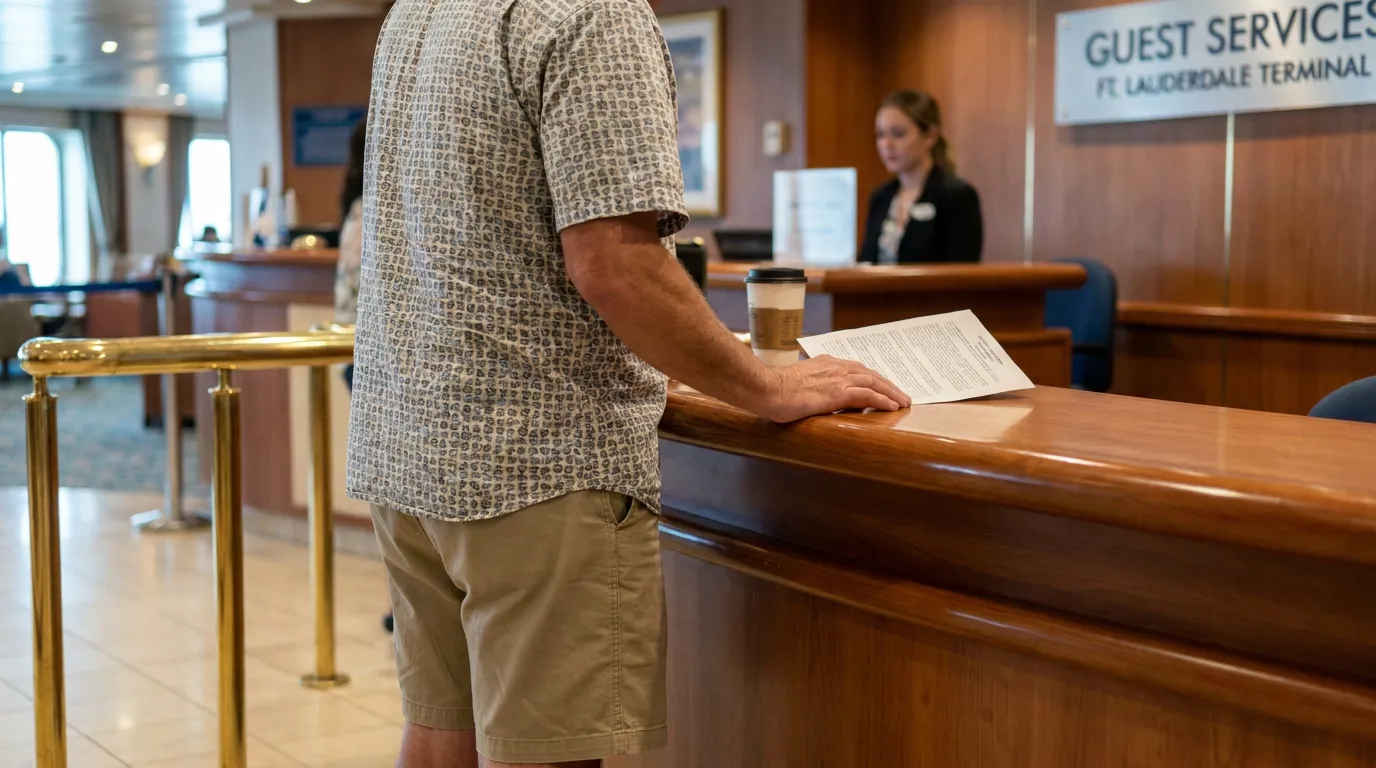
Who Controls the Deck and Why It Matters
The party in legal control of the deck typically bears the duty to keep it reasonably safe. On cruise ships, that is usually the cruise line, though management companies and maintenance contractors can share responsibility. Falls aboard ships on navigable waters are governed by federal maritime law.
Your status as a visitor shapes the level of care owed to you. Under Florida premises law, paying passengers qualify as invitees, entitled to the strongest protection. The owner has a duty to inspect for dangers, make repairs, and warn of hazards. Federal maritime law imposes a single standard of reasonable care under the circumstances, expecting cruise lines to actively look for and correct dangers around pools and wet walkways.
When several entities share control, allocating fault becomes complex. Florida has largely abolished joint and several liability, applying a comparative fault system in negligence cases, making it critical to identify which entities were involved and their share of fault.
💡 Pro Tip: Note the exact deck level, time of day, and nearby signage or crew members when a fall occurs. These details help identify which party controlled the area at the moment of injury.
Proving the Cruise Line Should Have Known
To recover in a slip-and-fall case, you must show the responsible party had notice of the danger. This requirement exists under both federal maritime law and Florida premises law. If a person slips on a transitory foreign substance in a business establishment, they must prove the business had actual or constructive knowledge of the dangerous condition.
Constructive knowledge is often the heart of wet deck claims. Because passengers rarely have direct proof that staff saw a spill, the law allows circumstantial evidence. Under Fla. Stat. § 768.0755(1)(a)-(b), constructive knowledge may be shown when the condition existed long enough that the business should have known, or when it occurred with regularity and was foreseeable. A recurring puddle near a pool ladder may support the second theory.
The statutory notice requirement does not erase the underlying duty to maintain safe conditions. Florida law preserves common-law duty of care owed by entities in possession or control of business premises, which matters in cruise ship negligence Florida claims where maritime law may supply the governing standard.
💡 Pro Tip: Ask whether the cruise line keeps inspection or "wet floor" logs for the pool deck. Regular maintenance records can reveal how long a hazard was present before your fall.
When the Property Belongs to a Government Entity
Some slip-and-fall injuries near Ft. Lauderdale occur on government-owned property, which changes the rules. Port facilities and terminal areas may be publicly controlled, where Florida’s sovereign immunity statute governs.
Under Fla. Stat. § 768.28, the state waives sovereign immunity for liability for torts only to the extent specified in the act. Government may be liable for negligent acts of agents or employees acting within their scope of employment under the same circumstances a private individual would be liable. You can review the sovereign immunity statute for details.
Government claims carry strict notice and recovery limits. Damages are capped at $200,000 per person or $300,000 per incident, with excess payable only by further act of the Legislature. Fla. Stat. § 768.28(6)(a) requires presenting the claim in writing to the appropriate agency within three years after accrual. Claimants generally must wait for a 180-day agency investigation period before filing suit.
These administrative steps are separate from filing a civil lawsuit and are interpreted strictly. Missing pre-suit notice can affect your ability to proceed, making early legal guidance critical.
Deadlines, Defenses, and Practical Hurdles
Filing deadlines can quietly end an otherwise strong case. Different rules apply depending on whom you are suing and where the injury occurred. Florida’s limitations period for ordinary negligence is two years, while government claims carry distinct notice and filing rules.
Cruise passengers face additional challenges. Many tickets impose a one-year limitation for maritime injury claims under 46 U.S.C. § 30526, and courts generally enforce these contractual deadlines. Tolling or discovery exceptions apply only in limited circumstances.
Defendants routinely raise defenses to reduce or defeat responsibility. Common defenses include comparative fault, the open and obvious doctrine, assumption of risk, and statute of limitations. Which applies depends on governing law, as maritime and Florida law treat these differently.
Practical steps to strengthen your claim:
- Seek prompt medical care and keep every record and receipt
- Photograph the hazard, your injuries, and surrounding conditions
- Report the fall to ship personnel and request a written incident report
- Identify witnesses and collect their contact information
- Preserve your cruise ticket and any signage or emails from the cruise line
💡 Pro Tip: Request a copy of your incident report before you disembark. Once you leave the vessel, obtaining internal documentation becomes far more difficult.
How a Cruise Ship Slip and Fall Attorney Ft. Lauderdale Can Help
A lawyer’s role is to gather evidence, identify every responsible party, and navigate applicable deadlines. Because cruise claims blend maritime law, contract terms, and premises principles, the analysis is complex. A cruise passenger injury attorney can evaluate whether the cruise line, a contractor, or a public entity controlled the area where you fell.
Insurance almost always plays a role in claim resolution. Most premises liability claims are paid by insurance policies, typically commercial general liability coverage. Understanding the parties who can be held liable when suing a cruise line helps set realistic expectations.
Florida’s broader liability framework in Chapter 768, Part I, addresses related scenarios. Outcomes depend on specific facts, and no article substitutes for individualized legal advice. Working with a dedicated cruise ship slip and fall attorney Ft. Lauderdale can help you understand your claim’s strengths and limits.
Frequently Asked Questions
-
Who is usually responsible for a lido deck fall on a cruise ship?
Responsibility generally rests with the party that controlled the deck and had a duty to keep it safe, usually the cruise line. Management companies or maintenance contractors may share fault depending on their role.
-
What do I have to prove in a Florida slip-and-fall claim?
You must show the responsible party had actual or constructive knowledge of the hazard and failed to fix it. Constructive knowledge can be proven when a condition existed long enough to be discovered or recurred regularly. Federal maritime law applies a similar notice requirement.
-
How long do I have to file a cruise ship injury claim?
Many cruise tickets impose a one-year deadline under 46 U.S.C. § 30526, which courts generally enforce. Land-based premises claims may allow more time, while government claims require much shorter notice. Acting quickly is essential.
-
What if I fell on government-owned property near Port Everglades?
Fla. Stat. § 768.28 waives sovereign immunity only to a limited extent and caps recoverable damages. It requires written pre-suit notice under § 768.28(6)(a), generally within three years. These administrative requirements are separate from a civil lawsuit and are strictly interpreted.
-
Can my own actions reduce my compensation?
Possibly. Defendants often raise comparative fault, assumption of risk, or the open-and-obvious doctrine. Whether these defenses apply depends on the evidence and governing law.
Taking the Next Step After a Lido Deck Injury
Determining who is responsible for a lido deck slip and fall near Ft. Lauderdale requires examining control of the space, notice of the hazard, and applicable deadlines. Whether the responsible party is a cruise line, contractor, or public entity, Florida and maritime law provide a framework for holding negligent parties accountable while imposing limits and defenses. Early action helps protect your ability to recover.
You do not have to sort through these rules alone. The team at Chalik & Chalik Injury Lawyers is ready to review your cruise ship accidents Ft Lauderdale case. Call 954-476-1000 today or contact us through our confidential case evaluation page to get started.

Your Rights After a Cruise Ship Accident in Miami Waters If you suffered an injury while cruising in Miami waters, you can pursue legal action against the cruise line, but maritime law creates unique challenges and strict deadlines that differ from typical personal injury cases. Passengers boarding from Miami’s ports often don’t realize that once...
 Can a Low CDC Sanitation Score Support a Ft Lauderdale Cruise Illness Claim?
What a Cruise Ship Inspection Report Can Reveal About Your Illness Key Takeaways: A low CDC sanitation score can support a Ft. Lauderdale cruise illness claim, but rarely wins a case alone. Inspection scores and outbreak postings from the neutral CDC Vessel Sanitation Program help establish that a cruise line may have breached its duty...

Missing a cruise injury deadline in Florida can mean losing your right to compensation entirely. Cruise ship accidents fall under maritime (admiralty) law, which operates differently from standard personal injury claims on land. While the normal statute of limitations for admiralty matters is three years, cruise ticket contracts frequently reduce this to one year. If...

Understanding Fatal Cruise Incidents on Florida Waters Key Takeaways: Filing a wrongful death cruise claim in Miami requires understanding which laws apply, since maritime law generally controls fatal incidents on navigable waters. Where the death occurred matters: the Death on the High Seas Act limits recovery to financial losses for deaths beyond three nautical miles...