
How Florida Law Applies to Each Light on a HAWK Crossing
Key Takeaways:Each light on a pedestrian hybrid beacon (HAWK signal) tells drivers something different. A dark beacon is inactive. Flashing yellow means proceed with caution. Steady yellow means get ready to stop. Steady red means stop and stay stopped. Alternating flashing red means stop, then go only once the crosswalk is clear, like at a stop sign. Walkers generally have the right of way during the steady red phase, and during the flashing red phase drivers must still yield to pedestrians in the crosswalk. Florida statutes do not name these beacons, but Fla. Stat. §§ 316.0745 and 316.0755 require traffic control devices to follow the MUTCD standards that the Florida Department of Transportation (FDOT) adopts. Even when the beacon is dark, Fla. Stat. § 316.130(7) generally requires drivers to yield to pedestrians in a crosswalk. Pedestrians have legal duties too, and insurers often argue the walker was partly at fault. Surveillance footage, black box data, and signal records can be key to proving fault. A pedestrian found more than 50% at fault generally cannot recover damages, and filing deadlines can also affect your claim.
A pedestrian hybrid beacon generally gives walkers the right of way during its steady red phase, and drivers must still yield to pedestrians in the crosswalk during the flashing red phase. A dark beacon is inactive. Flashing yellow warns drivers, and steady yellow tells them to prepare to stop. Steady red stops traffic so pedestrians can cross. Alternating flashing red lets drivers go only after a full stop, and only if the crosswalk is clear. Knowing these rules can help Ft. Lauderdale walkers cross more safely, and may help show who was at fault if a driver ignored the signal and hit you.
If a driver ran a HAWK signal and hit you, you may have legal options beyond your personal injury protection (PIP) coverage.Chalik & Chalik Injury Lawyers helps injured pedestrians across Broward County hold negligent drivers accountable. Call 954-476-1000 or contact us now for a free case review.
What Makes a Pedestrian Hybrid Beacon Different
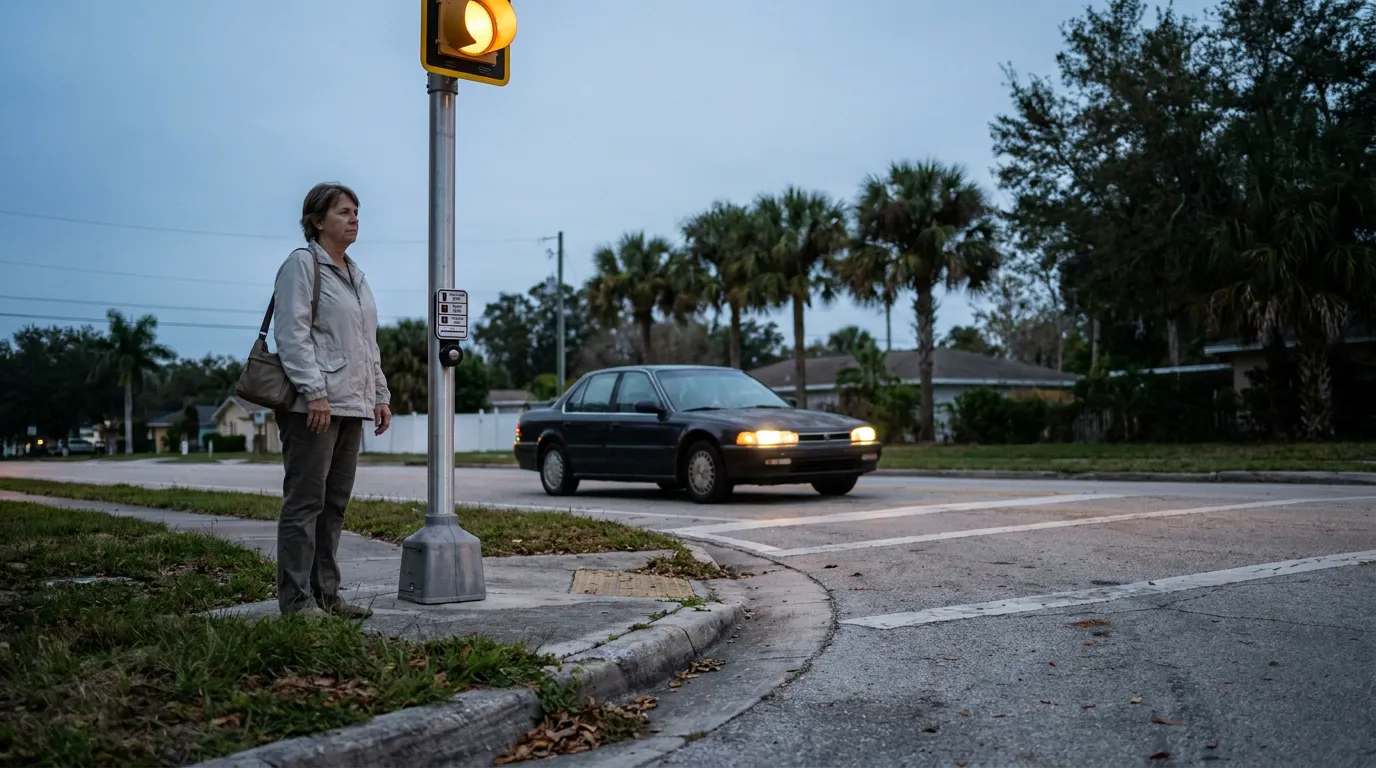
A pedestrian hybrid beacon is a separate type of traffic control device, not a regular traffic light. The federal Manual on Uniform Traffic Control Devices (MUTCD) uses the formal name "Pedestrian Hybrid Beacon." The 2009 edition (Section 4F.01) describes it as a device "used to warn and control traffic at an unsignalized location to assist pedestrians in crossing a street or highway." It is typically used at marked mid-block crosswalks.
Florida statutes do not mention pedestrian hybrid beacons by name. Under Fla. Stat. § 316.0755, pedestrian control signals must meet the requirements of the most recent MUTCD as adopted by FDOT. The beacon’s light sequence therefore comes from MUTCD standards that Florida adopts by reference.
Why the Signal Should Work the Same Across Florida
Florida requires one statewide system of traffic control devices. Fla. Stat. § 316.0745 directs FDOT to adopt a uniform system that matches national standards as closely as practical. A beacon installed by the City of Fort Lauderdale or Broward County should therefore look and work the same as one in Tampa or Jacksonville.
The Beacon Light Sequence, Phase by Phase
The beacon goes through a set order of lights after a pedestrian presses the button. It stays dark until activated, then shows a brief flashing yellow, a steady yellow, and two steady red lenses, which then flash alternately. The table below matches each phase with the supporting Florida statute.
| Beacon Phase | What Drivers Must Do | Related Florida Law |
|---|---|---|
| Dark | Follow normal crosswalk yielding rules | Fla. Stat. § 316.130(7)(c) |
| Flashing yellow | Proceed only with caution | Fla. Stat. § 316.076(1)(b) |
| Steady yellow | Prepare to stop; red is coming | Fla. Stat. § 316.075(1)(b) |
| Steady red | Stop and remain stopped | Fla. Stat. § 316.075(1)(c) |
| Alternating flashing red | Stop, then go only if the crosswalk is clear | Fla. Stat. § 316.076(1)(a) |
Flashing Yellow and Steady Yellow: The Warning Phases
The yellow phases tell drivers to slow down and get ready to stop. Under Fla. Stat. § 316.076(1)(b), drivers facing a flashing yellow may go forward only with caution. Fla. Stat. § 316.075(1)(b) says a steady yellow warns that "a red indication will be exhibited immediately thereafter." For pedestrians facing a steady yellow, there is generally not enough time to cross.
Steady Red: The Pedestrian’s Protected Window
Steady red is the phase when walkers generally have the right of way. Under the MUTCD, the pedestrian signal shows WALK during this phase. Fla. Stat. § 316.075(1)(c)1. requires a driver facing a steady red to stop before the crosswalk and stay stopped. Fla. Stat. § 316.130(7) also requires drivers to stop for a pedestrian on the driver’s half of the road, or one close enough to be in danger. A driver who rolls through a steady red at a HAWK crossing may be breaking a clear statutory duty.
💡 Pro Tip: Wait until you see the WALK symbol, then check that cars have actually stopped before you step off the curb. A stopped driver in one lane does not mean the driver in the next lane has seen you.
Alternating Flashing Red: Stop, Then Proceed Only If Clear
During flashing red, drivers are generally required to treat the beacon like a stop sign. The MUTCD says road users "may proceed after stopping, as at a STOP sign, when the crosswalk is clear." Under Fla. Stat. § 316.076(1)(a), drivers facing a flashing red must stop and then follow stop-sign rules. The pedestrian signal usually shows a flashing DON’T WALK, meaning pedestrians should not start crossing. A pedestrian already in the crosswalk, however, generally keeps the right to finish crossing, and drivers must yield.
Florida Crosswalk Law and Pedestrian Hybrid Beacon Right of Way
Florida’s main crosswalk statute sets out drivers’ duties whether the beacon is active or dark. Fla. Stat. § 316.130(7)(a)-(c) creates three rules:
- At an intersection with a traffic control signal, drivers must stop before entering the crosswalk and remain stopped for a pedestrian with a permitted signal.
- Where signs say so, drivers must stop and stay stopped for pedestrians in the crosswalk.
- Where no traffic signal is in place or operating and no signage indicates otherwise, drivers must yield to a pedestrian in the crosswalk and slow down or stop if needed.
Turning drivers generally do not get an exception either. Under Fla. Stat. § 316.075(1)(c)1., a driver allowed to turn on red must first stop and then yield to pedestrians lawfully in the crosswalk. You can read the full text of the Florida traffic control signal legend, which is the controlling authority on what signals mean.
Duties Pedestrians Should Know
Pedestrians have legal duties too, and insurers often look closely at them. Under Fla. Stat. § 316.130, pedestrians must obey traffic control devices and must not suddenly step into the path of a vehicle too close to stop. They must yield to vehicles when crossing outside a crosswalk. Insurers may claim the pedestrian was partly at fault to reduce what they pay, so following the beacon’s phases closely may help protect your claim.
When a Driver Ignores the Beacon: Proving Fault
A driver who runs a steady red or flashing red at a HAWK crossing may have breached the duty of care owed to pedestrians. Proving it usually depends on evidence that can disappear quickly. To learn more about how fault is decided, see our guide on crosswalk driver liability. Important evidence often includes:
- Surveillance or dashcam footage from nearby businesses
- The vehicle’s event data recorder (the "black box")
- Cell phone records showing whether the driver was distracted
- Signal timing and activation logs from the city or county
Comparative fault rules and filing deadlines can affect what you recover. Florida’s negligence rules are found in the Florida civil remedies statutes. Under Fla. Stat. § 768.81(6), an injured person found more than 50% at fault generally cannot recover damages. Anyone found 50% or less at fault has their recovery reduced by their share of fault. For most negligence claims that arose on or after March 24, 2023, the statute of limitations is generally two years. Claims against a government agency have separate notice requirements under Fla. Stat. § 768.28(6). An experienced pedestrian accident lawyer can review which deadlines apply to your case.
💡 Pro Tip: Write down the exact crossing location and the time you pressed the button. If the agency keeps signal records, they may confirm the beacon was in its red phase when you were hit.
Frequently Asked Questions
-
Is a HAWK signal the same as a pedestrian hybrid beacon?
Yes. "HAWK" is the common nickname. "Pedestrian Hybrid Beacon" is the official MUTCD name. Florida adopts MUTCD standards through FDOT under Fla. Stat. §§ 316.0745 and 316.0755.
-
Can drivers go during the flashing red phase?
Drivers generally may go only after coming to a full stop and only if the crosswalk is clear, as at a stop sign, under Fla. Stat. § 316.076(1)(a). They must still yield to any pedestrian in the crosswalk.
-
What should I do if the beacon is dark?
A dark beacon is not in use. Under Fla. Stat. § 316.130(7)(c), drivers generally still have to yield to pedestrians in the crosswalk. Still make sure approaching traffic can stop safely before you cross.
-
Does PIP cover all my pedestrian accident injuries?
No. PIP generally pays up to $10,000, covering a portion of medical bills and lost wages, and it does not pay for pain and suffering. You may be able to bring a claim against the negligent driver for losses beyond PIP, though recovering pain and suffering generally requires meeting Florida’s serious-injury threshold.
-
Can the driver’s insurer blame me?
Yes, insurers often argue that the pedestrian was partly at fault. Evidence of the beacon’s phase when you were hit can be critical to answering that argument.
Protecting Your Rights at Every Phase
Each phase of a pedestrian hybrid beacon creates specific duties under Florida law and MUTCD standards. When a driver ignores these rules, the injured walker may have grounds to seek compensation for medical bills, lost wages, and pain and suffering, depending on the facts, comparative fault, and Florida’s no-fault injury threshold.
If you were hurt at a Ft. Lauderdale crosswalk, timely action can help preserve key evidence. Reach out to Chalik & Chalik Injury Lawyers by calling 954-476-1000, or schedule your free consultation today.
Disclaimer: This content is for informational purposes only and is not legal advice. Every case is unique, and results may vary. Consult an attorney about your specific circumstances.
 What Is an Unmarked Crosswalk Under Florida Law?
The Invisible Crosswalks Most Florida Drivers Forget Exist Key Takeaways: Under Fla. Stat. §316.003(17), an unmarked crosswalk is generally the part of a roadway at an intersection formed by connecting the lateral lines of sidewalks on opposite sides of the street, paint, signage, or a signal is not necessarily required. Drivers generally owe the same...
 Is a Driver Liable for Hitting a Pedestrian in a Crosswalk?
Understanding Who Pays When a Crosswalk Crash Happens in Ft. Lauderdale Key Takeaways: A driver who strikes a pedestrian lawfully using a crosswalk in Ft. Lauderdale is often liable, but fault depends on the specific crash facts. Florida law requires motorists to yield at marked and unmarked crosswalks, stop at signalized intersections, refrain from passing...

It seems like every time you turn on the news, there is another story of someone getting hit by a car in South Florida. Just this week, a couple in their eighties were struck and killed by a car in Fort Myers, and two University of Miami students were struck and killed while crossing the...

With over 60,000 serious injuries and nearly 4,000 deaths each year, pedestrian accidents are occurring at an alarming rate. What’s even more shocking is the rate at which these accidents are affecting younger populations. In order to understand the causes of pedestrian accidents and how to prevent them, the National Highway Traffic Safety Administration (NHTSA)...

Not everyone gets around Fort Lauderdale by car, and even drivers become pedestrians when they use sidewalks and crosswalks to get to their destinations, such as the park, a beach, or a downtown festival, after parking somewhere nearby. Unfortunately, year after year, Fort Lauderdale consistently ranks among the deadliest cities in Florida and the United...

There are several ways pedestrians can seek compensation for their injuries if hit by a car in Florida. If you were the victim of this type of accident, you might be able to file a claim with your own no-fault insurance, with the at-fault driver’s no-fault insurance, or with the motorist’s auto liability policy. If...

The person or entity whose negligence led to the pedestrian accident is liable. However, determining the at-fault party requires a thorough investigation and an understanding of what constitutes negligence and how to identify it. Proving these elements and filing your potential lawsuit on time are critical to recovering damages. You do not have to define...