
Understanding Who Pays When a Crosswalk Crash Happens in Ft. Lauderdale
Key Takeaways:A driver who strikes a pedestrian lawfully using a crosswalk in Ft. Lauderdale is often liable, but fault depends on the specific crash facts. Florida law requires motorists to yield at marked and unmarked crosswalks, stop at signalized intersections, refrain from passing vehicles stopped at crosswalks, and exercise due care to avoid all pedestrians. Crosswalks exist at intersections even without painted lines, strengthening claims many walkers assume they don’t have. However, pedestrians must yield when crossing mid-block and not dart suddenly into traffic. Florida’s modified comparative negligence system reduces recovery when a victim shares fault and bars recovery entirely if the victim is more than 50% at fault. Building a strong claim depends on preserving time-sensitive evidence like video and signal timing and establishing the driver’s statutory breach. Acting quickly and consulting a knowledgeable attorney helps protect your rights and pursue full compensation beyond limited PIP benefits.
A driver who strikes a pedestrian lawfully using a crosswalk in Ft. Lauderdale is often liable, but liability depends on the specific crash facts and how Florida’s right-of-way rules apply. Florida law places significant duties on motorists to yield, slow down, and watch for people on foot. When a driver breaches those duties and causes injury, that breach forms the foundation of a negligence claim. Still, fault is rarely automatic, and several legal factors can shift or share responsibility.
If you or a loved one was hurt while crossing the street, the team at Chalik & Chalik Injury Lawyers is ready to help you understand your options. You can reach our office at 954-476-1000 or use our secure online contact form to request a confidential case review today.
What Florida Law Requires of Drivers Approaching a Crosswalk
Florida imposes clear duties on motorists who encounter pedestrians, and those duties are the starting point for any liability analysis. At crosswalks without a traffic signal, drivers must yield the right-of-way, slowing down or stopping if necessary, to a pedestrian crossing within a crosswalk, as set out in Fla. Stat. § 316.130(7)(c). At signalized intersections, drivers must stop before entering the crosswalk and remain stopped to allow a pedestrian with a permitted signal to cross under Fla. Stat. § 316.130(7)(a).
Beyond these specific yield rules, every motorist carries a broad obligation to act carefully. Under Fla. Stat. § 316.130(15), every driver must exercise due care to avoid colliding with any pedestrian or person propelling a human-powered vehicle and give warning when necessary. This due care standard can apply even when a pedestrian does not technically have right-of-way, an important point many injured walkers don’t realize. You can review the state’s official guidance through the Florida Highway Safety and Motor Vehicles’ pedestrian safety resources.
💡 Pro Tip: After a crosswalk crash, write down whether the traffic signal was green, red, or flashing for each direction. That single detail often determines which statute controls your claim.
The Passing and Overtaking Rule That Causes Many Collisions
One of the most dangerous moments for a pedestrian occurs when a second vehicle illegally passes a car stopped at a crosswalk. Florida directly prohibits this maneuver. Under Fla. Stat. § 316.130(9), drivers approaching from the rear shall not overtake and pass such stopped vehicles. A driver who ignores this rule and strikes someone who stepped out from in front of a stopped car has likely breached a clear statutory duty.
This scenario is so common that safety officials repeatedly warn against it. As guidance reminds motorists, you should never pass vehicles stopped at a crosswalk because people may be crossing that you can’t see. For pedestrians, a driver’s claim that "the person came out of nowhere" frequently points to the driver’s own negligence.
💡 Pro Tip: If a vehicle stopped to let you cross before another car hit you, identify the stopped driver as a witness. Their account can corroborate that you were lawfully in the crosswalk.
Crosswalks Exist Even Where No Paint Appears
Many injured pedestrians assume they had no protection because there were no painted lines, but Florida recognizes unmarked crosswalks at intersections. All sides of the intersection are crosswalks, marked or not, regardless of whether the sidewalk is paved, unless a government authority has explicitly closed the crossing with signage. This principle matters because a vehicle approaching a pedestrian legally crossing at an intersection must yield or stop.
Understanding these crosswalk rules helps explain why so many cases turn on location. The risk of being struck while on foot is significant across the region, and the same hazards appear in nearby communities such as in this overview of pedestrian accidents in Plantation. Knowing whether you were inside a marked or unmarked crosswalk can be the difference between a strong claim and a contested one.
How Pedestrian Conduct Can Affect Liability
Liability is not always one-sided, and Florida law also assigns responsibilities to pedestrians. When crossing away from an intersection, every pedestrian must yield right-of-way to all vehicles under Fla. Stat. § 316.130(10). Similarly, if crossing mid-block cannot be avoided, pedestrians must yield to vehicles on the roadway.
Pedestrians also cannot dart into traffic without warning. Fla. Stat. § 316.130(8) provides that no pedestrian shall suddenly leave a curb or other place of safety and walk or run into the path of a vehicle which is so close that it is impossible for the driver to yield. Since March 24, 2023, Florida has followed a modified comparative negligence framework, so a pedestrian who shares some fault may recover compensation reduced by their percentage of fault, but a pedestrian found more than 50% at fault is barred from recovering any damages. You can read the full text of these provisions in the codified version of Florida Statute Section 316.130.
| Crossing Scenario | Who Generally Must Yield |
|---|---|
| Marked crosswalk, no signal | Driver yields to pedestrian |
| Signalized intersection, walk signal | Driver stops and remains stopped |
| Unmarked crosswalk at intersection | Driver yields to pedestrian |
| Mid-block, outside any crosswalk | Pedestrian yields to vehicles |
💡 Pro Tip: Sharing some fault does not necessarily end your claim, as long as your share of fault does not exceed 50%. Speak with a qualified attorney before accepting a driver’s insurer’s argument that you were entirely to blame.
Mapping the Most Dangerous Intersections Broward County Drivers Should Know
Location data helps explain why certain crossings produce more crashes than others. Identifying the most dangerous intersections Broward County residents navigate daily can help walkers stay alert at the highest-risk crossings.
Urban density is a major factor in pedestrian risk, which is directly relevant to a city like Ft. Lauderdale. In 2024, more pedestrian fatalities occurred in urban areas (84%) than in rural areas (16%). Awareness of the most dangerous intersections Broward County offers can support both safer crossing habits and stronger injury claims.
When evaluating risk and protecting your rights, keep these points in mind:
- Hit-and-run drivers are a recurring threat, since 1 out of every 4 pedestrians killed in traffic crashes in 2024 (24%) was struck by a hit-and-run driver.
- Motorists who fail to yield face real penalties: a minimum citation of $164 and three points on their driver license.
- Time-sensitive evidence such as surveillance video and signal timing can disappear quickly.
💡 Pro Tip: Photograph the intersection layout, signal heads, and any crosswalk markings the same day if possible. Conditions and signage can change before a claim is filed.
Building a Crosswalk Injury Claim the Right Way
A strong pedestrian injury case is built on preserved evidence and a clear theory of driver negligence. Florida’s Personal Injury Protection coverage may provide initial medical and wage benefits, but PIP limits are often inadequate for serious injuries, and pursuing the at-fault driver may be necessary for full recovery. Establishing the driver’s breach, whether a failure to yield, an illegal pass, or a lack of due care, is central to that effort.
Working with a knowledgeable advocate can make a meaningful difference in how a claim is developed. Our team is recognized for handling these matters with partner-level attention, and you can learn more about how a dedicated pedestrian accident lawyer Broward approaches investigation, evidence preservation, and negotiation.
Frequently Asked Questions
1. Is the driver automatically at fault if I was in a crosswalk?
Not automatically, though the driver is frequently liable. Florida requires drivers to yield at crosswalks, but factors like signal status, sudden entry into traffic, and comparative negligence can affect the outcome.
2. Can I still recover compensation if I was partly at fault?
Possibly, under Florida’s modified comparative negligence system. A pedestrian who shares fault may recover damages reduced by their share of fault, but a pedestrian found more than 50% at fault is barred from recovering anything; because insurers often overstate a victim’s share, independent review is wise.
3. What if the driver fled the scene?
Hit-and-run claims are still pursuable. Roughly one in four pedestrian deaths involves a fleeing driver, and uninsured motorist coverage or other sources may apply depending on your policy.
4. Does an unmarked crossing count as a crosswalk?
Often, yes. At intersections, all sides are generally treated as crosswalks whether painted or not, unless a government authority has formally closed the crossing.
5. How quickly should I act after a crosswalk crash?
As soon as reasonably possible. Evidence like video and signal data can vanish, and Florida’s civil filing deadlines apply, so prompt action helps protect your rights.
Protecting Your Rights After a Crosswalk Collision
A driver who hits a pedestrian in a crosswalk is often liable, but the strength of your claim depends on the statutes that apply, the evidence you preserve, and how Florida’s modified comparative negligence rules treat each party’s conduct. From yield duties and the no-passing rule to the recognition of unmarked crosswalks, the law offers meaningful protections to injured walkers. Understanding those protections is the first step toward holding a negligent driver accountable.
If you were injured while crossing the street, do not wait to get answers. Contact Chalik & Chalik Injury Lawyers by calling 954-476-1000 or reaching out through our online case review request so we can discuss how to protect your rights and pursue the compensation you may be owed.

The Orange County Board of Commissioners has approved a $5 million plan to improve pedestrian and bike safety on the major roads serving the University of Central Florida (UCF) campus. The plan includes the building and improving of mid-block crosswalks, sidewalks and bike paths in order to make their use safer and more appealing to...

With over 60,000 serious injuries and nearly 4,000 deaths each year, pedestrian accidents are occurring at an alarming rate. What’s even more shocking is the rate at which these accidents are affecting younger populations. In order to understand the causes of pedestrian accidents and how to prevent them, the National Highway Traffic Safety Administration (NHTSA)...

It seems like every time you turn on the news, there is another story of someone getting hit by a car in South Florida. Just this week, a couple in their eighties were struck and killed by a car in Fort Myers, and two University of Miami students were struck and killed while crossing the...
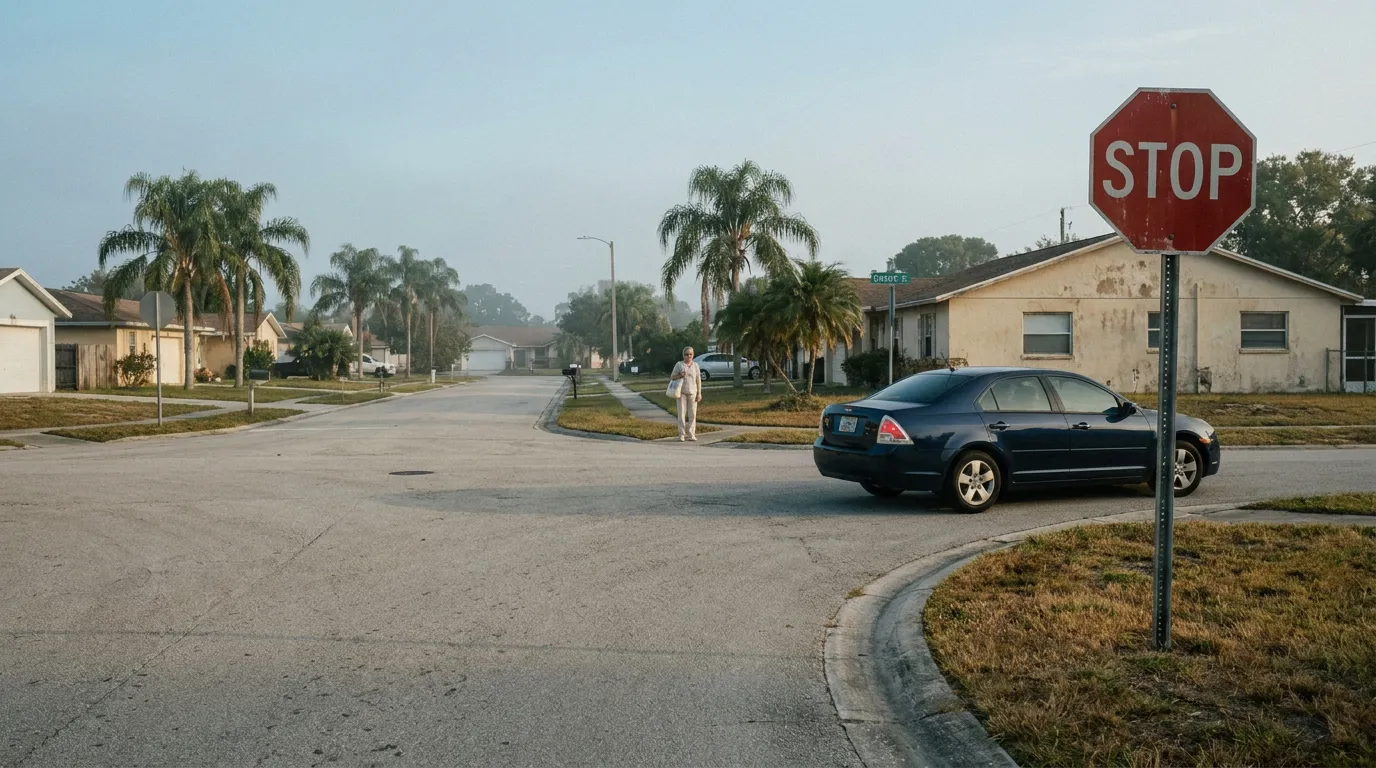 What Is an Unmarked Crosswalk Under Florida Law?
The Invisible Crosswalks Most Florida Drivers Forget Exist Key Takeaways: Under Fla. Stat. §316.003(17), an unmarked crosswalk is generally the part of a roadway at an intersection formed by connecting the lateral lines of sidewalks on opposite sides of the street, paint, signage, or a signal is not necessarily required. Drivers generally owe the same...

Not everyone gets around Fort Lauderdale by car, and even drivers become pedestrians when they use sidewalks and crosswalks to get to their destinations, such as the park, a beach, or a downtown festival, after parking somewhere nearby. Unfortunately, year after year, Fort Lauderdale consistently ranks among the deadliest cities in Florida and the United...

There are several ways pedestrians can seek compensation for their injuries if hit by a car in Florida. If you were the victim of this type of accident, you might be able to file a claim with your own no-fault insurance, with the at-fault driver’s no-fault insurance, or with the motorist’s auto liability policy. If...

The person or entity whose negligence led to the pedestrian accident is liable. However, determining the at-fault party requires a thorough investigation and an understanding of what constitutes negligence and how to identify it. Proving these elements and filing your potential lawsuit on time are critical to recovering damages. You do not have to define...