
What Ft. Lauderdale Restaurant Diners Should Know About Their Legal Protections After a Fall
Key Takeaways:Florida law classifies restaurant diners as "business invitees," owed the highest duty of care under premises liability law. Restaurants must inspect their premises, fix dangerous conditions, and warn patrons of known hazards. To prove a slip and fall, you must demonstrate the business had actual or constructive knowledge of the hazard under Florida Statute § 768.0755. Florida’s modified comparative fault system under § 768.81, as amended by HB 837, reduces your recovery if you share responsibility and bars recovery entirely if you are more than 50 percent at fault. Preserving evidence quickly is critical to building a strong claim.
If you have slipped on a wet floor, tripped over a loose mat, or fallen because of a spill in a Ft. Lauderdale restaurant, you are not alone. Dining injuries happen frequently, and Florida law provides meaningful protections for injured patrons. Because diners enter a restaurant at the business’s invitation for commercial purposes, Florida courts treat them as "business invitees," carrying the greatest safety obligation.
If a dining injury in Ft. Lauderdale has left you with medical bills and lost wages, Chalik & Chalik Injury Lawyers can help you understand your rights. Call 954-476-1000 for a case evaluation, or reach out to our team online to get started.
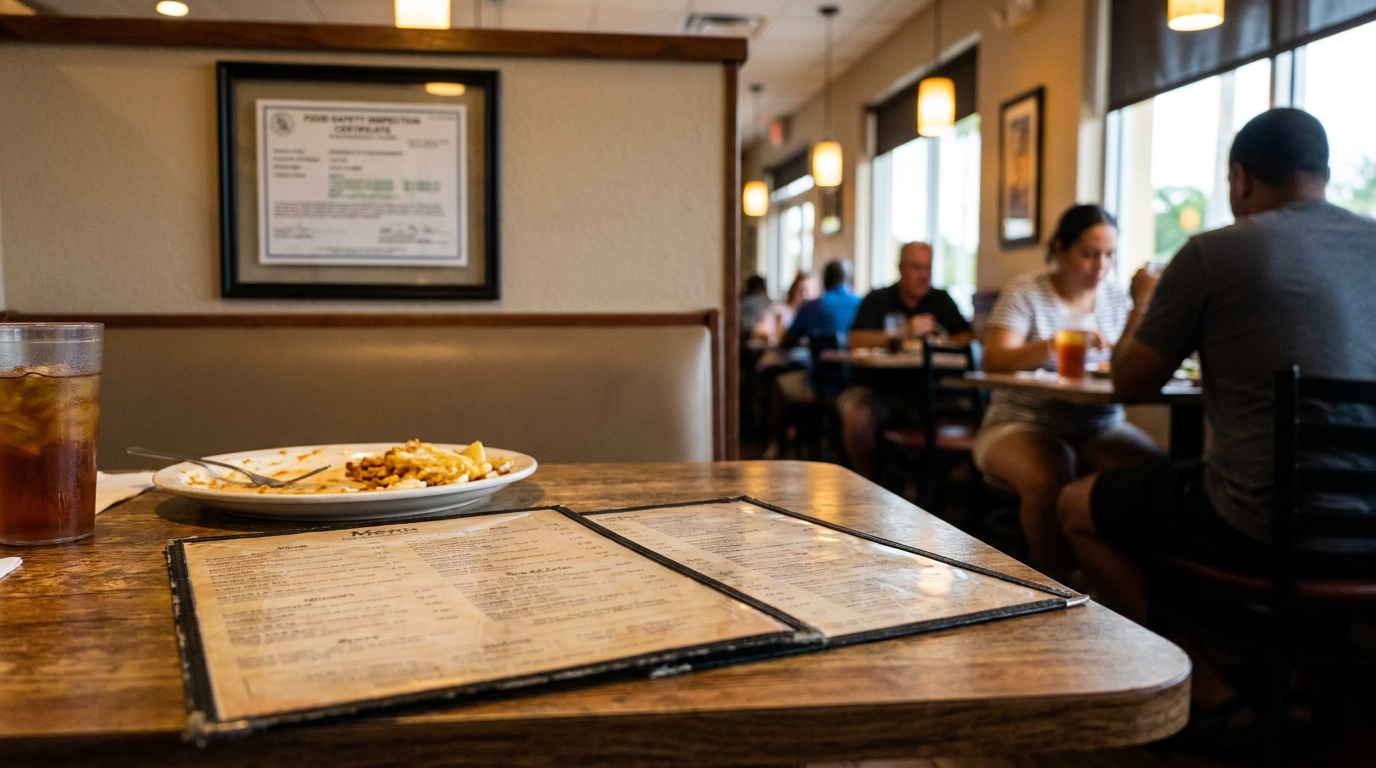
How Florida Law Classifies Restaurant Patrons as Invitees
Florida premises liability law divides visitors into three categories: invitees, licensees, and trespassers, each owed a different level of care. A business invitee enters property for a purpose connected with the property owner’s business dealings. When you walk into a Ft. Lauderdale restaurant to dine, you are there at the restaurant’s invitation and for commercial purposes, placing you squarely in the invitee category.
Under Florida Statute § 768.075, a person who enters real property shall not be elevated to that of an invitee unless the property owner has issued an express invitation to enter the property or has manifested a clear intent to hold the property open to use by persons pursuing purposes such as those pursued by the person whose status is at issue. This provision specifically addresses when a trespasser’s status may be elevated to that of an invitee, rather than serving as a general definition of invitee status. Restaurants generally satisfy invitee requirements by opening their doors to paying customers. This distinction matters because invitees are owed the highest degree of care. Note that an invitee who ventures beyond the scope of invitation, such as entering an employees-only area, may lose invitee status and be reclassified as a licensee.
What the Invitee Classification Means for Your Claim
Being classified as an invitee triggers specific duties the restaurant must fulfill. The property owner must maintain the premises in a reasonably safe condition and correct or warn of dangers the owner knew or should have known about, which the patron did not or should not have known about through reasonable care.
💡 Pro Tip: If injured in a restaurant, document your reason for being there. Confirming you were a paying customer helps establish your invitee status, foundational to a premises liability restaurant Ft. Lauderdale claim.
The Duty of Care Restaurants Owe to Diners in Florida
Restaurant owners in Ft. Lauderdale are not insurers of safety, but they carry significant legal responsibilities. As the Florida court explained in Fla. Dep’t of Nat. Res. v. Garcia, a property owner is not subject to strict liability for injuries from dangerous property conditions. Instead, the duty is one of reasonable care, requiring restaurants to take active, ongoing steps to keep premises safe.
Property owners have a continuing duty to inspect and repair dangerous conditions or post warnings. A Ft. Lauderdale restaurant that ignores a recurring puddle, neglects a broken tile, or fails to place a wet floor sign after mopping may breach this duty. Owners are liable when they know or should know of a dangerous condition and fail to repair or warn, resulting in injury.
Reasonable Care vs. Absolute Protection
Understanding the difference between reasonable care and strict liability is important for setting realistic expectations. A restaurant is not automatically liable every time someone falls. The injured diner must show the restaurant failed to meet its duty of care by proving the restaurant knew about, or should have discovered, the hazardous condition and did nothing to address it within a reasonable timeframe.
| Element | What It Means for Diners |
|---|---|
| Duty | The restaurant owes invitees the highest standard of reasonable care |
| Breach | The restaurant failed to inspect, repair, or warn of a known or discoverable hazard |
| Causation | The breach directly caused the slip and fall in restaurant |
| Damages | The diner suffered actual injuries, medical costs, lost income, or pain and suffering |
💡 Pro Tip: Request a copy of the restaurant’s incident report before you leave. Many restaurants create internal reports after a fall, and preserving your own record helps protect critical evidence.
Proving a Slip and Fall in Restaurant Cases Under Florida’s Spill Statute
Florida Statute § 768.0755(1) establishes a specific burden of proof for slip-and-fall incidents involving transitory foreign substances like spilled drinks, dropped food, or grease. If a person slips on a transitory foreign substance in a business establishment, the injured person must prove that the business had actual or constructive knowledge of the dangerous condition and should have taken action to remedy it.
Actual vs. Constructive Knowledge
Actual knowledge means the restaurant knew the hazard existed, perhaps because an employee created the spill or a customer reported it. Under § 768.0755(1)(a)-(b), constructive knowledge may be established by showing the condition existed long enough that the business should have discovered it through ordinary care, or that the condition occurred with regularity and was therefore foreseeable.
Evidence preservation is essential for a restaurant injury claim in Florida. Surveillance footage can show how long a spill existed before your fall. Maintenance logs reveal whether the restaurant followed a reasonable inspection schedule. Witness statements confirm whether staff walked past the hazard without cleaning it.
💡 Pro Tip: Ask the restaurant manager to preserve any surveillance video immediately after your fall. Many systems overwrite footage within days, and once gone, key evidence disappears.
The Common-Law Duty Survives the Statute
Florida Statute § 768.0755(2) explicitly states that the transitory foreign substance statute does not affect any common-law duty of care owed by a business. This means the Florida premises liability statutes do not replace the traditional heightened duties restaurants owe to invitees. Even outside spill situations, restaurants must still inspect, maintain, and warn about hazards like uneven flooring, poor lighting, broken furniture, or cluttered walkways.
How Comparative Fault Could Affect Your Recovery
Florida applies a modified comparative fault system under § 768.81, as amended by HB 837 (effective March 24, 2023), which means your own actions matter significantly. If a visitor is found negligent in using the property, the recovery award is reduced by the visitor’s percentage of fault. Critically, under § 768.81(6), if you are found more than 50 percent at fault for your own harm, you are barred from recovering any damages. For example, if you were texting while walking and failed to notice a clearly marked wet floor, a court could assign you partial responsibility, and if that share exceeds 50 percent, your claim would be entirely barred.
If your fault is 50 percent or less, your compensation is reduced proportionally but not eliminated. Understanding Florida’s modified comparative fault standard is important because insurance adjusters frequently argue that the injured diner should have seen and avoided the hazard. A Ft. Lauderdale slip and fall attorney can help you counter these arguments with evidence demonstrating the restaurant’s failure to meet its duty of care.
💡 Pro Tip: Avoid giving recorded statements to the restaurant’s insurance company before consulting an attorney. Adjusters may use your words to inflate your percentage of fault.
Steps to Take After a Dining Injury in Ft. Lauderdale
Acting quickly after a slip and fall in a restaurant protects both your health and your legal rights. The following steps can strengthen your position if you decide to pursue a claim:
- Report the incident to the restaurant manager immediately and request a written incident report.
- Photograph the hazard, your injuries, your footwear, and the surrounding area before anything is cleaned.
- Collect names and contact information from witnesses who saw the fall or hazardous condition.
- Seek medical attention promptly, even if injuries seem minor, because some conditions worsen over time.
- Keep all medical records, receipts, and documentation of missed work related to the injury.
Delays in any of these steps can weaken your ability to prove the restaurant’s negligence. Evidence fades, memories change, and surveillance footage gets erased. Learn more about how restaurant hazards lead to fall injuries and what you can do to protect your claim.
💡 Pro Tip: Take note of the shoes you were wearing and keep them in the same condition. Defense attorneys sometimes argue that inappropriate footwear caused the fall, and preserving the shoes allows your legal team to counter that argument.
Frequently Asked Questions
1. Does a restaurant automatically owe me compensation if I slip and fall?
No. Florida does not impose strict liability on property owners. You must prove the restaurant knew or should have known about the dangerous condition and failed to address it.
2. What qualifies as constructive knowledge of a hazard under Florida law?
Under § 768.0755(1)(a)-(b), constructive knowledge can be shown if the hazardous condition existed long enough that the restaurant should have discovered it through ordinary care, or if the condition occurred with regularity and was foreseeable.
3. Can the restaurant reduce my compensation by blaming me for the fall?
Yes. Under Florida’s modified comparative fault system established by § 768.81, as amended by HB 837, your recovery is reduced by your percentage of fault. If you are more than 50 percent at fault, you are barred from recovering damages.
4. How long do I have to file a slip and fall claim in Florida?
Under Florida Statute § 95.11, as amended by HB 837, negligence actions must be filed within two years of the date of injury for incidents occurring on or after March 24, 2023. Consulting an attorney promptly helps ensure you do not miss critical filing deadlines.
Protecting Your Rights After a Restaurant Fall in Ft. Lauderdale
Ft. Lauderdale restaurants owe diners the highest duty of care because patrons qualify as business invitees under Florida law. That duty includes ongoing inspection, maintenance, and warnings about known or discoverable hazards. While restaurants are not automatically liable for every fall, Florida law provides meaningful paths to recovery when a business fails to meet its obligations. The strength of your claim depends on the specific facts, the evidence you preserve, and whether you can demonstrate the restaurant’s actual or constructive knowledge of the hazard.
If you suffered an injury from a fall at a Ft. Lauderdale restaurant, Chalik & Chalik Injury Lawyers is ready to review your case and help you understand your options. Call 954-476-1000 today, or contact us online to schedule a consultation.


After a Painful Fall in Miami: Understanding Your Next Steps After a sudden fall in a Miami business, your first concern is injury severity—but once medical bills arrive, you may wonder if the property owner bears responsibility. Florida law requires businesses to maintain safe premises, yet proving negligence in slip and fall cases involves specific...

Tiger Woods is facing a slip-and-fall case filed by one of his former security guards, John Davis, who is also a retired police officer. While guarding Woods’ mansion in Jupiter Island, Florida on December 23, 2010, Davis slipped and fell on a marble walkway. As a result of the fall, Davis, who resides in Miami,...

How the Open and Obvious Defense Could Affect Your Ft Lauderdale Fall Claim If you slipped and fell on someone else’s property in Ft Lauderdale, you may expect the property owner to take responsibility, but the defense they raise could change everything. One of the most common strategies property owners and insurers use in Florida...

Why Sweep Logs Matter After a Slip and Fall in Restaurant Incidents Key Takeaways: Sweep logs document whether and when a business inspected its premises and are crucial evidence in Ft Lauderdale restaurant fall claims. Under Florida Statute § 768.0755, you must prove the restaurant had actual or constructive knowledge of a dangerous condition. Acting...

Slip and fall accidents don’t sound dangerous, but they can cause serious harm. If you’ve been injured in a fall at a Marriott hotel due to another’s negligence, your priority should be getting the medical assistance you need. Reporting your injury to the hotel owner or manager and identifying the cause of your fall can...
 How Can a Target Slip and Fall Lawyer in Florida Help You?
A slip and fall at Target can happen in seconds, then you’re left with pain, medical bills, missed work, and questions about what comes next. If you were hurt in a Target store, parking area, or entrance in Florida, the most important thing to know is this: these cases are evidence-driven. It’s not enough that...

If you were involved in a wet floor slip and fall accident, you should know that: If another party’s negligence caused your accident, you can seek compensation. You should collect any type of evidence possible to strengthen your case. Slip and fall accidents can cause severe injuries, so you should seek medical care right away....

A slip and fall accident can cause serious injuries that affect your ability to work, move, and enjoy life as you did before. When you suffer harm because a property owner, business manager, or tenant failed to keep their premises safe, you have the right to seek compensation for your losses. Understanding what damages you...