
Understanding Your Rights After a Fall at Miami International Airport
Key Takeaways:An airline can be held liable for a fall inside a Miami airport terminal, but liability depends on who controlled the space and whether they maintained it safely. Because responsibility follows control, airlines leasing gate areas or jet bridges may share fault with the airport authority or contractors. Travelers qualify as invitees owed the highest duty of care, requiring owners to inspect for hazards, repair them promptly, and warn of dangers. To recover, you must prove duty, breach, causation, and damages, supported by photos, incident reports, witness statements, and security footage. Defenses including open-and-obvious danger, lack of notice, and Florida’s comparative negligence rules can reduce or bar recovery. Acting quickly to preserve evidence and confirm statute of limitations deadlines is essential.
Yes, an airline can potentially be held liable for a fall inside a Miami airport terminal, but liability depends on who controlled the space where you were hurt and whether they maintained it safely. When a traveler falls in a leased gate area, jet bridge, or airline-operated space, the airline may share responsibility alongside the airport authority or contractors. Determining the correct defendant is a critical first step.
If you were injured while traveling through Miami, the team at Chalik & Chalik Injury Lawyers is ready to help. Call our office at 954-476-1000 or reach out through our online case review request to discuss what happened. Acting quickly helps preserve crucial evidence.
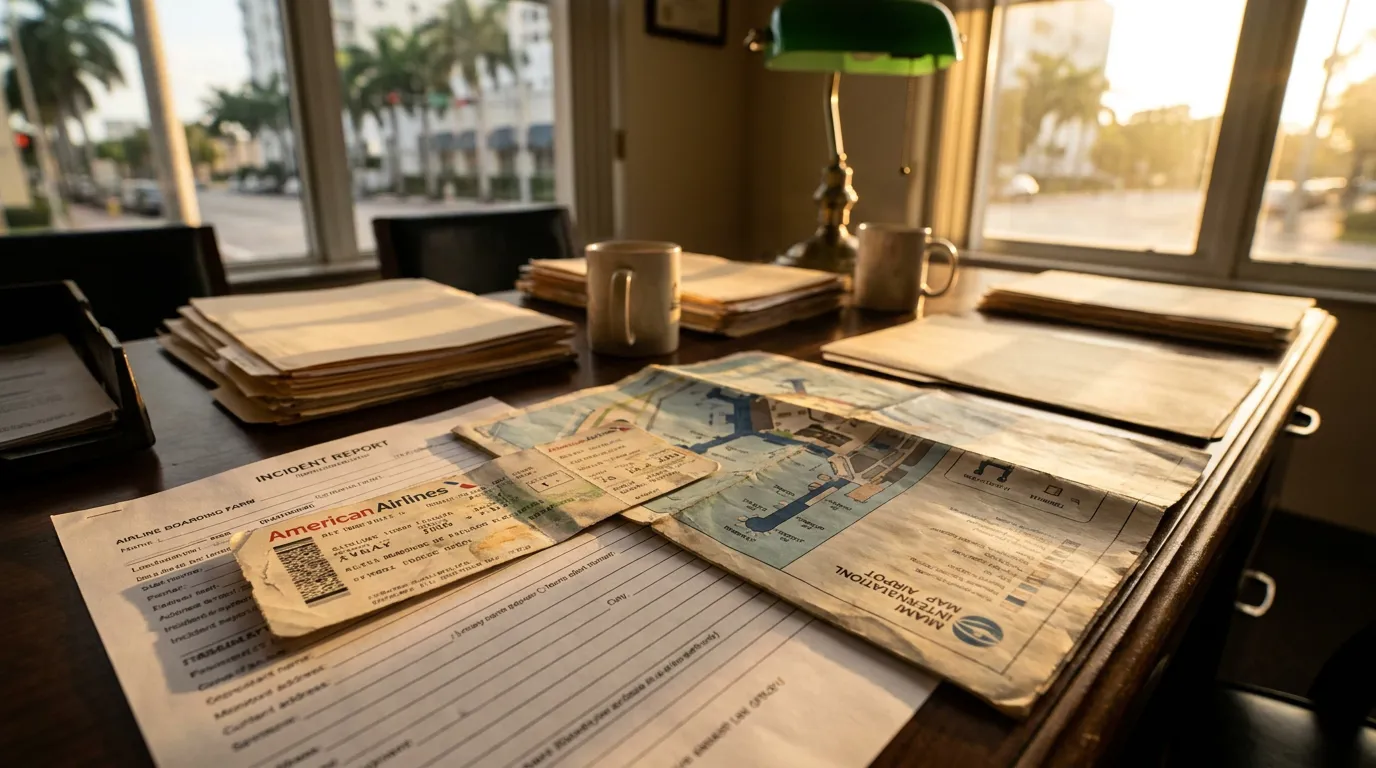
How Premises Liability Applies to Airport Terminals
Premises liability is the legal framework governing injuries on someone else’s property. This area of law holds property owners and occupiers accountable for hazardous conditions that cause harm. A person or company can be held responsible if they failed to keep the property reasonably safe, which is why airlines leasing gate areas can face claims after a fall.
Because these claims sound in negligence, the party controlling the space is the focus. Under Florida’s approach to premises liability principles, responsibility follows control. An airline leasing a terminal portion may owe duties to travelers in that area, while the airport authority may be responsible for common concourses. Identifying which entity controlled your fall location is central to pursuing the right defendant.
💡 Pro Tip: Note the precise location of your fall, including gate number, airline signage, and nearby landmarks. This detail helps establish which entity controlled that specific space.
Your Legal Status as a Traveler Matters
Your legal status on the property determines the level of care owed to you. Airport terminals are commercial spaces open to the public, so travelers generally qualify as invitees, the category owed the highest duty of care. An invitee is someone invited onto property for commercial benefit, and air travelers typically fall into this protected group.
Property owners and operators owe invitees demanding obligations. Under Florida law, these duties include using reasonable care to maintain the property safely, inspecting for hidden dangers they knew or should have known about, and warning of hazards that are not open and obvious. That elevated duty is often the foundation of a strong terminal fall claim.
Common Hazards That Cause Terminal Falls
Many terminal falls trace back to inadequate maintenance of walking surfaces and equipment. Classic examples of dangerous conditions include:
- Structural defects such as decaying stairs, loose handrails, uneven flooring, and cracked walkways
- Uncleaned spills and tracked-in water on tile or polished floors
- Fallen merchandise or other obstructions in retail and food-court areas
- Faulty equipment like malfunctioning escalators, elevators, or automatic doors
These conditions can support an inadequate-maintenance theory. When a hazard results from neglected upkeep, the injured traveler may point to the responsible party’s failure to inspect and repair. You can read more about how courts evaluate maintenance-related claims in this overview of inadequate maintenance cases. Documenting the condition strengthens the claim.
💡 Pro Tip: If safe to do so, photograph the hazard immediately after your fall, before airport staff clean or repair it. Time-stamped images can become powerful evidence.
The Four Elements You Must Prove
To win a terminal fall case, you must satisfy standard negligence elements. This requires establishing four elements: duty (the defendant owed you a legal duty of care), breach of that duty, causation, and damages. In Florida slip-and-fall cases involving a transitory foreign substance, you must also prove the establishment had actual or constructive knowledge of the dangerous condition under Florida Statute §768.0755.
Each element carries evidentiary demands. Establishing breach often requires showing the responsible party knew or should have known about the hazard and failed to act. Causation links that breach to your injury, and damages reflect your medical costs, lost income, and other losses. Expert testimony may be needed to explain complex conditions like escalator malfunctions.
Why You May Need an Airport Slip and Fall Attorney Miami Travelers Trust
Airport fall claims are more complicated than typical slip-and-fall cases due to multiple parties and control layers. A single terminal may involve the airport authority, airlines, cleaning contractors, and equipment maintenance vendors. Florida premises liability law directs responsibility at the owner, lessor, operator, or manager controlling the commercial property. Sorting out which entity controlled your fall location requires early investigation, and claims against public airport authorities may involve additional sovereign immunity rules and notice requirements.
Preserving evidence quickly is crucial. Security footage, incident reports, and witness statements can disappear within days. Review these steps to take after an airport injury to understand how to protect your claim. A knowledgeable Miami airport injury attorney can send preservation requests and gather documentation before it is lost.
💡 Pro Tip: Request a copy of the incident report before leaving the airport, and get names and contact information of any witnesses who saw you fall.
Defenses Airlines and Operators Commonly Raise
Defendants often argue the hazard was open and obvious, they lacked notice, or you were partly at fault. An open-and-obvious argument claims the danger was so apparent you should have avoided it, while a lack-of-notice defense asserts the operator had no reasonable opportunity to discover and fix the hazard.
Florida’s comparative negligence rules can significantly affect your recovery. Under modified comparative negligence, your compensation is reduced by your percentage of fault, and you are barred from recovery entirely if found more than 50 percent at fault. Following changes enacted in HB 837 in 2023, Florida shifted from pure comparative negligence to a modified 50 percent bar system under Fla. Stat. § 768.81, barring recovery for plaintiffs found more than 50% at fault. Separately, under newly created Fla. Stat. § 768.0701, in negligent security actions where a person lawfully on property was injured by the criminal act of a third party, the trier of fact must consider the fault of all persons who contributed to the injury, but this requirement is limited to that specific category of premises liability claims.
| Common Defense | What the Defendant Claims |
|---|---|
| Open and obvious danger | The hazard was visible and easily avoidable |
| Lack of notice | No reasonable time existed to discover and fix it |
| Comparative fault | Your own actions contributed to the fall |
Florida also defines a separate category of premises liability for criminal acts of third parties under Florida Statute §768.0701. That framework addresses harm caused by criminal conduct, distinct from the ordinary dangerous-condition analysis applying to routine terminal falls.
Deadlines That Can Make or Break Your Claim
Florida sets a statute of limitations for personal injury suits you must meet to preserve your right to sue. For negligence claims that accrue after the March 24, 2023 enactment of HB 837, Florida’s deadline is generally two years, shortened from the prior four-year period. Failing to file within the applicable window will almost certainly prevent you from recovering compensation. Confirm your filing window early.
Courts interpret exceptions narrowly. Tolling and discovery rules may extend a deadline only in limited circumstances. Civil statutes of limitations are also distinct from shorter notice deadlines that may apply when a public airport authority or government entity is involved. Consulting a knowledgeable airport slip and fall attorney Miami lawyer about your timeline can help you avoid losing your right to file.
Frequently Asked Questions
-
Can I sue both the airline and the airport authority?
Potentially, yes. Liability depends on who controlled the space where you fell. In many cases, multiple parties may share responsibility.
-
What if I was partly at fault for my fall?
You may still recover under Florida’s comparative negligence system. Your compensation would be reduced by your percentage of fault, and recovery is barred if you are found more than 50 percent at fault.
-
How long do I have to file a Miami airport accident claim?
Generally two years for negligence claims arising after the 2023 law change. Missing this deadline will almost certainly bar recovery, so confirm your specific deadline early.
-
What evidence helps prove a terminal slip and fall claim?
Photos, incident reports, witness statements, security footage, and medical records are all valuable. Because footage can be overwritten quickly, prompt preservation requests make a meaningful difference.
-
Do I need expert testimony for my case?
Sometimes. Complex hazards like escalator or automatic-door malfunctions may require testimony to explain how the equipment failed and why it caused your injury.
Protecting Your Claim After a Miami Terminal Fall
Airlines and airport operators can be held liable for Miami terminal falls when they fail to keep spaces reasonably safe, but proving it requires the right defendant, solid evidence, and timely filing. Travelers qualify as invitees owed a high duty of care, and Florida’s premises liability principles hold the controlling party accountable for negligence. Defenses like open-and-obvious danger and comparative fault can reduce or bar recovery, and every claim turns on its specific facts.
If you or a loved one was injured in a Miami airport terminal, do not wait to get answers. Contact Chalik & Chalik Injury Lawyers today by calling 954-476-1000 or by submitting your details through our confidential contact form. The sooner you act, the better positioned you are to preserve evidence and pursue the compensation you may deserve.


 Does Florida’s Sovereign Immunity Cap Apply to Fort Lauderdale Airport Injuries?
Understanding Government Liability at Fort Lauderdale-Hollywood International Airport Key Takeaways: Yes, Florida’s sovereign immunity cap applies to injuries at Fort Lauderdale-Hollywood International Airport because Broward County operates the facility. Under section 768.28, Florida Statutes, you can pursue a negligence claim against the county, but recovery is capped at $200,000 per person and $300,000 per incident....

When a Resort Vacation Turns Into a Slip and Fall Nightmare A relaxing getaway to a Ft Lauderdale resort can take a painful turn if you slip, trip, or fall due to a hazardous condition on the property. If you’re dealing with medical bills, lost wages, or lengthy recovery after a resort fall, you may...
 Hidden slip and fall hazards of steps and stairways
Slip and fall accidents on stairs can cause serious injuries. Stairways come with inherent dangers that are usually not present on level surfaces. While sometimes the hazards may be obvious, in other cases they may be harder to detect. Property owners can be liable for stair accidents just like slip and falls in other locations....

Recent research suggests step training and exercises for improving balance may help prevent seniors from slipping and falling. People over the age of 65 are particularly at risk for sustaining serious injuries from such accidents. A Yale University study has found that exercising can help older men significantly reduce their risk of dangerous falls. The...

In a slip and fall accident case, medical records serve as vital evidence to support a compensation claim. Your medical records will document your injuries and treatments, establish a link between the accident and your injuries, and help the insurance company and your lawyer determine how much compensation you deserve to recover. A Fort Lauderdale...

Often, Florida cities and municipalities are held responsible for the upkeep and maintenance of sidewalks and could, therefore, be liable for injuries and losses suffered by a victim in a slip and fall accident on a public sidewalk. If the public sidewalk is owned by a condo or homeowner association, then they would have the...

If you were involved in a wet floor slip and fall accident, you should know that: If another party’s negligence caused your accident, you can seek compensation. You should collect any type of evidence possible to strengthen your case. Slip and fall accidents can cause severe injuries, so you should seek medical care right away....

If you slipped, fell, and got hurt, you might be wondering if you have a valid personal injury claim and the right to pursue fair compensation. In many slip and fall cases, it comes down to whether a property owner knew (or should have known) about a dangerous condition and didn’t fix it in a...