
How Florida Drivers Can Hold Insurers Accountable After a Crash
Key Takeaways:A civil remedy notice is a formal written warning, filed with the Florida Department of Financial Services, that an insurer may have violated Fla. Stat. § 624.155, including by handling a claim in bad faith. You must file it before bringing a statutory bad faith lawsuit. The notice must be filed on the Department’s form and must state the statutory provision allegedly violated, the facts, the people involved, any relevant policy language, and that it is given to perfect the right to pursue the civil remedy. Third-party claimants do not have to cite policy language if the insurer has not provided the policy after a written request. Once the insurer receives the notice from the Department, it has 60 days to pay the damages or correct the violation. If it does, the statutory bad faith action cannot go forward. Filing the notice pauses the deadline for the bad faith action for 60 days, but not the deadline for the injury claim against the at-fault driver. Because the rules are technical and timing matters, careful records and preparation may help strengthen a car accident claim.
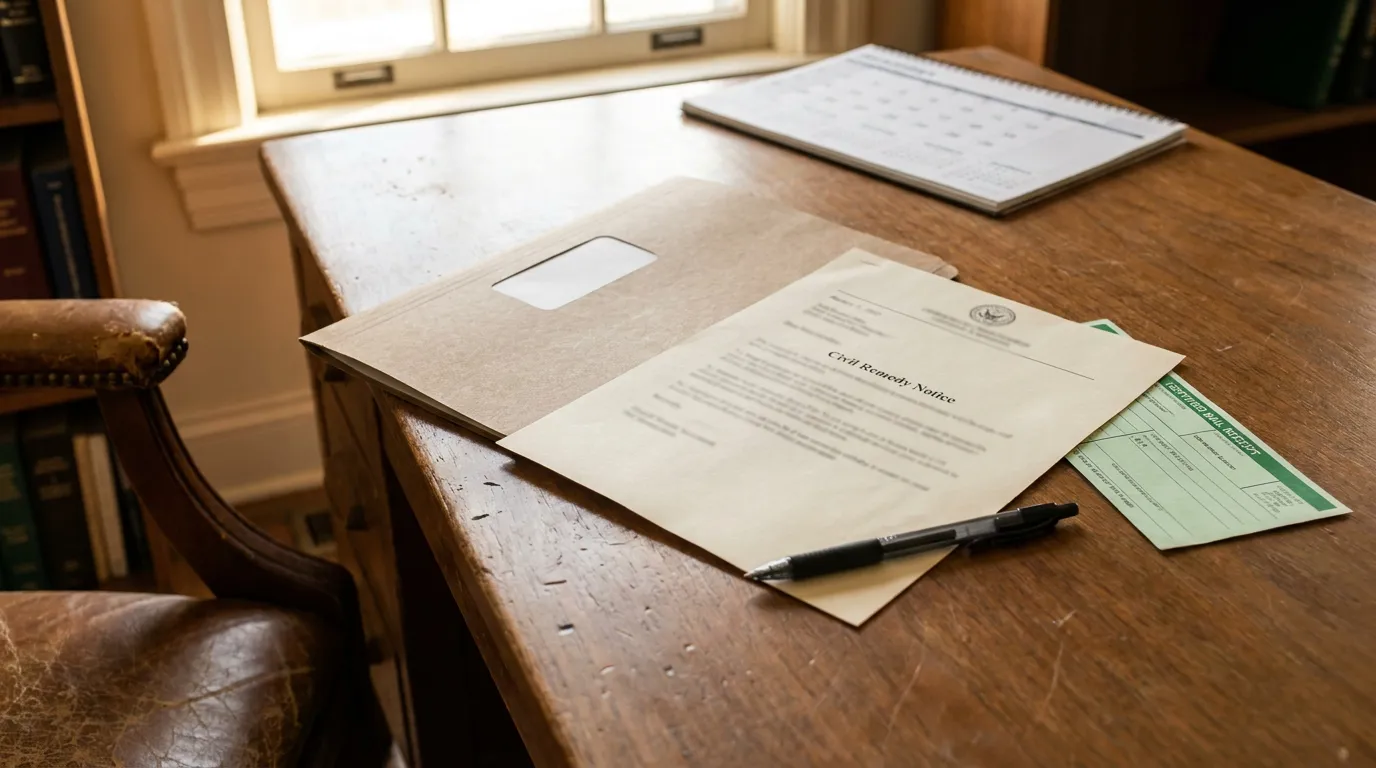
A civil remedy notice is a formal written warning that tells an insurance company, and the State of Florida, that the insurer may have handled a claim in bad faith. In a Florida car accident claim, it is a required first step before you can file a statutory bad faith lawsuit against an auto insurer. Under Fla. Stat. § 624.155(3)(a), the Florida Department of Financial Services and the insurer must get 60 days’ written notice of the violation before that kind of lawsuit can be filed. During those 60 days, the insurer can still fix the problem, often by paying the claim. If you were hurt in a crash in Plantation or elsewhere in Broward County and the insurer seems to be stalling or underpaying, it helps to understand how this notice works.
If an insurance company is delaying or undervaluing your claim after a crash, Chalik & Chalik Injury Lawyers can review your situation and explain your options. Call 954-476-1000 or contact us now to talk about your case.
The Law Behind Insurance Bad Faith in Florida
Florida Statute § 624.155 lets a person sue an insurer for certain unfair claim-handling practices. Under Fla. Stat. § 624.155(1)(b)1., that conduct includes failing to try in good faith to settle a claim when, under all the circumstances, the insurer could and should have settled if it had acted fairly and honestly toward its insured and with due regard for the insured’s interests. In car accident cases, this failure-to-settle provision is the most common basis for a bad faith notice. In third-party cases, these claims usually come up after a judgment against the insured that exceeds the policy limits. Since 2023, the statute also says that negligence alone is not enough to prove bad faith, and that the insured and claimant must also act in good faith. You can read the full text in Florida’s insurance code, Chapter 624.
Other Conduct the Statute Covers
Failing to settle in good faith is not the only conduct the statute lists. Section 624.155(1)(a) also allows lawsuits for certain violations of other insurance code provisions, such as the unfair claim settlement practices in Fla. Stat. § 626.9541(1)(i). Fla. Stat. § 624.155(1)(b)2.-3. also covers:
- Paying claims to an insured or beneficiary without a statement saying which coverage the payment falls under.
- Failing to promptly settle a claim under one part of a policy, once the duty to pay is reasonably clear, in order to influence settlements under other parts of the policy. This does not apply to liability coverage.
One Mishandled Claim Can Be Enough
For the conduct listed in § 624.155(1)(b), you do not have to prove that the insurer has a general business practice of bad faith. One poorly handled claim could, in some cases, support a bad faith action, depending on the facts.
Filing a Civil Remedy Notice: Florida Requirements You Need to Meet
A civil remedy notice in Florida must follow specific format and content rules to be valid. Under Fla. Stat. § 624.155(3)(b)1.-5., the notice must be filed on the Department of Financial Services’ form, and it must state:
- The statutory provision the insurer allegedly violated, including its specific language.
- The facts and circumstances behind the violation.
- The names of anyone involved in the violation.
- Any reference to specific policy language tied to the violation, if available.
- A statement that the notice is given to perfect the right to pursue the civil remedy authorized by the statute.
There is an important exception for injured people who are not the policyholder. A third-party claimant, such as an injured driver making a claim against the at-fault driver’s insurer, does not have to cite policy language if the insurer has not provided a copy of the policy after a written request.
Courts often look closely at whether a notice is specific enough. A vague or incomplete notice may let the insurer argue it was defective. The American Bar Association has discussed how recent changes to Florida’s bad faith law affect procedure, including how courts view whether these notices are detailed enough and filed at the right time.
💡 Pro Tip: If the at-fault driver’s insurer has not shared the policy, send a written request for a copy and keep proof of the date you sent it. That record may matter if the insurer later says the notice left out policy language.
What Happens After the Notice Is Filed
Once the Department receives the notice, it forwards it to the insurer, and the 60-day clock starts. Under Fla. Stat. § 624.155(3)(a), the Department sends notice to the e-mail address the insurer chose under Fla. Stat. § 624.422. The 60 days run from when the insurer receives notice from the Department.
The 60-Day Cure Period
The cure period gives the insurer a last chance to fix the problem. Fla. Stat. § 624.155(3)(c) provides that no action lies if, within 60 days after the insurer receives notice, the damages are paid or the violation is corrected. In practice, this deadline may push insurers to resolve stalled car accident claims.
The Insurer’s Reporting Duty
An insurer that receives a notice must report back to the Department. Under Fla. Stat. § 624.155(3)(d), the insurer must tell the Department how it resolved the alleged violation. The notice process is an administrative step, separate from any lawsuit you may later file.
| Stage | What Happens | Statute |
|---|---|---|
| Filing | Notice filed on the Department’s form with required details | Fla. Stat. § 624.155(3)(b) |
| Delivery | Department sends notice to insurer’s chosen e-mail | Fla. Stat. § 624.155(3)(a) |
| Cure window | Insurer has 60 days to pay or correct the violation | Fla. Stat. § 624.155(3)(c) |
| Reporting | Insurer reports how it resolved the violation | Fla. Stat. § 624.155(3)(d) |
| Tolling | Deadline paused for 60 days after insurer receives notice | Fla. Stat. § 624.155(3)(e)1. |
How the Notice Affects Your Deadlines
Filing a notice can pause the deadline for a bad faith action, but only for a short time. Under Fla. Stat. § 624.155(3)(e)1., filing the notice tolls (pauses) the limitations period for the bad faith action for 60 days after the insurer receives notice from the Department. This applies to the statutory bad faith claim, not to your negligence claim against the at-fault driver.
Courts tend to read tolling rules narrowly, so do not count on them. Your personal injury claim has its own statute of limitations, and a civil remedy notice does not pause it. For most negligence claims arising after March 24, 2023, that deadline is generally two years under Fla. Stat. § 95.11. Because a missed deadline may bar recovery for good, track every deadline carefully.
💡 Pro Tip: Keep a dated log of every call, letter, and e-mail with the insurance adjuster. Bad faith cases often turn on what the insurer knew and when it knew it.
Where a Civil Remedy Notice Fits in Your Car Accident Claim
A civil remedy notice is a way to push back against insurer delay. It does not replace proving your injury case. You generally still need to show the at-fault driver was negligent by proving duty, breach, causation, and damages. Under Florida’s modified comparative fault rule in Fla. Stat. § 768.81(6), an injured person found more than 50% at fault generally cannot recover damages, while a person 50% or less at fault may recover a reduced amount.
Timing and strategy matter when deciding whether to file a notice. Filing too early, before the insurer has had a fair chance to review the claim, might weaken the argument that it acted in bad faith. Under Fla. Stat. § 624.155(4), a liability insurer that offers the policy limits or the amount demanded within 90 days after receiving actual notice of the claim, along with enough supporting evidence, is generally protected from a failure-to-settle bad faith action. A civil remedy notice Florida lawyer can assess whether the insurer’s conduct may support a notice and how it could affect settlement talks.
Many injured people in Plantation first notice a problem when an adjuster stops responding or makes a low offer even though fault seems clear. These signs do not automatically mean bad faith, but they are worth writing down. For more guidance on dealing with insurers after a crash, browse our Florida car accident articles.
Frequently Asked Questions
1. Do I need to file a civil remedy notice before suing the at-fault driver?
No. You need the notice only for a statutory bad faith action against an insurer under Fla. Stat. § 624.155. Your negligence claim against the at-fault driver follows separate rules.
2. What happens if the insurer pays during the 60 days?
Under Fla. Stat. § 624.155(3)(c), no bad faith action lies if the damages are paid or the violation is corrected within 60 days after the insurer receives notice. Whether a payment fully cures the violation can depend on the facts.
3. Can a passenger or another driver file a notice against someone else’s insurer?
In some cases, a third-party claimant may file a notice. The statute does not require them to cite policy language if the insurer has not provided the policy after a written request. However, a third party’s bad faith claim generally depends on first getting a judgment against the insured, often one exceeding the policy limits.
4. Does filing a notice extend my statute of limitations?
It pauses the deadline for the bad faith action for 60 days after the insurer receives notice, under Fla. Stat. § 624.155(3)(e)1. It does not extend the deadline on your injury claim.
5. Where is the notice filed?
You file the notice with the Florida Department of Financial Services on its required form. The Department then sends it to the insurer’s chosen e-mail address. This filing is separate from any lawsuit filed in court.
Protecting Your Rights When an Insurer Won’t Play Fair
A civil remedy notice gives injured Floridians a clear way to hold auto insurers to their duty of good faith. The insurer then has 60 days to cure, and the notice pauses the bad faith deadline for a short time. Because the rules are technical and results depend heavily on the facts, careful preparation may make a real difference.
If an insurer has mishandled your car accident claim, Chalik & Chalik Injury Lawyers is ready to listen. Call 954-476-1000 or schedule your consultation today to discuss your next steps.
Disclaimer: This content is for informational purposes only and is not legal advice. Every case is unique, and results may vary. Consult an attorney about your specific circumstances.


When men and women are trying to get each other’s attention and flirt with one another, they generally exchange several glances in each other’s direction. Sometimes this is followed by a smile, head nod, or wink. So, shouldn’t men and women practice the same behaviors on the road by blinking at each other? When you...

An Ohio nurse was literally worked to death by her hospital, according to a wrongful death lawsuit filed by her husband last week. Attorney Jason Chalik says that if the suit succeeds it will revolutionize personal injury and worker protection law. Beth Jasper allegedly worked through breaks during 12-hour shifts and was frequently called in...

A broken or fractured rib is a very painful medical condition. When trauma to the chest occurs, a broken or fractured rib is a common result. Car accidents are one of the leading causes of trauma to the chest, and therefore one of the leading causes of broken ribs. If you need help recovering compensation...

Being in a car accident is traumatic enough. But when the person who caused the accident is uninsured, it can add another level of devastation to a life-altering event. In many cases, the victim is left paying for another’s mistake, both physically and financially, even though he or she played by the rules. Forty-nine states...
 Are Car Accident Settlements Taxable in Fort Lauderdale?
According to the Internal Revenue Service (IRS), car accident settlements are not generally taxable in Fort Lauderdale. However, there may be exceptions to this rule. For instance, depending on your situation, the financial recovery you gained from noneconomic losses may be taxable, since they are not observable damages. However, if emotional trauma, for example, did...

A traffic accident can be traumatic and disorienting. You may suffer physical injuries, emotional distress, and property damage that can create significant financial challenges. If your accident was due to someone else’s reckless or careless behavior, you could seek compensation through a personal injury lawsuit or insurance claim. A police report can provide crucial evidence...

The determination of who is at fault after a car accident in Florida is typically made by a judge using information collected from the parties involved in the accident, their legal representatives, their insurance claims adjustors, and the police officers who responded to the accident. Determining Fault in a Car Accident in Florida There are...

Yes, there are some situations where you can file a lawsuit against a rental car company for an accident in Florida. However, in most cases, the driver of the rental car has accepted responsibility for the vehicle. In these cases, they or their insurance company will be held liable for the car accident, not the...