
Understanding Letters of Protection in Miami After Florida’s Tort Reform
Key Takeaways:Yes, a Miami injury victim can generally still use a letter of protection (LOP) after Florida’s 2023 tort reform, because the law regulated these agreements rather than eliminating them. Fla. Stat. § 768.0427 preserves LOPs while imposing new disclosure obligations and limiting medical-damages evidence to amounts actually paid or payable rather than gross billed charges. LOPs remain practical because Florida’s No-Fault PIP coverage is capped at $10,000 and often exhausts during serious injury treatment. Patients retain the right to dispute charges exceeding reasonable and customary rates. However, modified comparative fault under Fla. Stat. § 768.81, which now bars recovery entirely if you are more than 50% at fault, and a shortened two-year negligence filing deadline under HB 837 raise the stakes for anyone relying on an LOP.
Yes, a Miami injury victim can generally still use a letter of protection after tort reform, but the arrangement is now regulated rather than eliminated. Florida’s 2023 tort reform created new disclosure and evidence rules that reshape how they work in personal injury litigation. For an injury victim in Miami facing mounting medical bills, understanding these changes is essential to protecting continued treatment and fair recovery.
If you are treating under a letter of protection and worried about how the new rules affect your claim, the team at Chalik & Chalik Injury Lawyers is ready to help. Call us at 954-476-1000 or reach out through our online case review page to discuss your situation.
What a Letter of Protection Actually Does
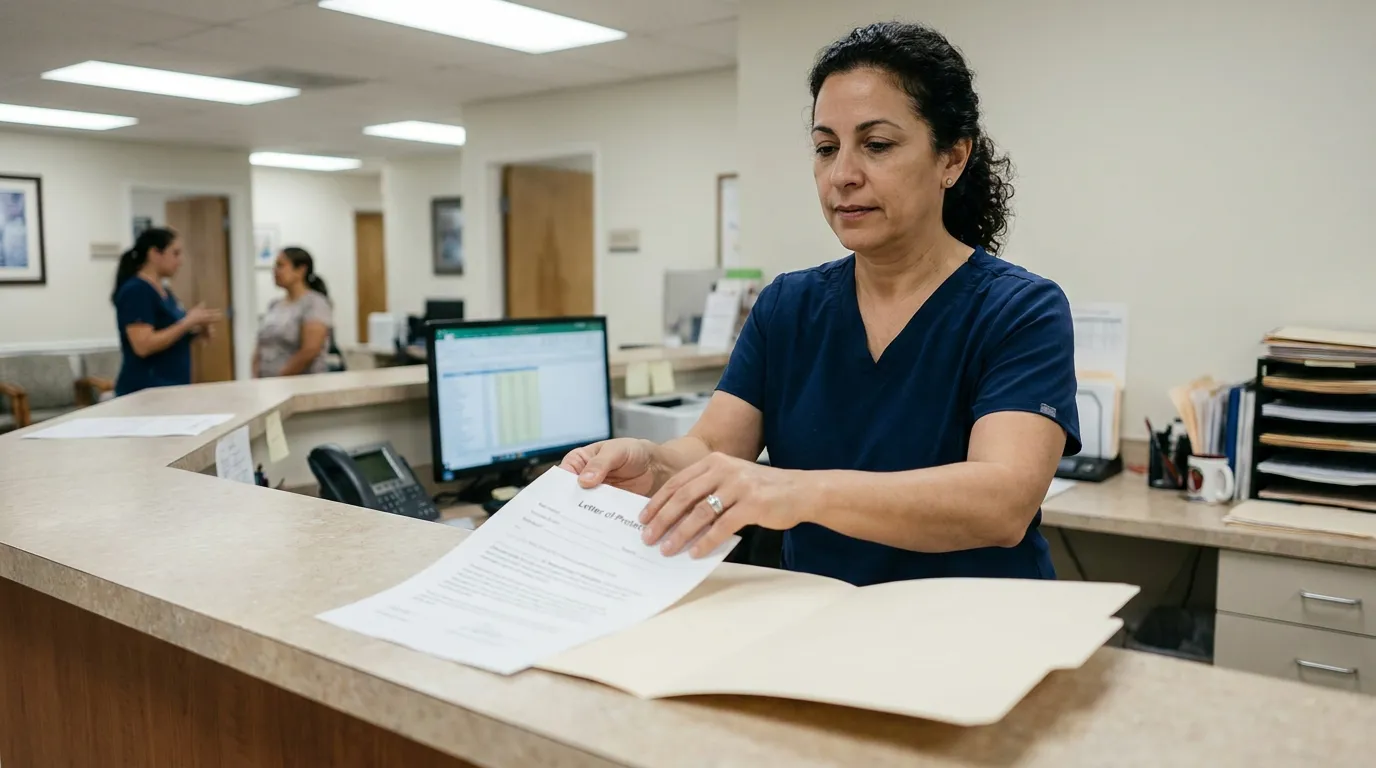
A letter of protection is a contractual promise that lets you receive medical care now and pay later out of your eventual recovery. Under § 768.0427(1)(d), a "letter of protection" means any arrangement by which a health care provider renders treatment in exchange for a promise of payment for the claimant’s medical expenses from any judgment or settlement of a personal injury or wrongful death action.
These agreements function as binding financial obligations. When a provider treats you and later seeks payment, the letter of protection, assignment of benefits, or financial-responsibility agreement you signed creates enforceable duties on both sides.
💡 Pro Tip: Keep a signed copy of every treatment agreement and ask your provider to itemize charges. Clear records make it easier to challenge unreasonable bills later.
Why Miami Injury Victims Rely on LOPs in the First Place
Florida’s No-Fault system leaves significant coverage gaps that push many injury victims toward letter-of-protection arrangements. Personal Injury Protection is capped, and PIP must provide benefits to a limit of $10,000 in medical and disability benefits and $5,000 in death benefits. Serious injuries can exhaust that amount quickly.
The coverage limitations run deeper than the dollar cap. PIP generally pays eighty percent of all reasonable expenses for medically necessary services only if care is received within 14 days after the motor vehicle accident, as outlined in Fla. Stat. § 627.736(1)(a). Reimbursement is limited to $2,500 if a provider determines that the injured person did not have an emergency medical condition under Fla. Stat. § 627.736(1)(a)(4). You can review the full statutory framework in Florida’s no-fault insurance statute.
When PIP runs out or never covers the full cost, a letter of protection can bridge the difference so treatment does not stop mid-recovery. That continuity is often critical to both your health and documenting your injuries.
How Florida 768.0427 Letter of Protection Rules Changed the Game
The florida 768.0427 letter of protection statute is the tort-reform provision that regulates, but preserves, these agreements. The law is titled "Admissibility of evidence to prove medical expenses in personal injury or wrongful death actions; disclosure of letters of protection; recovery of past and future medical expenses damages," confirming that LOPs remain usable while now carrying transparency obligations.
One major shift concerns what a jury is allowed to see about your medical bills. Under § 768.0427(2), evidence of past medical expenses that have been paid is limited to the amount actually paid rather than the original billed charge; for unpaid or future care, the statute allows evidence such as what health care coverage would pay or, for uninsured claimants, defined percentages of Medicare or Medicaid rates. This focus on amounts actually paid or payable can affect the value juries assign to your treatment. You can read the statutory text on the Justia codes page for Section 768.0427.
The reform also introduced new transparency around who ultimately holds your medical debt. Under § 768.0427(1)(a), a "factoring company" is defined as a person who purchases a health care provider’s accounts receivable at a discount below the invoice value of such accounts, while § 768.0427(1)(b) separately defines "health care coverage" as third-party financing arrangements including PIP and workers’ compensation. When a bill treated under an LOP has been sold to a factoring company, the statute’s disclosure provisions require, and make admissible, the dollar amount for which the factoring company purchased such accounts, including any discount provided below the invoice amount.
The Reasonableness Standard Still Protects Patients
Even under a letter of protection, the charges billed to you must be reasonable. Florida law and case authority interpreting Fla. Stat. § 627.736(5)(a) require PIP-covered charges to be reasonable, and a patient or insurer can dispute the underlying reasonableness if charges exceed what is reasonable and customary in your area, with reasonableness evaluated against usual and customary charges, community reimbursement levels, and applicable federal and state medical fee schedules.
A separate federal consumer-protection layer may also apply in limited circumstances. The No Surprises Act, codified at 45 C.F.R. § 149.610, generally requires Good Faith Estimates for self-pay or uninsured patients, with application to PIP-covered treatment being fact-specific.
How Comparative Fault and Shorter Deadlines Raise the Stakes
Florida’s comparative fault framework can reduce, or even eliminate, the recovery that a letter of protection is counting on. Under Fla. Stat. § 768.81, the court shall enter judgment against each party liable on the basis of such party’s percentage of fault. Critically, HB 837 adopted a modified comparative negligence standard: for causes of action accruing on or after March 24, 2023, a claimant found to be more than 50% at fault for their own harm is barred from recovering any damages, while a claimant at 50% or less has their award reduced by their fault percentage. A narrow exception preserves the older pure comparative negligence rule for medical-negligence claims under Chapter 766. Because your provider expects payment from a judgment or settlement, a reduced, or entirely barred, recovery can directly affect how that debt gets paid.
Defendants can also point fingers at people who are not even in the lawsuit. The statute permits this, but a defendant must affirmatively plead the fault of a nonparty and, absent a showing of good cause, identify or describe the nonparty as specifically as practicable, either by motion or in the initial responsive pleading when defenses are first presented, subject to amendment any time before trial in accordance with the Florida Rules of Civil Procedure. You can review the apportionment rules in Florida’s comparative negligence statute.
The clock to file suit is now shorter, which makes prompt action essential. Florida’s Section 95.11 subsection covering actions founded on negligence was amended effective March 24, 2023 by HB 837 to a two-year limitations period, cutting the old four-year window in half for causes of action accruing on or after that date. Courts generally interpret tolling or discovery exceptions narrowly. If you want to understand how tort reform has narrowed other recovery avenues, our discussion of the Florida HB 837 sovereign immunity changes offers helpful context.
Below is a quick comparison of key thresholds that affect LOP-based treatment in Miami:
| Legal Feature | Governing Authority | Practical Effect |
|---|---|---|
| PIP medical/disability cap | Fla. Stat. § 627.736(1) | $10,000 limit, $5,000 death benefit |
| No emergency condition limit | § 627.736(1)(a)(4) | Reimbursement capped at $2,500 |
| Negligence filing deadline | Fla. Stat. § 95.11 (HB 837) | Two years to file suit |
| LOP disclosure and evidence | Fla. Stat. § 768.0427 | Regulated, still permitted |
Practical Steps to Protect Your Claim
Taking deliberate steps can help preserve both your health and your case value under the new LOP after tort reform rules. Because the reforms increased documentation demands, organized records are one of your strongest assets. Consider the following:
- Seek initial care within 14 days to preserve PIP eligibility.
- Save every LOP, itemized bill, and financial-responsibility document you sign.
- Question charges that appear above reasonable and customary rates in Miami.
- Track your deadline carefully, because the two-year negligence window is unforgiving.
Working with counsel who understands these interlocking rules can make a measurable difference. An experienced Miami personal injury lawyer can help you evaluate whether an LOP fits your situation, dispute unreasonable billing, and coordinate treatment with the litigation timeline.
Frequently Asked Questions
1. Did tort reform ban letters of protection in Florida?
No. Fla. Stat. § 768.0427 expressly regulates disclosure of letters of protection and how medical expenses are proven, confirming LOPs remain lawful but subject to new transparency and evidence rules.
2. Will a jury see my full medical bills or only what was paid?
Generally, the focus has shifted toward amounts actually paid or payable. Under § 768.0427(2), evidence of past medical expenses that have been paid is limited to the amount actually paid, which in many cases narrows what juries consider compared to gross billed charges.
3. Can I dispute a medical bill charged under an LOP?
Yes, in appropriate circumstances. Because Fla. Stat. § 627.736(5)(a) requires PIP-covered charges to be reasonable, you may challenge amounts that exceed what is reasonable and customary in your area.
4. How long do I have to file my Miami injury lawsuit?
Under current law, you generally have two years for negligence claims. HB 837 amended Fla. Stat. § 95.11 effective March 24, 2023, reducing the deadline from four years for causes of action accruing on or after that date.
5. Does an LOP guarantee my provider gets paid?
No. An LOP ties payment to a judgment or settlement, and modified comparative fault under Fla. Stat. § 768.81 can reduce your net recovery, or bar it entirely if you are found more than 50% at fault, which may affect how the debt is ultimately resolved.
Moving Forward With Confidence
A letter of protection remains a viable option for Miami injury victims, provided you respect the new regulatory framework. The 2023 reforms preserved LOPs while adding disclosure duties, evidence limits, a shorter negligence deadline, a modified comparative negligence standard, and continued reasonableness protections. Understanding how the florida 768.0427 letter of protection rules interact with PIP caps and comparative fault gives you a stronger foundation for continued treatment and a fair claim.
If you are navigating a 768.0427 letter of protection issue or worried about mounting medical bills, do not wait to get guidance. The attorneys at Chalik & Chalik Injury Lawyers can help you protect your treatment and your deadlines. Call 954-476-1000 today or complete our confidential contact form to take the next step toward protecting your recovery.




 Chalik & Chalik Files First Lawsuit Against Cruise Lines for Coronavirus Negligence
As the coronavirus (COVID-19) became an increasingly apparent threat to Americans’ health, those on cruise ships were among the first to be infected. Debi Chalik, partner at Chalik & Chalik Injury Lawyers, decided she had to take action as her parents were aboard Princess Cruises’ Grand Princess cruise ship amidst a coronavirus outbreak. The more...
 The Controversy behind Orphan Drugs Approved for Treating Rare Cancers
Orphan drugs are those that the federal government approves for use in the treatment of rare diseases that affect less than 200,000 people. New medications that treat rare forms of cancer or rare cancer-related symptoms are hitting the market all the time, despite their lack of clinical trials, a study published by Harvard researchers in...
 South Florida Couple Files Lawsuit Against Princess Cruises Over Coronavirus Pandemic
A South Florida couple who were aboard Princess Cruises’ Grand Princess have filed a lawsuit against the cruise line based on allegations of negligence. The coronavirus (COVID-19) pandemic struck multiple cruise ships in a major way, and Princess Cruises had multiple ships where passengers and crew members fell ill with the virus. The Grand Princess...
 Young boy suffers head injury at a Florida sports park
According to the Brevard County Fire Rescue, on March 14, a child was airlifted to a trauma center after he suffered a severe head injury at the Space Coast Field of Dreams Sports Park in West Melbourne, Florida. No information is available about how the injury occurred or the condition of the child. Space Coast...
 Why Should I Hire a Lawyer for My Scooter Injuries?
While you have the right to pursue a personal injury case on your own, there are many reasons why you should hire a lawyer for your scooter injuries. The work of an attorney begins during the early stages of your case and continues until the end. Along the way they could help you negotiate settlements,...
 How to File a Dog Bite Report in Miami
If you were bitten by a dog in Miami, you should file a dog bite report through Miami-Dade County Animal Services. The county offers the option to report the incident online or by calling 311. Filing a report of the incident is essential. You want a record of the details collected as soon as possible,...
 What Is a Compulsory Medical Examination (CME)?
A compulsory medical examination (CME) is an exam requested by the defendant in a personal injury lawsuit. The exam is often used to gather more information regarding a plaintiff’s condition and injuries. For example, let’s say that you suffered a traumatic brain injury (TBI) in a car accident and decide to file a lawsuit against...
 What Is the Serious Injury Threshold in Fort Lauderdale?
The serious injury threshold in Fort Lauderdale is defined by Florida state statute 316.027, which outlines the debilitating conditions that can greatly impair one’s quality of life. These afflictions, quoted verbatim from the statute, include: A physical condition that creates a substantial risk of death Serious personal disfigurement Loss or impairment of the function of...