
Untangling Responsibility When You Fall Inside a Brickell Tower
Key Takeaways:Liability for a slip and fall at a Brickell high-rise depends on who controlled the area where you were hurt and whether that party failed to keep it reasonably safe. The responsible party could be the condominium association, a property management company, a commercial tenant, or an individual unit owner, and multiple parties may share fault. Under Florida premises liability law, you must prove the responsible party had actual or constructive notice of the hazard and failed to act. Damages include medical expenses and lost wages, typically paid by homeowners, renters, or commercial general liability insurance. Florida imposes a two-year statute of limitations for most negligence claims accruing after March 24, 2023, making quick action critical. Because these cases involve overlapping insurance policies and layered ownership, consulting a Miami slip and fall attorney can help identify who is accountable.
Determining who is liable for a slip and fall at a Brickell high-rise depends on who controlled the area where you were hurt and whether that party failed to keep it reasonably safe. In a luxury tower, that could be the condominium association, a property management company, a commercial tenant, or an individual unit owner. Florida premises liability law focuses on control and negligence, so identifying the responsible party is the first step toward recovering compensation.
If you were injured in a Miami-Dade high-rise and are unsure who to hold accountable, the team at Chalik & Chalik Injury Lawyers can help. Call us at 954-476-1000 for a free consultation, or reach out through our online contact page.
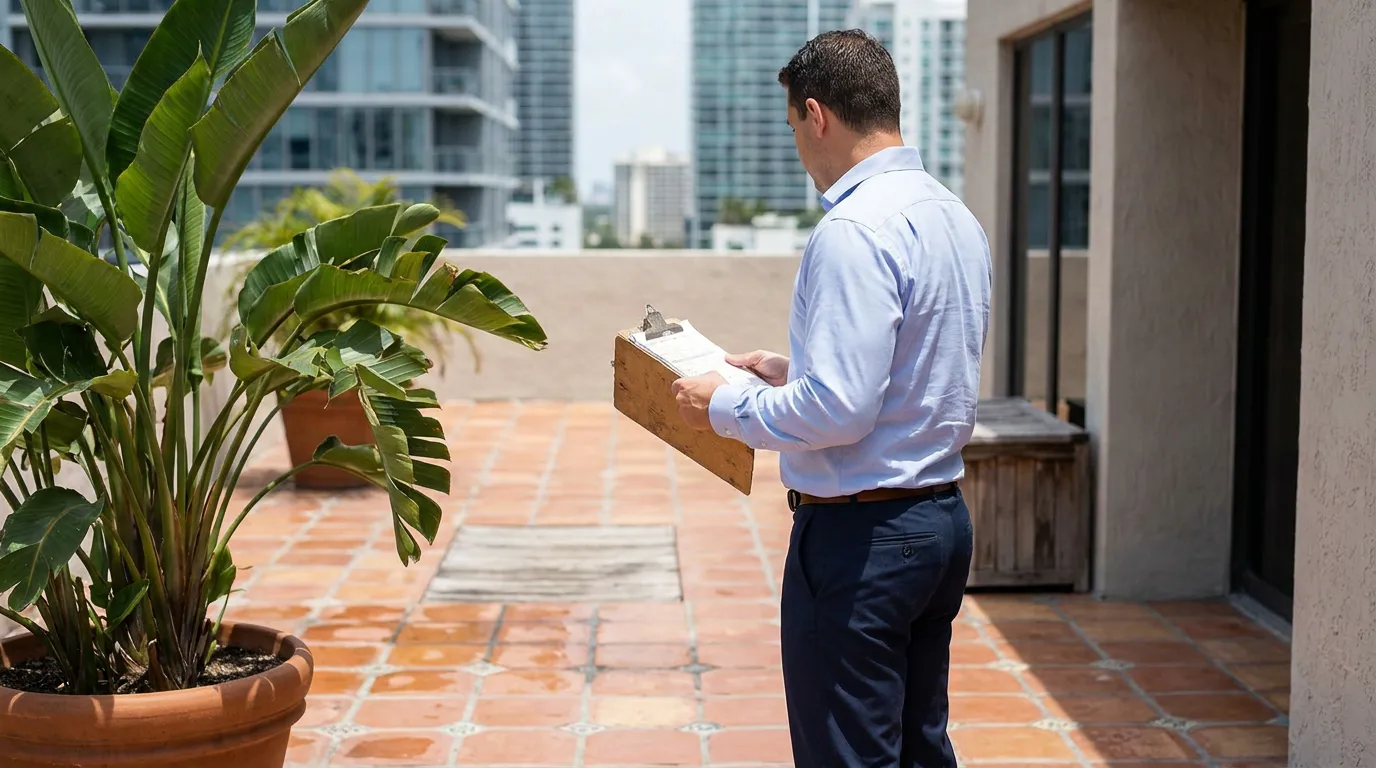
How Florida Premises Liability Law Frames Your Claim
Premises liability determines who answers for a hazardous property condition. According to legal reference materials on premises liability principles, a person or company can be held responsible if they failed to meet a legal duty to keep the property reasonably safe and that failure directly caused an injury.
In Florida, an owner or possessor generally owes invited guests a duty to maintain the premises in a reasonably safe condition and to warn of non-obvious hazards. The level of care depends on the visitor’s legal status. Someone lawfully present for a mutual benefit, such as a resident, guest, or customer, is typically treated as an invitee and receives the highest level of protection.
The duty owed shifts based on how the law classifies the injured person. Courts consider whether you were an invitee, a licensee, or a trespasser when measuring what the property owner was required to do. The table below summarizes these categories.
| Visitor Status | Typical Example in a High-Rise | General Duty Owed |
|---|---|---|
| Invitee | Resident, guest, retail customer | Inspect for dangers, make repairs, warn of hazards |
| Licensee | Social visitor with permission | Warn of known dangers not obvious to the visitor |
| Trespasser | Unauthorized entrant | Limited duty; avoid willful harm |
💡 Pro Tip: Write down exactly where you fell, including the floor and specific area. That detail often decides which party controlled the space and who may be liable.
Identifying the Party Responsible for Your Brickell High-Rise Fall
Multiple parties frequently share control of a modern Brickell tower, complicating Miami-Dade fall claims. A homeowners association may manage common areas like lobbies and hallways, while a professional management firm handles day-to-day upkeep. Individual unit owners control the interior of their units, and commercial tenants control their leased spaces.
When several parties share control, the question of HOA liability, property management liability in Florida, or commercial tenant liability in Miami turns on who was responsible for the specific hazard. A wet lobby floor may point to the association or its management company, while a spill inside a ground-floor cafe may implicate that business. Florida applies its own comparative fault framework to apportion responsibility.
A slip and fall accident attorney in Miami can help you sort through overlapping insurance policies and management contracts. These arrangements are rarely obvious to an injured visitor. If you want to understand how condo premises liability in Miami applies to your situation, speak with a knowledgeable miami slip and fall lawyer who can review the building’s structure of ownership and control.
💡 Pro Tip: Request the incident report from building security before you leave, and ask for a copy. Buildings generate internal records that can identify the responsible party later.
Proving Notice: The Heart of a Condo Slip and Fall
To win a Florida slip-and-fall case, you generally must show the responsible party had actual or constructive notice of the hazard. Under Florida Statutes § 768.0755, an injured person suing a business establishment over a transitory foreign substance must prove the business knew or should have known of the dangerous condition and should have taken action. This standard is where many claims are won or lost.
Actual notice means the party actually knew about the hazard, while constructive notice means the condition existed long enough that a reasonably careful owner should have discovered and fixed it. Photographs of the scene and witness statements can strengthen this factual record considerably.
Because timing and knowledge are critical, understanding how courts evaluate what a property owner should have known is essential. Our discussion of constructive knowledge in a Miami slip and fall explains how evidence like maintenance logs and surveillance footage can support this element. Evidence tends to disappear quickly, so acting promptly matters.
💡 Pro Tip: Ask whether the building has surveillance cameras covering the area where you fell, and have your attorney send a preservation letter fast. Footage is often overwritten within days.
Evidence and Damages That Support a Miami-Dade Fall Claim
Building a strong premises liability claim requires proving both liability and damages. Damages may include medical expenses, lost wages, and other losses tied to the injury. The stronger your documentation, the harder it becomes for an insurer to minimize your claim.
Preserving evidence early is one of the most important steps an injured person can take. Helpful proof commonly includes:
- Medical records connecting your injuries to the fall
- Photographs of the hazard, surrounding area, and visible injuries
- Names and contact information for witnesses
- Incident reports and maintenance or inspection logs
- Surveillance footage from the building or nearby businesses
Most slip-and-fall claims are ultimately paid by insurance rather than out of an owner’s pocket. Homeowners, renters, and commercial general liability policies typically cover injuries on a property, which means you will likely negotiate with the property owner’s insurer. Guidance on practical steps is available through resources like this discussion of steps to take for an injury lawsuit.
Defenses, Deadlines, and Why a Slip and Fall Accident Attorney in Miami Matters
Property owners and their insurers frequently raise several defenses to reduce or defeat a claim. Common arguments include comparative fault, the open and obvious hazard doctrine, assumption of risk, and the statute of limitations. Under Florida’s comparative negligence system, your recovery may be reduced by your share of fault.
Florida imposes a strict filing deadline that courts interpret narrowly. For most negligence actions accruing after March 24, 2023, Florida Statutes § 95.11 sets a two-year statute of limitations. Exceptions such as tolling may apply in limited circumstances, but they are not automatic. This civil deadline is separate from any administrative or contractual process.
Some booking or rental agreements tied to short-term high-rise units contain mandatory binding arbitration clauses. In those situations, an injured party may be required to resolve the dispute through arbitration rather than court. Because outcomes depend on specific facts and contracts, reviewing your paperwork with counsel is wise.
💡 Pro Tip: Do not give a recorded statement to the property owner’s insurance adjuster before speaking with an attorney. Early statements are often used to support comparative fault arguments.
Frequently Asked Questions
1. Who can be held liable for my fall in a Brickell condo building?
Liability generally falls on whoever controlled the area where you were injured. That may be the condominium association, a property management company, a commercial tenant, or a unit owner. In some cases, more than one party may share responsibility.
2. What must I prove to win a condo premises liability case in Miami?
You generally must prove duty, breach, causation, and damages. For a business establishment, Florida Statutes § 768.0755 requires showing the responsible party knew or should have known about the dangerous condition.
3. How long do I have to file a slip and fall claim in Florida?
Florida Statutes § 95.11 generally provides a two-year deadline for negligence claims accruing after March 24, 2023. Certain exceptions may extend this period in limited circumstances, but courts apply them narrowly. Speaking with a lawyer promptly helps protect your rights.
4. Will insurance pay for my injuries?
In most cases, a homeowners, renters, or commercial general liability policy covers the claim. This means you will typically negotiate with the property owner’s insurer. Thorough documentation strengthens your position during negotiations.
5. Do I need a lawyer for a high-rise fall claim?
High-rise cases often involve multiple responsible parties and layered insurance policies. A miami slip and fall lawyer can help identify who controlled the hazard and preserve time-sensitive evidence.
Protecting Your Rights After a High-Rise Fall
Determining liability for a slip and fall at a Brickell high-rise comes down to control, notice, and negligence. Whether the responsible party is an association, a management company, or a commercial tenant, proving they knew or should have known about the hazard is essential. Acting quickly to preserve evidence and understand Florida’s deadlines can make a meaningful difference in your recovery.
If you or a loved one was hurt in a Miami high-rise, the attorneys at Chalik & Chalik Injury Lawyers are ready to review your case. Call us today at 954-476-1000 or connect with our team through our free case review form to take the next step toward protecting your rights.


When a Ft Lauderdale Restaurant Did Not Cause the Spill, Can It Still Be Held Responsible? Key Takeaways: A Ft Lauderdale restaurant can be liable for a slip and fall even if it did not create the spill, provided it had actual or constructive notice of the hazard. Florida law under Fla. Stat. §768.0755 requires...
 How to Beat the Open and Obvious Defense After a Miami Store Fall
Why a Visible Hazard Does Not Automatically End Your Miami Store Fall Claim Key Takeaways: An adjuster’s "open and obvious" label is generally a defense argument, not a final ruling on your Miami store fall claim. Florida applies a two-duty framework: a hazard’s visibility may negate the duty to warn, but the separate duty to...
 Who Is Considered an Invitee Under Plantation Slip and Fall Law?
Understanding Your Rights as a Visitor on Florida Property Key Takeaways: If you were injured while shopping, dining, or visiting a business in Plantation, you were most likely an invitee under Florida law, a person invited onto property for a business purpose. Florida sorts visitors into three categories, invitee, licensee, and trespasser, each carrying different...
 Can Airport Contractors Be Held Liable for a Ft Lauderdale Terminal Fall?
Understanding Who Is Responsible When You Fall Inside a Fort Lauderdale Airport Key Takeaways: Airport contractors in Fort Lauderdale can be held liable for terminal falls depending on who controlled the area and whether they maintained it safely. Under Fla. Stat. §768.0755(2), Florida law preserves common-law duties for any party controlling premises, meaning maintenance contractors...

Filing a slip and fall lawsuit helps you hold a property owner or business manager responsible for the injuries you suffered. When dangerous conditions cause harm, you have the right to pursue compensation through the court system. The legal process begins when you file a formal complaint against the person or business responsible for maintaining...

Slip and fall accidents don’t sound dangerous, but they can cause serious harm. If you’ve been injured in a fall at a Marriott hotel due to another’s negligence, your priority should be getting the medical assistance you need. Reporting your injury to the hotel owner or manager and identifying the cause of your fall can...

A slip and fall is not a personal injury, but it is a type of personal injury case. If you were injured in a slip and fall accident as the result of negligence, your slip and fall injuries may be eligible for a personal injury claim. A law representative can assess your case to determine...

You can sue a cruise ship if you’re injured in a fall onboard. When there is a fall hazard, something that causes a slip or trip, and you suffer injuries, the cruise company might be legally responsible. They must provide a safe environment for passengers and workers alike. If you fell on a cruise, you...