
When a Ft Lauderdale Restaurant Did Not Cause the Spill, Can It Still Be Held Responsible?
Key Takeaways:A Ft Lauderdale restaurant can be liable for a slip and fall even if it did not create the spill, provided it had actual or constructive notice of the hazard. Florida law under Fla. Stat. §768.0755 requires injured patrons to prove the business knew or should have known about the dangerous condition. Restaurant customers are invitees, owed the highest duty of care, including regular inspections. For claims accruing on or after March 24, 2023, Florida’s two-year statute of limitations under Fla. Stat. §95.11 applies. Under modified comparative negligence, plaintiffs found more than 50% at fault are barred from recovery.
You walked into a Ft Lauderdale restaurant, stepped on a spill you never saw, and ended up on the ground with a serious injury. The manager insists another customer caused it. Does that mean the business has no responsibility? Often, no. Under Florida law, a restaurant may still bear liability for a hazardous condition even when a third party created it. The key question is whether the restaurant knew or should have known about the spill and failed to address it in a reasonable timeframe.
If you suffered a food spill injury in Ft Lauderdale and need guidance, Chalik & Chalik Injury Lawyers can help you understand your rights. Call 954-476-1000 for a case evaluation, or reach out to our team online today.
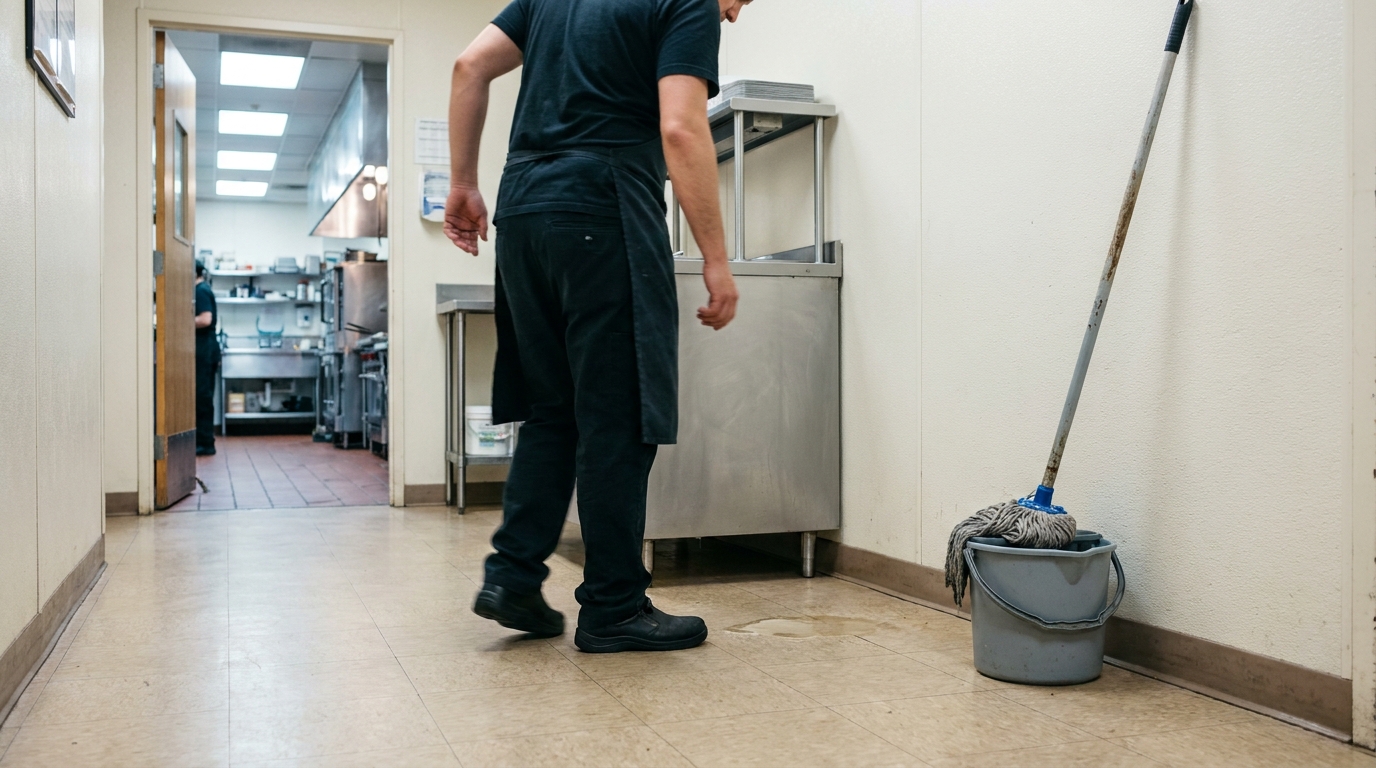
How Premises Liability Applies to a Slip and Fall in Restaurant Settings
Premises liability holds property owners accountable when someone is injured due to a dangerous condition on their property. Liability requires two core elements: the owner owed the injured person a duty of care, and the owner breached that duty. A wet floor from a restaurant spill is a classic premises liability scenario.
The fact that a restaurant did not create the spill does not automatically shield it from liability. A property owner can be liable for a hazard it did not create if it had actual or constructive notice of the condition. Actual notice means the owner knew about the hazard. Constructive notice means the owner should have been aware of it through reasonable care.
Why Restaurant Customers Receive the Highest Protection
Under premises liability law, visitors are categorized based on their reason for being there, and this classification determines the level of care owed. Restaurant customers are invitees because they enter for the business’s commercial benefit. Property owners owe invitees the highest duty of care, meaning restaurants must address known hazards and regularly inspect premises to detect and correct unsafe conditions, even those they did not create.
💡 Pro Tip: If you slip and fall in a restaurant, ask the manager whether the business conducts regular floor inspections and whether an inspection log exists. This documentation can become powerful evidence in your claim.
What Florida Law Requires You to Prove After a Restaurant Slip and Fall
Florida has a specific statute governing slip-and-fall claims involving transitory foreign substances in business establishments. Under Fla. Stat. §768.0755(1), the injured person must prove that the business had actual or constructive knowledge of the dangerous condition and should have taken action to remedy it. This applies directly when a customer, employee, or unknown person caused a spill the restaurant failed to clean.
Establishing Constructive Knowledge Under Florida Law
Constructive knowledge is often the most important battleground in restaurant slip and fall cases. Under Fla. Stat. §768.0755(1)(a), constructive knowledge can be established by showing the dangerous condition existed for such a length of time that, in the exercise of ordinary care, the business should have known of it. For example, if a puddle sat on the floor for 30 minutes during busy service, a court may find the restaurant should have discovered it during routine inspection.
Florida law also recognizes a second path to proving constructive knowledge. Under Fla. Stat. §768.0755(1)(b), constructive knowledge may be shown if the condition occurred with regularity and was therefore foreseeable. In restaurants where spills near drink stations or buffet areas happen frequently, this provision can be particularly relevant. Learn more about how courts evaluate constructive knowledge in a slip and fall case.
💡 Pro Tip: Photograph the spill area immediately after your fall if physically able. Capture the size, color, and texture of the substance. Dried or dirty footprints through a spill can suggest it existed for a significant period.
The Four Elements Every Slip and Fall Plaintiff Must Prove
To succeed in a slip and fall claim against a Ft Lauderdale restaurant, you must establish four key elements of negligence. The table below breaks down each element.
| Element | What It Means | Restaurant Spill Example |
|---|---|---|
| Duty of Care | The restaurant owed you a legal obligation to keep premises safe | As an invitee, you were owed the highest duty of care, including regular inspections |
| Breach of Duty | The restaurant failed to meet that obligation | Staff did not clean a spill or place warning signs within a reasonable time |
| Causation | The breach directly caused your injury | You slipped on the unaddressed spill and fell |
| Damages | You suffered actual harm as a result | Medical bills, lost wages, pain, or rehabilitation costs |
Each element must be supported by evidence. Gathering witness statements, surveillance footage, and incident reports shortly after your fall is critical.
💡 Pro Tip: Ask the restaurant to preserve any surveillance video immediately. Many businesses record over footage within days or weeks, and once that evidence is gone, it cannot be recovered.
The Duty to Inspect Applies Even When the Restaurant Did Not Cause the Hazard
Property owners in Florida must regularly inspect their premises for hazards and either fix dangerous conditions or warn invitees about them. This duty applies even to spills the restaurant did not create. A restaurant with no inspection routine, or long gaps between floor checks during service, may struggle to argue it lacked constructive notice. Fla. Stat. §768.0755(2) reinforces this by preserving any common-law duty of care owed by a person or entity in possession or control of business premises.
How Comparative Negligence May Affect Your Ft Lauderdale Claim
Florida’s modified comparative negligence system can significantly impact compensation you receive. Under Fla. Stat. §768.81(6), effective since March 2023, any party found greater than 50 percent at fault for his or her own harm may not recover damages. This means a restaurant may argue you were texting, wearing inappropriate footwear, or ignoring a visible warning sign.
Even if you bear some fault, you may still recover compensation as long as your responsibility does not exceed 50%. Your damages would be reduced by your percentage of fault. For instance, if a jury determines you were 20% responsible and awards $100,000, your recovery would be $80,000.
Common Defenses Restaurants May Raise
Restaurants and their insurance carriers often rely on predictable strategies to reduce or eliminate liability:
- Lack of notice: The restaurant may argue it was unaware of the dangerous condition and did not have reasonable opportunity to remedy it.
- Open and obvious hazard: The defense may claim the spill was visible and you should have avoided it.
- Comparative fault: The restaurant may assert you were distracted, intoxicated, or otherwise contributed to your injury.
- No causation: The business may argue your injuries were pre-existing or unrelated to the fall.
💡 Pro Tip: If the restaurant claims the hazard was "open and obvious," photographs and witness testimony about lighting conditions, obstructions, and the substance’s color can help counter this argument.
Florida’s Statute of Limitations for Restaurant Slip and Fall Claims
Time is a critical factor in any slip and fall claim. Under Fla. Stat. §95.11, as amended by HB 837 (effective March 24, 2023), a negligence action must generally be commenced within two years from the date the claim accrues. Claims that accrued before March 24, 2023, remain subject to the prior four-year period. This window is relatively short, and evidence can deteriorate quickly. Surveillance footage gets erased, witnesses forget details, and physical conditions change.
Courts interpret tolling exceptions narrowly in Florida. Do not assume special circumstances will automatically extend your deadline. If you are approaching the limitations period, consult with a Ft Lauderdale slip and fall attorney promptly.
💡 Pro Tip: Even if you are unsure whether you have a valid claim, documenting everything early, medical records, photos, and a written account, preserves your options and costs nothing.
Frequently Asked Questions
1. Can I sue a restaurant for a spill caused by another customer?
Yes, you can often pursue a claim even if another patron caused the spill. The legal issue is not who created the hazard but whether the restaurant had actual or constructive knowledge and failed to take reasonable steps to address it.
2. What evidence do I need to prove a slip and fall in a restaurant?
Helpful evidence includes photographs of the spill, your injuries, and the surrounding area, along with surveillance footage, witness contact information, incident reports, and medical records. Maintenance and inspection logs can demonstrate whether the business fulfilled its duty to regularly check for hazards.
3. How long do I have to file a slip and fall lawsuit in Ft Lauderdale?
Under Fla. Stat. §95.11, as amended by HB 837, you generally have two years from the accident date to file a negligence claim if your cause of action accrued on or after March 24, 2023. Claims accruing before that date are subject to the prior four-year deadline. Waiting can weaken your case as evidence becomes harder to obtain.
4. What happens if I was partially at fault for my fall?
Under Florida’s modified comparative negligence rule in Fla. Stat. §768.81(6), your compensation may be reduced by your percentage of fault. However, if you are found more than 50% responsible, you are barred from recovering damages.
5. Does the restaurant have to prove it did not know about the spill?
The burden of proof rests on the injured plaintiff, not the restaurant. Under Fla. Stat. §768.0755(1), you must demonstrate that the business had actual or constructive knowledge of the dangerous condition. However, evidence such as lack of inspection logs or employee testimony about staffing gaps can support your case.
Protecting Your Rights After a Ft Lauderdale Restaurant Fall
A restaurant’s failure to clean up a spill it did not create can still constitute negligence under Florida law. The duty to inspect, discover, and remedy hazardous conditions falls on the business that invites customers onto its premises. If you suffered an injury in a slip and fall at a Ft Lauderdale restaurant, understanding how notice, duty of care, and comparative negligence apply is essential to holding the responsible party accountable.
Do not wait to explore your legal options. Contact Chalik & Chalik Injury Lawyers to discuss your Ft Lauderdale personal injury claim. Call 954-476-1000 or send us a message today to get started.


While taking a cruise is a life-long dream for many people, the risk of serious injury or illness is always present. Anything from food poisoning to a slip and fall can ruin a vacation and have lasting health consequences. Serious injuries are unfortunately common on cruise ships. Whether these injuries occur on board or during...

Banana Peel Slip and Fall Cases are the Real Deal If you’ve read comic books or seen cartoon shows, you’ve probably seen a character in one of these farces slip and fall on a banana peel. The reality is that this actually does happen, resulting in some serious injuries. Personal injury lawsuits, though easily...
 Florida’s $200,000 Sovereign Immunity Cap and Miami Slip and Fall Claims
When a Miami Slip and Fall Involves a Government Property Key Takeaways: Slip and fall claims on government property in Miami follow different rules than private-property cases. Florida’s sovereign immunity doctrine, codified in section 768.28, caps recovery at $200,000 per person and $300,000 per occurrence while requiring mandatory pre-suit notice. Insurance does not automatically raise...

With a baby on board, pregnant women may find it more difficult to maintain balance and be surefooted. Pregnancy brings with it many bodily changes like a shift in the center of gravity, weight gain, a protruding belly, dizziness and loosening of ligaments. As a result, expectant mothers may be prone to falls. While there...

The location of a slip and fall accident is important because property owners owe different levels of responsibility to those victims who suffer injuries due to an accident on their property. Business property owners, personal property owners, and government entities who own property all have different duties of care and obligations to victims who suffer...

If you slip and fall at a dollar store, these are the following steps you should take to ensure your health and possibly support your personal injury or premises liability claim: You should check for injuries and get immediate medical attention to address them. You should collect evidence while still inside the store by taking...

In slip and fall accident cases, the state of Florida requires claimants to prove that the property owner did not take reasonable precautions to prevent their injury. Because many people do not have a working knowledge of premises liability laws, they elect to work with a personal injury lawyer. Some of the services that these...

Yes, if the city has the responsibility for maintenance and owns the portion of the sidewalk on which you slipped and fell and suffered injuries. If another entity (such as a private property owner, or condo or homeowner association) owned the sidewalk or was responsible for its maintenance, you may have to file a claim...