
Key Takeaways:Cruise lines owe passengers a legal duty of care under maritime law, requiring reasonable safety standards onboard. To hold a cruise operator liable, injured passengers must show the company knew about or created the hazardous condition. Most cruise injury claims involve slips, trips, or falls caused by preventable hazards. Strict contractual deadlines, often as short as 180 days for notice and one year to file suit, can bar valid claims. Passengers departing from Florida ports should understand how federal maritime law and ticket contract terms shape their rights.
Reasonable care on a cruise ship means the operator must act as a reasonably careful ship operator would under the circumstances. Cruise lines cannot guarantee no passenger will suffer injury, but they carry a legal obligation to identify and address foreseeable hazards. If you were hurt on a cruise departing from Port Everglades or any Florida port, you may wonder what the cruise line owed you and whether its conduct fell short. This question sits at the heart of virtually every cruise ship negligence claim filed in Florida.
If you or a loved one suffered an injury on a cruise ship departing from South Florida, Chalik & Chalik Injury Lawyers can help you understand your options. Call 954-476-1000 for a case evaluation, or reach out online today to get started.
How Maritime Law Defines a Cruise Line’s Duty of Care
Cruise ships operate under a unique legal framework blending federal maritime law, regulatory requirements, and contractual provisions in passenger tickets. These sources govern an injured passenger’s ability to pursue claims against cruise operators. Unlike standard premises liability cases on land, which are governed by state tort and personal injury law, cruise ship injury claims are shaped by admiralty principles.
What "Duty of Care" Means for Passengers
Cruise lines, as common carriers, owe passengers a duty of reasonable care under the circumstances. Maritime law holds vessel operators responsible for providing safe transportation. This duty includes installing security cameras, running crew background checks, employing sufficient staff, and adequately lighting public areas. Courts have recognized that common carriers may owe heightened obligations in certain situations, including protecting passengers from third-party criminal acts.
The "Reasonably Careful Ship Operator" Standard
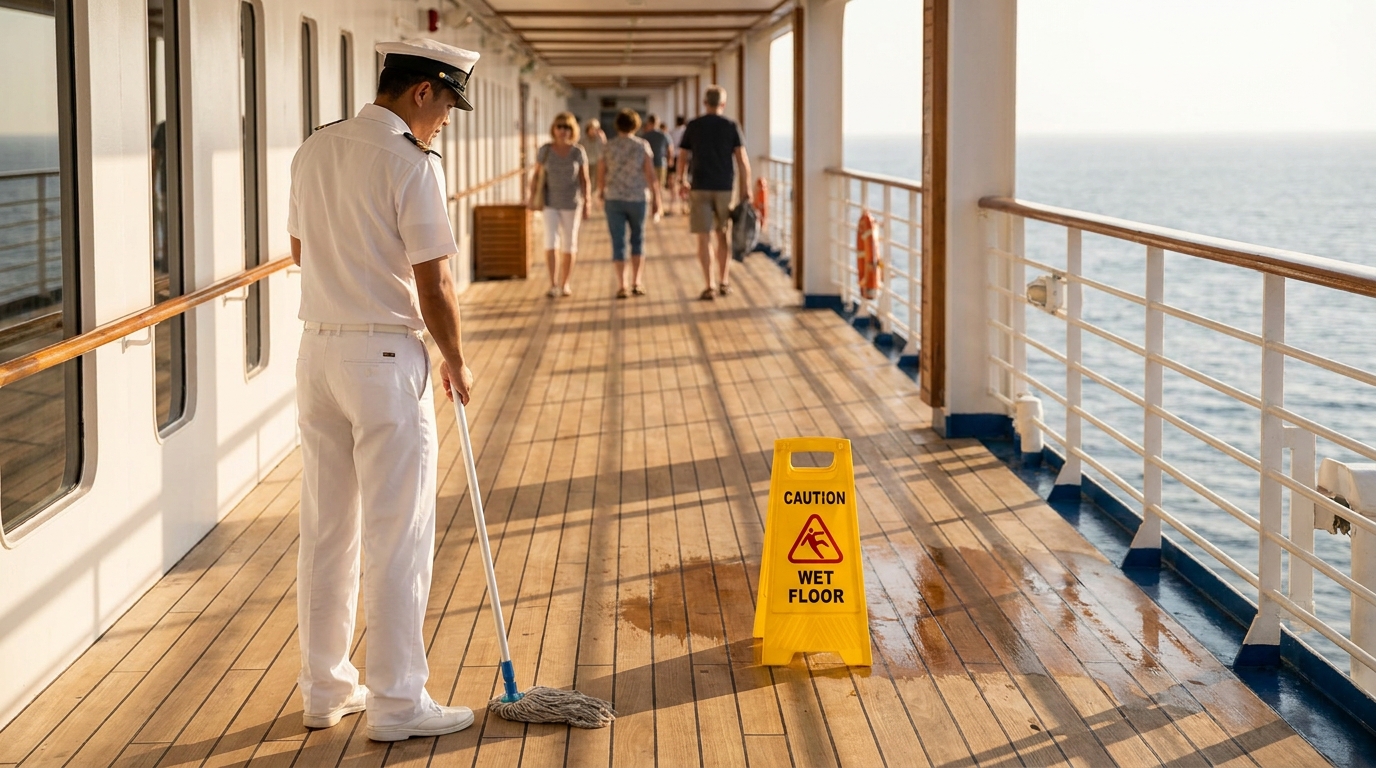
The negligence standard does not require perfection; it asks what a reasonably careful ship operator would have done. Courts generally hold operators liable only for hazards they should reasonably have known about or directly created. A wet pool deck unaddressed for hours may give rise to liability, while a sudden, unforeseeable spill causing immediate falls may not.
💡 Pro Tip: Photograph the injury scene immediately, including any hazard like wet floors, broken railings, or missing warning signs. Timestamped photos can serve as powerful evidence the cruise line knew or should have known about the dangerous condition.
Proving Cruise Ship Negligence in Florida
To establish negligence, injured passengers must show the cruise operator either had knowledge of the unsafe condition or created the hazardous condition that led to injury. You cannot simply prove you were hurt onboard; you must connect the cruise line’s conduct or inaction to your harm.
Under maritime law, courts evaluate this using a four-part framework:
- Duty: The cruise line owed you reasonable care.
- Breach: The cruise line failed to meet that standard.
- Causation: The breach directly caused your injury.
- Damages: You suffered actual, compensable harm.
Successfully proving each element often requires thorough documentation and guidance from a cruise ship accident attorney in Plantation who understands how admiralty courts analyze these claims.
💡 Pro Tip: Report your injury to the ship’s guest services desk before disembarking and request a written copy of the incident report. This creates an official record difficult for the cruise line to dispute later.
Common Cruise Ship Injuries and How Negligence Applies
The majority of cruise ship injury claims involve slips, trips, or falls. These incidents frequently result from wet decks, uneven flooring, poor lighting, obstructed walkways, and missing warning signs. They can cause serious injuries including broken bones, traumatic brain injuries, and spinal cord damage, particularly among older passengers.
Beyond slip-and-fall cases, negligence, medical malpractice, and unsafe shore excursions can all give rise to liability. Cruise operators also have duties not to over-serve alcohol and to warn passengers of known dangers such as rough seas.
| Type of Claim | Common Cause | Duty Implicated |
|---|---|---|
| Slip, trip, or fall | Wet decks, poor lighting, uneven surfaces | Maintain safe premises |
| Medical malpractice | Inadequate onboard medical care | Provide competent medical staff |
| Assault or crime | Insufficient security, failure to screen crew | Protect from foreseeable harm |
| Unsafe excursion | Negligent third-party tour operator | Vet and supervise excursion providers |
| Alcohol-related injury | Over-serving passengers | Refuse service to intoxicated guests |
The Barbetta Rule and Onboard Medical Care
For decades, the Barbetta Rule shielded cruise lines from liability for medical malpractice committed by onboard physicians. However, in 2014 the Eleventh Circuit’s decision in Franza v. Royal Caribbean Cruises, Ltd. held that passengers could pursue apparent agency claims against cruise lines for onboard medical negligence. If you received negligent medical treatment aboard a cruise ship, the cruise line may face potential liability depending on circumstances and the agency theory alleged.
💡 Pro Tip: If you receive medical treatment onboard, request copies of all treatment records before leaving the vessel. These documents may be critical if you later pursue a medical malpractice claim.
Why Florida Is the Center of Cruise Ship Litigation
Florida is widely recognized as the cruise capital of the world, and its courts handle a disproportionate share of cruise passenger injury cases. Approximately 59-61 percent of all U.S. cruise embarkations pass through Florida’s six cruise ports. For Plantation and Broward County residents, Port Everglades in Fort Lauderdale is the primary departure point.
Major cruise lines including Carnival, Royal Caribbean, and Norwegian maintain their principal places of business in Miami. Their passenger ticket contracts typically designate Miami as the venue for legal disputes. Even if you live in Plantation, your cruise ship injury claim in Florida will likely need filing in federal court in Miami.
Critical Deadlines That Can Make or Break Your Claim
Passenger ticket contracts impose strict time limits far shorter than standard personal injury statutes of limitations. Most cruise passengers have only 180 days after an accident to notify the cruise line of their claim, then a limited window, often just one year from injury, to file a lawsuit. These shortened deadlines are permitted under federal maritime law, specifically 46 U.S.C. §30508. Missing either deadline can permanently bar recovery, regardless of claim strength.
Courts interpret these contractual deadlines strictly. Tolling or extension may apply only in narrow circumstances.
- 180-day notice requirement: You must formally notify the cruise line within roughly six months of the incident.
- One-year filing deadline: Lawsuits must be filed within one year, as permitted by 46 U.S.C. §30508, rather than typical multi-year windows in land-based personal injury cases.
- Venue restrictions: Cases likely need filing in Miami, not Broward County, based on ticket contract terms.
💡 Pro Tip: Read the back of your cruise ticket or booking confirmation terms immediately after an injury. Notice and filing deadlines are printed there and start running from the incident date, not when you return home.
To learn more about how these obligations work in practice, read our breakdown of duty of care on cruise ships.
Steps to Protect Your Rights After a Cruise Ship Injury
Taking the right actions in days and weeks following a cruise ship injury can significantly affect your claim’s strength. Evidence on cruise ships disappears quickly. Surveillance footage may be overwritten, witnesses scatter, and vessels continue sailing. Timely medical documentation and evidence preservation are essential to building viable cases.
💡 Pro Tip: Keep a written journal of your symptoms, medical visits, and how the injury affects daily life starting from the incident day. This contemporaneous record can support your damages claim months later when memories fade.
Frequently Asked Questions
1. What does reasonable care mean on a cruise ship?
Reasonable care requires cruise lines to act as reasonably careful ship operators would, including identifying foreseeable hazards, maintaining safe conditions, and warning passengers of known dangers. The standard requires operators to address risks they knew about or should have discovered through ordinary diligence.
2. How long do I have to file a cruise ship injury claim in Florida?
Most passenger ticket contracts require written notice to the cruise line within 180 days of injury and lawsuit filing within one year, a shortened deadline permitted under 46 U.S.C. §30508. Courts generally enforce these deadlines strictly, so acting promptly is critical.
3. Where will my cruise ship injury lawsuit be filed if I live in Plantation?
Because major cruise lines like Carnival, Royal Caribbean, and Norwegian designate Miami as required venue in their ticket contracts, cases will most likely be filed in the U.S. District Court for the Southern District of Florida in Miami-Dade County.
4. Do I need to prove the cruise line knew about the hazard that injured me?
Generally, yes. Under maritime law, cruise lines are only liable if you demonstrate the operator knew or should have known about the unsafe condition. You may also establish liability by showing the cruise line created the hazardous condition.
Holding Cruise Lines Accountable Starts With Understanding Your Rights
Cruise passengers who suffer injuries in Florida face a complex intersection of maritime law, federal regulations, and contractual limitations that significantly affect their ability to recover compensation. The reasonable care standard protects passengers from foreseeable dangers, but successfully proving cruise lines breached their duty requires timely action, thorough documentation, and clear understanding of the legal framework. Plantation and surrounding Broward County residents departing from Port Everglades should be aware of strict deadlines and venue requirements.
The team at Chalik & Chalik Injury Lawyers is ready to help you evaluate your cruise ship accident claim. Call 954-476-1000 to speak with a cruise ship accident attorney in Plantation, or contact us now to schedule your consultation.

Can a Cruise Line Be Held Liable for Onboard Assault? Yes, cruise lines can be held liable for onboard assault in many cases. When passengers board a cruise ship, the cruise line assumes a legal responsibility to provide a reasonably safe environment. If the cruise line fails to take adequate precautions to prevent foreseeable harm,...
 Can I Sue in Florida if My Cruise Ship Is Registered in Another Country?
Foreign Flags and Florida Courts: What Injured Cruise Passengers Should Know Key Takeaways: Yes, you can often sue in Florida even if your cruise ship is registered in another country, because a ship’s flag alone does not decide which court can hear your case. Federal admiralty law, Florida’s long-arm statute (Fla. Stat. § 48.193), and...

What Cruise Lines Don’t Want You to Know About Evidence After an Onboard Injury Key Takeaways: Under maritime law, cruise lines are common carriers held to a reasonable care standard. No statute automatically requires cruise lines to preserve all evidence after passenger injuries. Under federal law (46 U.S.C. § 3507), cruise lines are required to...

With 37 Million Passengers Setting Sail, What Are Your Injury Rights in Miami? Key Takeaways: Cruise ship injury claims fall under federal maritime law, which overrides Florida state personal injury rules. Passengers typically have only one year from injury date to file a lawsuit under their ticket contract, per 46 U.S.C. § 30526. Cruise lines...