
Why Sweep Logs Matter After a Slip and Fall in Restaurant Incidents
Key Takeaways:Sweep logs document whether and when a business inspected its premises and are crucial evidence in Ft Lauderdale restaurant fall claims. Under Florida Statute § 768.0755, you must prove the restaurant had actual or constructive knowledge of a dangerous condition. Acting quickly to preserve restaurant cleaning records can make or break your case. An attorney experienced in premises liability can help before critical evidence disappears.
If you slipped and fell in a Ft Lauderdale restaurant, the cleaning and inspection records that business maintained could be the single most important factor in your case. These documents, called sweep logs, record when employees checked floors, cleaned spills, and addressed hazards. Under Florida law, proving a restaurant knew or should have known about a dangerous condition is essential to recovering compensation. Without sweep logs, establishing that timeline becomes far more difficult. The problem is that restaurants control these records, and if you do not act quickly, they may be lost, altered, or discarded.
If you suffered a restaurant injury and need guidance on protecting your claim, Chalik & Chalik Injury Lawyers can help. Call 954-476-1000 or reach out to our team today for a case evaluation.
What Are Sweep Logs and Why Do They Matter?
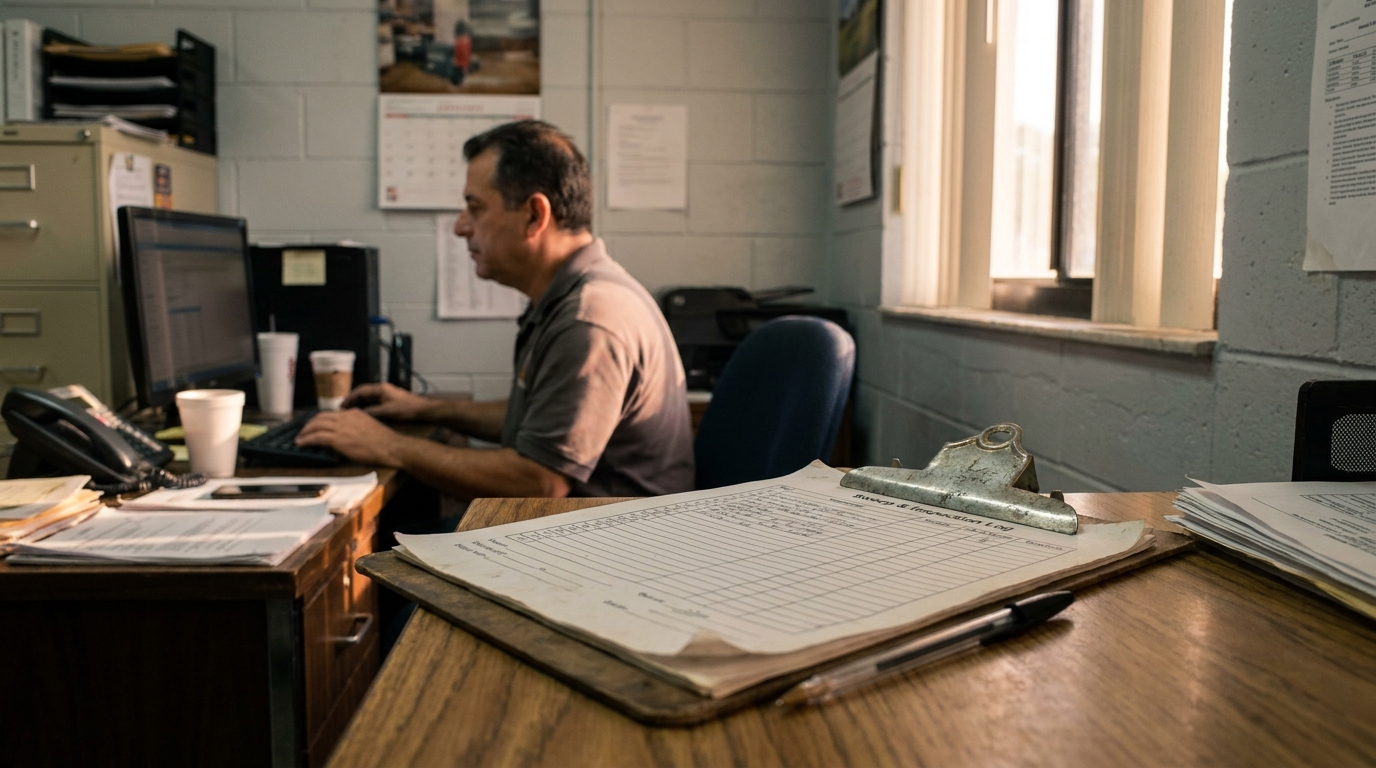
Sweep logs are internal records that restaurants use to document routine floor inspections and cleaning activities. A typical sweep log includes the date, time, employee initials, area inspected, and any hazards noted or resolved. In a Ft Lauderdale slip and fall claim, these logs serve as a paper trail revealing how diligently a restaurant monitored its premises.
The reason sweep logs carry so much weight traces directly to Florida’s premises liability statute. Under Florida Statute § 768.0755(1), the injured person must prove that the business had actual or constructive knowledge of the dangerous condition and should have taken action to remedy it. Sweep logs are one of the most direct ways to demonstrate whether the restaurant met that standard.
How Sweep Logs Prove Constructive Knowledge
Constructive knowledge is the legal concept at the heart of most restaurant slip and fall cases. Under FL Stat § 768.0755(1)(a), constructive knowledge may be established by showing the dangerous condition existed long enough that, in the exercise of ordinary care, the business should have known of it. If a sweep log shows no inspection for several hours before your fall, that gap may support your argument that the restaurant failed to exercise ordinary care.
Florida law also recognizes a second path to proving constructive knowledge. Under FL Stat § 768.0755(1)(b), the condition occurred with regularity and was therefore foreseeable. If historical sweep logs reveal recurring spills or hazards in the same area, this pattern can demonstrate the business should have anticipated the danger and taken preventive steps.
💡 Pro Tip: Ask your attorney to request sweep logs covering not just the day of your fall but also several weeks or months prior. Patterns of recurring hazards can strengthen your claim under the foreseeability standard of FL Stat § 768.0755(1)(b).
Steps to Preserve Sweep Logs After a Ft Lauderdale Restaurant Injury
Time is your biggest enemy when preserving restaurant maintenance logs in Florida. Many restaurants rotate or discard paper logs daily or weekly, and digital records can be overwritten. Below are the key steps you should take as soon as possible after your fall.
Report the Incident Immediately
Filing a formal incident report at the restaurant creates a documented record that ties your injury to a specific date, time, and location. Ask for a copy before you leave. This report puts the restaurant on notice and may trigger an internal obligation to retain related records, including sweep logs.
Send a Written Preservation Request
A spoliation letter formally instructs the restaurant to retain all records related to your fall. This letter should specifically identify sweep logs, surveillance footage, incident reports, and employee schedules. Sending this letter early is critical because once a business receives notice of a potential claim, destroying relevant evidence can carry serious legal consequences under Florida spoliation principles.
💡 Pro Tip: Send your preservation demand via certified mail with return receipt requested. This creates proof that the restaurant received your request and establishes a clear timeline if records later go missing.
Contact an Attorney Promptly
An experienced slip and fall accident lawyer can issue a formal preservation letter on your behalf and, if necessary, seek a court order to prevent evidence destruction. Attorneys understand which records to target and how to compel production through discovery if the restaurant resists.
💡 Pro Tip: Do not wait to see how your injuries develop before contacting a lawyer. Evidence preservation is most effective in the first days and weeks after a fall.
Understanding Florida’s Legal Standard for Restaurant Fall Claims
Florida Statute § 768.0755 is the controlling statute for slip and fall cases involving transitory foreign substances in business establishments, including restaurants. The statute places the burden on the injured person to prove the business had actual or constructive knowledge of the hazard. This makes Florida more challenging for plaintiffs compared to jurisdictions that presume negligence once a fall occurs.
It is also important to note that Florida’s negligence framework under Chapter 768 preserves common-law duties of care. Under FL Stat § 768.0755(2), the statute does not affect any common-law duty owed by a person or entity in possession of business premises. This means restaurants may owe duties beyond what the statute specifically codifies.
| Type of Knowledge | What You Must Show | Role of Sweep Logs |
|---|---|---|
| Actual Knowledge | The restaurant knew about the specific hazard before your fall | Logs may show an employee noted the hazard but failed to address it |
| Constructive Knowledge (Duration) | The hazard existed long enough that the restaurant should have discovered it | Gaps in inspection times documented on logs can support this |
| Constructive Knowledge (Foreseeability) | The condition occurred with regularity and was foreseeable | Historical logs showing repeated hazards in the same area |
What Happens When Sweep Logs Are Missing or Destroyed
Missing sweep logs do not automatically doom your case, but they do create significant challenges. If a restaurant cannot produce sweep logs after receiving a preservation demand, your attorney may argue that the absence itself is evidence of negligence. Courts in Florida may consider the failure to maintain or preserve records as relevant to whether the business exercised ordinary care.
Spoliation of evidence is a serious issue in Florida premises liability cases. When a party intentionally or negligently destroys relevant evidence after being put on notice of a claim, courts may impose sanctions ranging from adverse jury instructions to, in extreme cases, striking defenses entirely. For a deeper look at the evidence preservation process, our guide on how to preserve evidence after a slip and fall provides additional steps you should consider.
💡 Pro Tip: Photograph everything at the scene of your fall, including the floor condition, your footwear, any visible substances, and nearby signage. Your own documentation becomes even more valuable if the restaurant’s records later turn up incomplete.
Additional Evidence That Supports a Slip and Fall in Restaurant Cases
Sweep logs are critical, but they are not the only evidence that can support your Ft Lauderdale restaurant injury claim. Building a strong case often requires multiple types of documentation:
- Surveillance camera footage from inside and outside the restaurant
- Witness contact information and statements
- Photographs of the hazardous condition, your injuries, and the surrounding area
- Medical records documenting the nature and extent of your injuries
- The restaurant’s employee schedules and training records related to floor maintenance
Beyond § 768.0755, other provisions of Florida law may also shape the scope of a restaurant’s duty. Common-law principles governing the obligations of business owners to invitees can provide additional grounds for liability depending on your case circumstances.
💡 Pro Tip: If the restaurant has a self-service drink station, buffet, or open kitchen area, these features may increase the foreseeability of spills and strengthen your argument that more frequent inspections were required.
Frequently Asked Questions
1. How long do restaurants in Florida keep sweep logs?
There is no Florida statute requiring restaurants to retain sweep logs for a specific period. Retention practices vary widely. Some restaurants keep logs for only a few days, while others retain them for months. This is why sending a preservation demand letter quickly after your fall is so important.
2. Can I request sweep logs directly from the restaurant?
You can ask, but the restaurant is not legally obligated to hand over internal records without formal legal process. Once an attorney files a claim, formal discovery tools such as requests for production can compel the restaurant to produce its records, including sweep logs and restaurant cleaning records.
3. What if the restaurant says it does not keep sweep logs?
The absence of sweep logs may actually work in your favor. If a restaurant has no system for regularly inspecting its floors, that lack of a maintenance protocol can serve as evidence that the business failed to exercise ordinary care under FL Stat § 768.0755(1)(a).
4. What is spoliation of evidence in a Florida slip and fall case?
Spoliation refers to the destruction, alteration, or failure to preserve evidence that a party knew or should have known was relevant to a legal claim. In Florida, courts may sanction a party that engages in spoliation, and the consequences can significantly affect the outcome of premises liability cases.
5. How does comparative negligence affect my restaurant fall claim?
Under Florida’s modified comparative negligence system, the court may reduce your recovery based on your percentage of fault, and if you are found more than 50 percent at fault, you may be barred from recovering damages entirely. For example, if you were distracted or wearing inappropriate footwear, the defense may argue you share responsibility. However, this does not eliminate the restaurant’s liability if it failed to address a known or foreseeable hazard, provided your fault does not exceed the statutory threshold.
Protecting Your Ft Lauderdale Slip and Fall Claim Starts Now
The most important thing you can do after a slip and fall in a restaurant is act quickly to preserve the evidence that supports your claim. Sweep logs, surveillance footage, and incident reports can disappear in days if you do not take affirmative steps to protect them. Florida Statute § 768.0755 places the burden on you to prove the restaurant had knowledge of the hazard, and sweep logs are often the key to meeting that burden.
Do not let valuable evidence slip away. Contact Chalik & Chalik Injury Lawyers to discuss your Ft Lauderdale restaurant fall claim. Call 954-476-1000 or contact us today to get started on protecting your rights.


 Who Is Liable for a Slip and Fall at Fort Lauderdale Airport?
Understanding Liability After a Terminal Fall at Fort Lauderdale, Hollywood International Key Takeaways: Liability for a slip and fall at Fort Lauderdale, Hollywood International Airport depends on who controlled the area where you were hurt, the airport authority, a maintenance contractor, an airline, or a retail tenant. Florida allocates fault by percentage, with multiple parties...

With a baby on board, pregnant women may find it more difficult to maintain balance and be surefooted. Pregnancy brings with it many bodily changes like a shift in the center of gravity, weight gain, a protruding belly, dizziness and loosening of ligaments. As a result, expectant mothers may be prone to falls. While there...
 How to Build a Strong Miami Airport Slip and Fall Injury Claim
When a Terminal Stumble Turns Into a Legal Fight Key Takeaways: Building a strong Miami International Airport slip and fall claim requires proving the property operator breached its duty of care to you as a lawful "invitee," the category owed the highest protection under Florida law. The central challenge is showing the business had actual...

Hoverboards have become increasingly popular, but many people are unaware of how dangerous the self-balancing scooters can be. Florida hospitals have seen a spike in the number of adults and children in emergency rooms due to hoverboard injuries over the past holiday season. Besides posing a fire hazard, the two-wheeled electric scooter also puts users...

There are two main types of slip and fall accidents: Elevated falls – These occur when a person falls from one level down onto another. They can be as simple as tripping off a sidewalk into the road, or as complex as falling off scaffolding on a construction site. Same-level falls – These occur when...
 How Can a Target Slip and Fall Lawyer in Florida Help You?
A slip and fall at Target can happen in seconds, then you’re left with pain, medical bills, missed work, and questions about what comes next. If you were hurt in a Target store, parking area, or entrance in Florida, the most important thing to know is this: these cases are evidence-driven. It’s not enough that...

Slip and fall injuries can happen anywhere. Private and business property owners are both legally responsible for ensuring that their property is free from any kind of dangerous or hazardous conditions. Residential property owners must take reasonable precautions to prevent any visitors from harm when choosing to allow guests onto the premises. Slip and fall...

If you were injured when you fell in a gym, you could sue the gym for a slip and fall accident. To sue the gym, you will have to prove they were negligent in some way and that their negligence caused your fall. A local slip and fall lawyer in Fort Lauderdale can explain the...