
Understanding Your Rights After a Fall on an Escalator at FLL
Key Takeaways:Proving negligence after an escalator fall at Fort Lauderdale-Hollywood International Airport requires establishing duty, breach, causation, and damages. Because FLL is operated by Broward County, your claim falls under Florida’s limited waiver of sovereign immunity, which remain $200,000 per person and $300,000 per incident (a 2025 proposal to raise these caps cleared House committees but did not move in the Senate, and a 2026 bill (HB 145) subsequently passed both chambers but was vetoed by Governor DeSantis, leaving the caps unchanged), along with strict pre-suit notice requirements. As an airport passenger, you are generally an invitee entitled to the highest duty of care, though establishing breach typically requires proof of actual or constructive notice. Multiple parties may share responsibility, with damages apportioned by fault percentage. Under Florida’s modified comparative negligence standard adopted in 2023, being more than 50 percent at fault bars recovery entirely. Prompt medical care, preserved evidence, and timely action are essential.
Proving negligence after an escalator fall at Fort Lauderdale-Hollywood International Airport generally comes down to four connected elements: duty, breach, causation, and damages. Because FLL is operated by a Florida government subdivision, the path to recovery carries added procedural layers many injured travelers don’t expect.
If you were hurt on an escalator or moving walkway at FLL, the team at Chalik & Chalik Injury Lawyers can help you understand your options. Call us at 954-476-1000 or reach out through our online case review page to discuss your situation.
The Legal Foundation: Premises Liability and Negligence
Escalator-fall claims sit within premises liability law. Liability is based on negligence, meaning a person or company can be held responsible if they failed to meet a legal duty to keep property reasonably safe, and that failure directly caused your injury. You can read more about how these claims work in this overview of premises liability principles.
Malfunctioning equipment is a recognized hazard within this area of law. Inadequate maintenance, including broken stairs or handrails and malfunctioning elevators or escalators, can support a premises liability claim. A broken step, sudden stop, or defective handrail is directly relevant if you fell on an FLL escalator.
💡 Pro Tip: Photograph the escalator, any warning signs (or their absence), and your visible injuries before leaving the scene. Time-stamped images can become powerful evidence in proving negligence.
Why Your Status as a Visitor Matters
As an airport passenger, you are generally considered an invitee, and that classification shapes the duty owed to you. An invitee is owed the highest level of protection, which typically requires the owner to maintain premises in a reasonably safe condition, inspect for unknown dangers, and warn of or correct hazards. This heightened duty of care in a Florida airport setting is central to an escalator injury claim in Fort Lauderdale.
Establishing breach usually requires proof of notice. A plaintiff generally must show the owner had actual notice, or constructive notice, meaning the hazard existed long enough that a reasonably careful owner should have discovered and fixed it. For a defective escalator, maintenance logs, inspection records, and prior complaints often become the heart of the case.
Sovereign Immunity: The Government Layer at FLL
Because FLL is run by Broward County, your claim falls under Florida’s limited waiver of sovereign immunity. The state, for itself and its agencies or subdivisions, waives sovereign immunity for liability for torts, but only to the extent specified in the act. You can review the governing statute on the state’s official page for the waiver of sovereign immunity under Fla. Stat. § 768.28.
Government liability tracks ordinary negligence principles. Fla. Stat. § 768.28 makes government liable for negligent acts of employees acting within the scope of employment to the extent that a private person would be liable under the same circumstances. The standard duty, breach, causation, and damages framework still applies to your escalator-fall case.
Recovery against a government entity is capped. Under the statute, judgments could be paid up to $200,000 per person and $300,000 per incident, with any excess payable only by further act of the Legislature. A 2025 proposal (HB 301) to increase these caps cleared all Florida House committees but never saw movement in the Florida Senate and was not enacted during the 2025 session; a subsequent 2026 bill (HB 145) passed both chambers but was vetoed by Governor DeSantis, leaving the caps unchanged at $200,000 per person and $300,000 per incident. Amounts above the applicable cap generally require a legislative claims bill, which is a separate and uncertain process.
Deadlines and Pre-Suit Notice You Cannot Ignore
Claims against a government subdivision like the county-operated airport carry strict pre-suit notice requirements. Under subsection (6)(a), no action may be instituted unless the claimant presents the claim in writing to the appropriate agency within 3 years after the claim accrues, and the claim is denied in writing or six months pass without a final disposition. Missing this step can bar an otherwise valid claim.
There is also a firm outer limitations period. Under subsection (14), claims for negligent or wrongful acts are forever barred unless a complaint is filed within 4 years after the claim accrues. It’s important to distinguish this government administrative claim process from the civil statute of limitations, as they operate separately.
Defendants routinely raise procedural and factual defenses. Common defenses include comparative fault, the open and obvious doctrine, assumption of risk, and statute of limitations. The written pre-suit notice must be presented within 3 years of accrual, so confirm the deadlines that apply to your specific claim.
💡 Pro Tip: Don’t wait for pain to fully develop before documenting your injury. Seek medical care promptly, because a clear medical record connecting the fall to your injuries supports the causation element.
| Key Deadline Type | General Reference | Practical Note |
|---|---|---|
| Written notice to agency | Fla. Stat. § 768.28(6)(a) | Generally within 3 years of accrual |
| Filing the complaint | Fla. Stat. § 768.28(14) | Generally within 4 years of accrual |
| Recovery cap | Fla. Stat. § 768.28 | $200,000/person; $300,000/incident (a 2025 proposal cleared House committees but did not move in the Senate; a 2026 bill (HB 145) passed both chambers but was vetoed by Governor DeSantis) |
These timeframes and figures are general and fact-dependent; specific circumstances and the date a claim accrues can affect them.
How Fault Is Shared Among Multiple Parties
An escalator fall may involve more than one responsible party, such as the airport authority, a maintenance company, or an equipment manufacturer. A negligence action broadly includes ordinary negligence, strict liability, products liability, professional malpractice, breach of warranty, and similar theories. That broad definition can support pursuing multiple defendants after an escalator accident at Fort Lauderdale airport.
When several parties share responsibility, Florida apportions damages by fault. Under Fla. Stat. § 768.81(3), the court shall enter judgment against each party liable based on that party’s percentage of fault and not on joint and several liability. You can review Florida’s negligence framework in the state’s compilation of Chapter 768 negligence statutes.
Your own conduct can also affect what you recover. Under Fla. Stat. § 768.81(2), contributory fault chargeable to the claimant diminishes proportionately the amount awarded but does not bar recovery, subject to subsection (6). This reflects Florida’s modified comparative negligence standard, which matters if an airport or escalator company argues you contributed to the fall.
A 2023 amendment raised the stakes for plaintiffs. Under Fla. Stat. § 768.81(6), any party found to be greater than 50 percent at fault for his or her own harm may not recover any damages. This 50 percent bar took effect on March 24, 2023, and applies to most negligence claims, though it does not apply to actions arising out of medical negligence. Building a strong evidentiary record early is important.
💡 Pro Tip: Identify witnesses at the scene and ask for their contact information. Independent accounts can counter a comparative-fault argument that shifts blame onto you.
Working With an Airport Slip and Fall Attorney Ft. Lauderdale Residents Trust
Building an escalator-fall case often requires preserving evidence that can disappear quickly. Security footage, incident reports, and maintenance records are frequently in the hands of the airport or its contractors. A knowledgeable airport slip and fall attorney Ft. Lauderdale claimants rely on can request preservation of that footage before it’s overwritten. Many escalator cases also benefit from engineering professionals who can explain how the equipment failed.
Understanding how these claims fit together helps you move forward with confidence. If you want a deeper look at related incidents, our discussion of escalator accident Fort Lauderdale airport issues explains how tram and moving-walkway injuries are handled.
Consider the practical steps below when protecting a potential claim:
- Report the fall to airport personnel and request a written incident report.
- Preserve footwear, clothing, and any physical evidence from the fall.
- Keep every medical bill, prescription receipt, and treatment note.
- Avoid giving recorded statements to insurers before consulting counsel.
For a broader look at how these matters are handled locally, our team as a trusted FLL airport injury lawyer resource is ready to explain the process.
Frequently Asked Questions
1. What four elements must I prove in an escalator-fall claim?
You generally must establish duty, breach, causation, and damages. Each element is fact-specific and often requires supporting documentation.
2. Does the fact that FLL is government-run change my case?
Yes. The state and its subdivisions waive sovereign immunity for torts, but only to the extent specified in statute. Special notice rules and damage caps apply.
3. Can I still recover if I was partly at fault?
In many cases, yes, though your recovery is reduced proportionately. However, under the 2023 amendment, being more than 50 percent at fault bars recovery entirely in most negligence cases.
4. How long do I have to bring a claim against the airport?
Deadlines are strict. No action may be instituted unless the claim is presented in writing within 3 years after it accrues, and the claim is denied or six months pass. A complaint generally must be filed within 4 years of accrual. Acting promptly is critical.
5. Can more than one party be held responsible?
Often, yes. Under Fla. Stat. § 768.81(3), the court enters judgment against each liable party based on that party’s percentage of fault. That can include the airport, a maintenance company, and a manufacturer.
Moving Forward After an FLL Escalator Injury
Proving negligence after an escalator fall at Fort Lauderdale airport blends premises liability principles with special rules that apply to government defendants. You generally must show duty, breach, causation, and damages, satisfy strict pre-suit notice requirements, and account for damage caps and comparative fault. Because each issue is fact-dependent, careful documentation and prompt action can make a meaningful difference.
If an escalator fall left you injured at FLL, don’t navigate the process alone. Contact Chalik & Chalik Injury Lawyers today by calling 954-476-1000 or by submitting your details through our confidential contact form to have a knowledgeable airport slip and fall attorney Ft. Lauderdale claimants trust review your situation.



In an effort to tackle the large number of slip and fall accidents reported in Palm Beach County, Florida, officials announced three senior health fairs in January. Palm Beach County Fire Rescue said 87 percent of the 911 calls they received in 2015 were regarding medical emergencies. The most common calls they responded to involved...
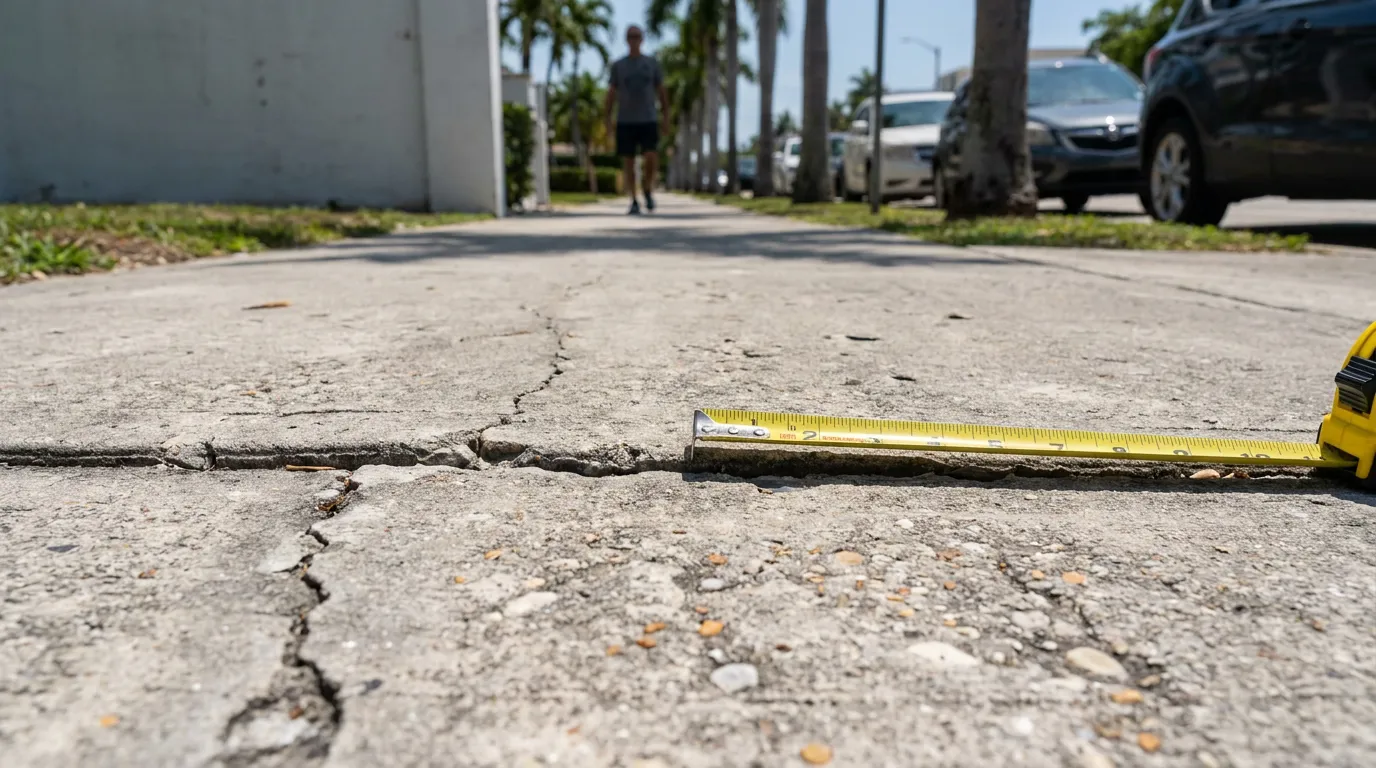 What Is the ADA 1/4-Inch Trip Hazard Rule in Ft Lauderdale?
Why a Quarter-Inch Can Change Your Injury Claim Key Takeaways: The ADA 1/4-inch trip hazard rule in Ft Lauderdale comes from federal accessibility standards allowing vertical changes up to 1/4 inch without treatment, while changes between 1/4 and 1/2 inch must be beveled and those over 1/2 inch require a ramp. This measurement can help...
 Steps to Meet the Dual-Notice Rule in a Broward Airport Injury Claim
When the Government Runs the Airport: What Injured Travelers in Broward Need to Know Key Takeaways: Getting injured at a government-operated Broward airport requires navigating Florida’s sovereign immunity framework and its strict dual-notice rule. You must identify the correct government agency (and any contractors sharing its immunity), prepare a written claim, present it to both...
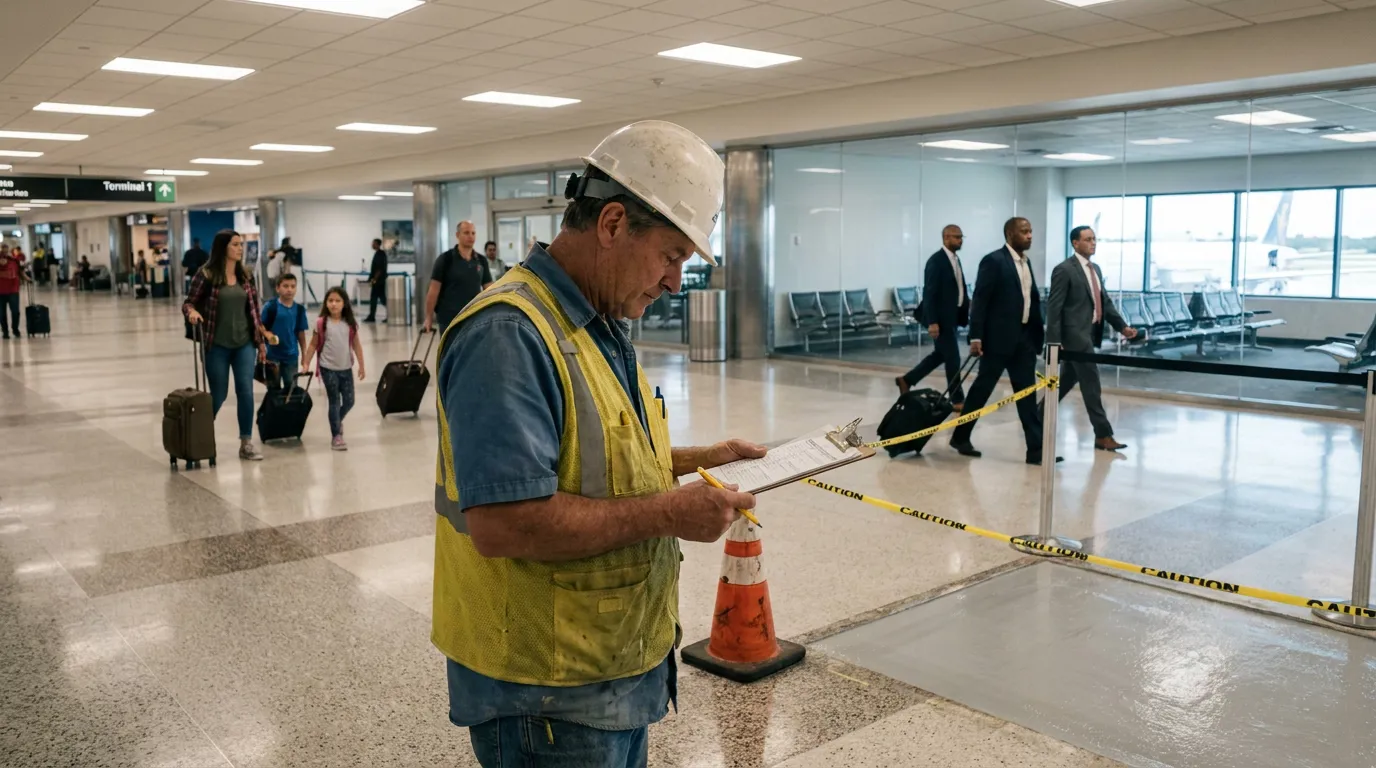 Can Airport Contractors Be Held Liable for a Ft Lauderdale Terminal Fall?
Understanding Who Is Responsible When You Fall Inside a Fort Lauderdale Airport Key Takeaways: Airport contractors in Fort Lauderdale can be held liable for terminal falls depending on who controlled the area and whether they maintained it safely. Under Fla. Stat. §768.0755(2), Florida law preserves common-law duties for any party controlling premises, meaning maintenance contractors...

Legally, you are not required to hire a lawyer for a slip and fall in Florida. However, having an attorney who understands premises liability law, knows how to negotiate with insurance companies, and can represent your interests in court offers a healthy peace of mind—leaving you to focus on recovering from your injuries. If you...

If you suffer injuries in a slip and fall accident on someone else’s property, the negligent party’s liability insurance company will typically be responsible for paying you compensation to cover your losses, such as medical bills, lost wages, and pain and suffering. A Fort Lauderdale slip and fall accident lawyer from our firm can guide...

A transitory foreign substance is any solid or liquid substance, object, or item that is located in a place that it does not belong. The law regarding transitory foreign substances is part of premises liability, and its definition often arises in slip and fall cases. Florida Statute 768.0755 states that if a person slips and...

In a slip and fall accident case, medical records serve as vital evidence to support a compensation claim. Your medical records will document your injuries and treatments, establish a link between the accident and your injuries, and help the insurance company and your lawyer determine how much compensation you deserve to recover. A Fort Lauderdale...