
When a Fall Makes an Old Injury Worse in Miami
Key Takeaways:Yes, you may be able to recover damages if a Miami slip and fall worsened an old injury. Recovery is generally limited to the extra harm the fall caused, not the pre-existing condition itself. If the jury cannot separate the two, Florida’s standard jury instructions may allow damages for the whole condition. Florida case law and jury instructions recognize the eggshell plaintiff principle, meaning a negligent party takes the injured person as they find them. In a transitory substance case, such as a spill, you generally must still prove the business had actual or constructive knowledge of the hazard under Fla. Stat. § 768.0755. Under Florida’s modified comparative negligence system, your recovery is reduced by your share of fault, and for most negligence cases filed on or after March 24, 2023, you are barred from recovering anything if you are found more than 50 percent at fault. Florida’s 2023 changes under Fla. Stat. § 768.0427 also limit how medical expenses can be proven, making clear before-and-after medical records especially important.
Yes, you may be able to recover damages if a Miami slip and fall worsened an old injury, but generally only for the harm the fall added. Florida law does not require you to have been perfectly healthy before the accident. If you had a bad knee, a bulging disc, or an arthritic hip and a fall on a wet grocery store floor made it worse, you may have a valid claim for that aggravation. The real fight is usually how much of your current pain, treatment, and lost income the fall actually caused, and how much fault the property owner’s insurer tries to shift onto you.
If an insurer is blaming your medical history for your injuries, the team at Chalik & Chalik Injury Lawyers can review your situation. Call 954-476-1000 or contact us now to talk through your options.
How Florida Treats a Slip and Fall Pre-Existing Condition
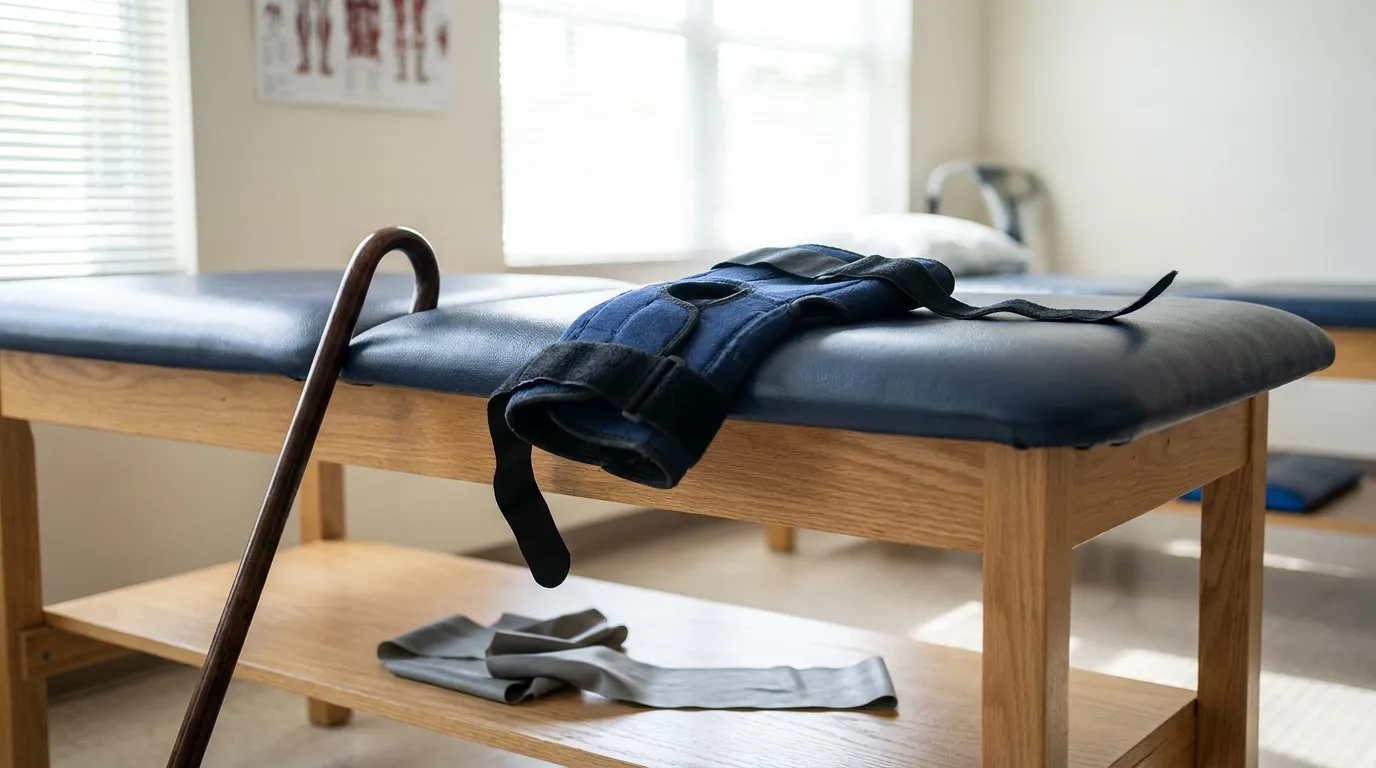
A prior injury generally affects the damages part of your case, not the basic liability question. You still have to prove the property owner was negligent. After that, the focus usually shifts to separating what the fall caused from what you were already living with.
The "Eggshell Plaintiff" Principle
Florida courts and the standard jury instructions recognize that a negligent party takes the injured person as they find them. A defendant generally cannot escape responsibility just because a healthier person might have walked away from the same fall with only bruises. The standard jury instructions on aggravation of a pre-existing condition also say that if the jury cannot separate the damage caused by the old condition from the damage caused by the fall, it may award damages for the entire condition. This principle comes from case law and jury instructions, not a statute, so how it applies depends on the facts.
The "But-For" Frame in Florida’s Statute
Florida’s comparative fault statute offers a useful way to think about aggravation damages. Under Fla. Stat. § 768.81(1)(b), economic damages include past and future lost income, medical expenses, and "any other economic loss that would not have occurred but for the injury giving rise to the cause of action." In an aggravation claim, that generally means you recover losses caused by the fall’s worsening of your condition, not the costs of the old condition itself.
Proving the Property Owner Was Responsible First
Before damages matter, you must establish that the property owner or business is legally responsible for the hazard. For transitory substances in a business establishment, Florida’s rules are set out in Fla. Stat. § 768.0755, which is part of Florida’s Chapter 768 negligence laws. For a deeper look at the elements, you can review what must be shown to win a Miami fall case.
The Transitory Substance Rule
If you slipped on a spill, dropped food, or tracked-in water at a Miami grocery store, mall, or restaurant, Fla. Stat. § 768.0755(1) requires you to prove the business had actual or constructive knowledge of the dangerous condition and should have taken action to fix it. Your prior injury does not change this burden.
Showing the Business "Should Have Known"
You may prove constructive knowledge through circumstantial evidence under Fla. Stat. § 768.0755(1)(a)-(b). The law allows two main paths:
- Length of time: The hazard existed long enough that, with ordinary care, the business should have discovered it.
- Regularity: The same kind of hazard happened so often that it was foreseeable, such as a leaking cooler or rainwater regularly tracked in during Miami storms.
- Supporting records: Surveillance footage, inspection logs, maintenance requests, and prior incident reports can help show either path.
💡 Pro Tip: Surveillance video at many stores may be recorded over within days or weeks. Sending a written preservation request quickly may help keep that footage from disappearing.
How Comparative Fault Can Reduce or Bar Your Recovery
Florida uses a modified comparative negligence system, and it can heavily affect a pre-existing condition claim. Under Fla. Stat. § 768.81(2), your own share of fault proportionally reduces both your economic and noneconomic damages. Under comparative negligence principles, a plaintiff’s compensation generally drops by a percentage equal to their fault.
The 51 Percent Bar
Under the 2023 tort reform law, ch. 2023-15, Fla. Stat. § 768.81(6) bars any recovery if you are found more than 50 percent at fault for your own harm. This rule generally applies to negligence cases filed on or after March 24, 2023, including slip and fall cases, but not medical negligence claims under chapter 766. Under Fla. Stat. § 768.81(3), the judge or jury assigns a percentage of fault to each party.
Defense teams often argue that someone with a known bad knee, back, or hip should have been more careful. They may say you should have used a handrail, worn different shoes, or avoided a certain aisle. These arguments can be challenged with evidence about the hazard itself, how visible it was, and the business’s failure to warn or clean up. Even so, no result can be assumed.
What Medical Evidence Looks Like After Florida’s 2023 Changes
For cases filed on or after March 24, 2023, Fla. Stat. § 768.0427 limits how medical expenses can be proven in personal injury cases. This matters because your bills are often the main proof that the fall caused new or increased treatment beyond your baseline. The table below summarizes the key benchmarks.
| Type of Medical Expense | What Evidence May Be Allowed |
|---|---|
| Past bills already paid, § 768.0427(2)(a) | The amount actually paid, regardless of who paid it |
| Unpaid bills or letter of protection treatment, § 768.0427(2)(b) | If you have health coverage other than Medicare or Medicaid: what that coverage would pay plus your share. If you are uninsured or on Medicare or Medicaid: 120% of the Medicare rate, or 170% of the Medicaid rate if no Medicare rate applies. If a letter of protection was sold to a third party: the amount the third party paid. Also, reasonable amounts billed for medically necessary treatment |
| Future care, § 768.0427(2)(c) | What health coverage would pay, 120% of the Medicare rate at the time of trial (or 170% of the Medicaid rate if no Medicare rate applies), and reasonable future amounts for medically necessary treatment |
Future damages can be significant in aggravation cases. A fall might speed up the need for a joint replacement or spinal surgery that you otherwise would not have needed for years, if at all. Medical opinions comparing your condition before and after the fall are often central to proving that acceleration.
Practical Steps to Strengthen a Worsened Old Injury Claim
The strongest aggravation claims usually rest on clear before-and-after documentation. Insurers commonly request years of prior records hoping to show your symptoms were unchanged.
Gather records that show your baseline before the fall. Notes showing your condition was stable, improving, or managed without surgery can be powerful. Your treating doctors may be able to describe how your function, pain levels, and treatment needs changed afterward.
Be honest about your medical history from the start. Hiding a prior injury may damage your credibility if records surface later, and they often do. Disclosure lets your legal team frame the history accurately rather than react to it.
💡 Pro Tip: Keep a simple daily journal of pain, sleep, missed work, and activities you can no longer do. Concrete comparisons to life before the fall can help illustrate noneconomic losses.
Frequently Asked Questions
1. Will my pre-existing condition automatically ruin my case?
No, a prior condition does not prevent recovery on its own. It usually shifts the focus to how much harm the fall added. If a jury cannot separate old symptoms from new ones, it may award damages for the entire condition.
2. What is the eggshell plaintiff rule in Florida?
It is a principle from Florida case law and jury instructions that a defendant takes the injured person as found. It is not written into a statute, and how it applies can vary.
3. Can the store blame my bad knee for the fall?
The store may argue you share fault, and Fla. Stat. § 768.81 allows fault to be allocated to you. In most cases filed on or after March 24, 2023, if you are found more than 50 percent at fault, you recover nothing. Evidence about the hazard can help rebut these claims.
4. Do I still have to prove the store knew about the spill?
Yes, under Fla. Stat. § 768.0755(1), you must prove actual or constructive knowledge for a transitory substance in a business. Your prior injury does not change this requirement.
5. Can I get compensation for a future surgery?
You may, if evidence shows the fall caused or sped up the need for it. Fla. Stat. § 768.0427(2)(c) sets benchmarks for proving future medical costs, and medical testimony is often key.
Protecting Your Right to Prior Injury Compensation
A Miami slip and fall that worsens an old injury may still support a claim, but these cases require careful proof. You generally must show the business knew or should have known about the hazard, separate new harm from your baseline, and push back against comparative fault arguments. Speaking with a Miami premises liability attorney can help you understand how these rules apply to your situation.
If your fall made a prior condition worse, our Florida injury team at Chalik & Chalik Injury Lawyers is ready to listen. Call 954-476-1000 or schedule your case review today.
Disclaimer: This content is for informational purposes only and is not legal advice. Every case is unique, and results may vary. Consult an attorney about your specific circumstances.


 Can Security Cameras Help Your Plantation Slip and Fall Case?
Security Camera Footage Could Make or Break Your Injury Claim When you slip and fall in a Plantation grocery store or mall, security cameras overhead may capture crucial evidence. Falls remain one of the most common causes of emergency department visits nationwide, with federal health data showing that more than one in four older adults...

As Fort Myers personal injury attorneys, we have represented victims of premises liability accidents in Florida for a number of injuries. While head injuries can be some of the most serious injuries that victims of falls may suffer from, joint injuries are often the most common. Shoulder injuries from slip and fall accidents in South...
 Who Is Considered an Invitee Under Plantation Slip and Fall Law?
Understanding Your Rights as a Visitor on Florida Property Key Takeaways: If you were injured while shopping, dining, or visiting a business in Plantation, you were most likely an invitee under Florida law, a person invited onto property for a business purpose. Florida sorts visitors into three categories, invitee, licensee, and trespasser, each carrying different...

Why Documenting a Slip and Fall Scene in Miami Can Make or Break Your Case All falls (including slip and fall accidents) account for approximately 21.3% of emergency room visits, while slip and fall accidents specifically account for approximately 12% of all fall-related emergency room visits (not 12% of all ER visits), representing over 1...

The cost of your medical bills and the financial value of your pain and suffering are two separate parts of an insurance claim or personal injury lawsuit. If you are injured in a car crash, trip and fall accident, or any other type of accident, you can collect compensation from the person responsible for the...

If you slip and fall in a grocery store, you should immediately notify the manager on duty and ask them to call 911 if you need emergency medical assistance. Do not make assumptions about your injuries, either. Report the incident to the store manager and see a doctor. You may even call the police to...

If you suffer injuries in a slip and fall accident on someone else’s property, the negligent party’s liability insurance company will typically be responsible for paying you compensation to cover your losses, such as medical bills, lost wages, and pain and suffering. A Fort Lauderdale slip and fall accident lawyer from our firm can guide...

If you slipped, fell, and got hurt, you might be wondering if you have a valid personal injury claim and the right to pursue fair compensation. In many slip and fall cases, it comes down to whether a property owner knew (or should have known) about a dangerous condition and didn’t fix it in a...