
When a Boarding Ramp Fails, More Than One Party May Be Responsible
Key Takeaways:When a cruise ship gangway shifts or collapses, several parties may be liable, including the cruise line, a public port authority, a terminal or stevedoring contractor, and the gangway maker. Florida’s comparative fault statute generally does not use joint and several liability in negligence actions, so each party generally pays only its own share of fault. That makes it vital to find every party at fault, though federal maritime law may apply different rules in some cases. Claims against government-owned ports are generally capped at $200,000 per person and $300,000 per incident. Federal general maritime law governs most cruise passenger claims and usually applies pure comparative fault. Cruise ticket contracts often require written notice within six months and a lawsuit within one year. Because evidence can disappear quickly, document what happened and talk to a lawyer early.
When a cruise ship gangway shifts or collapses, more than one party is often at fault. The cruise line, a port authority, a terminal or stevedoring contractor, and the gangway maker may each share fault, depending on who owned, set up, maintained, or designed the equipment. When Florida’s comparative fault statute applies, each liable party generally pays only its own share. Federal maritime law may apply different rules. A gangway accident can cause broken bones, head injuries, crush injuries, and in the worst cases a fall into the water between the ship and the pier.
If you or a loved one was hurt while boarding or leaving a ship, Chalik & Chalik Injury Lawyers can help you review your options. Call 954-476-1000 or contact us now to talk about what happened.
Why Gangway Accidents Happen at Florida Ports
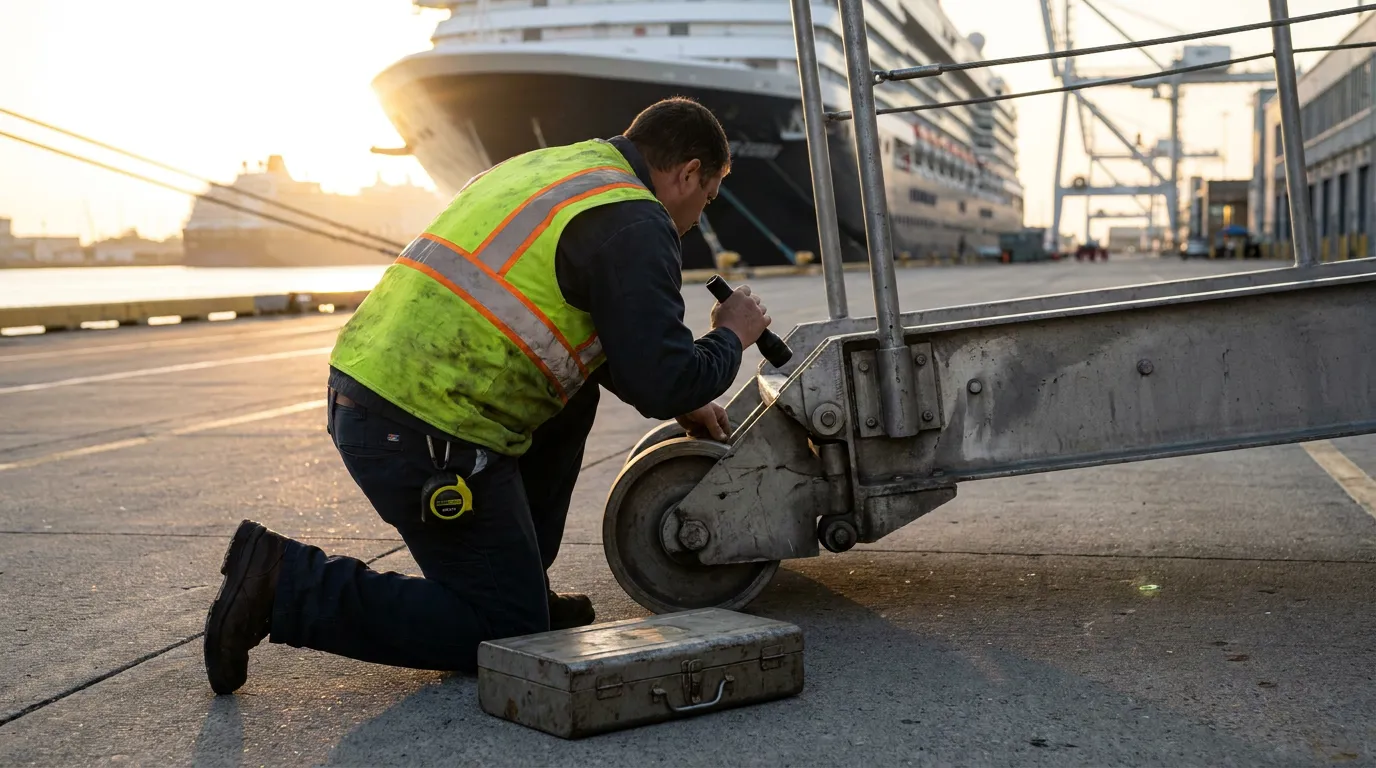
A gangway is a moving link between a floating ship and a fixed pier. Tides, wind, cargo loading, and ballast changes can move a ship by several feet while passengers are on the ramp. If crews do not adjust, secure, and watch the gangway, it can tilt, slide, pull apart, or collapse.
Common Causes of Gangway Shift Injuries
Most claims trace back to a few preventable failures. The usual problems include:
- Poor positioning or securing as the ship rises or falls with the tide
- Worn or broken hinges, hydraulic arms, rollers, or locking pins
- Missing, loose, or broken handrails and safety nets
- Wet, slippery, or uneven walking surfaces with no warnings
- Crowding caused by poor control of passenger flow
- Failure to stop boarding during high wind or heavy swells
Each cause may point to a different party. A cruise line may control boarding procedures, while a port or terminal operator may own the shoreside jetway. An equipment failure may also trace back to how a maker designed or built the part.
Who Can Be Liable for a Cruise Ship Gangway Collapse
Several parties may share fault, and Florida’s comparative fault statute defines covered claims broadly. Under Florida Statutes § 768.81(1)(c), a "negligence action" includes claims based on negligence, strict liability, products liability, and similar theories. Under § 768.81(1)(d), a "products liability action" includes claims about a product’s design, manufacture, construction, or installation. That may cover failed hinges, hydraulic arms, and locking pins.
The Cruise Line
A gangway case often starts with the cruise line’s negligence. Federal general maritime law governs most passenger injury claims and generally requires carriers to use reasonable care under the circumstances. For risk-creating conditions, courts generally require proof that the cruise line knew or should have known about the danger. To read more about how fault is divided, see this guide on who can be held liable when suing a cruise line.
Port Authorities and Terminal Contractors
A public port may be liable when its own terminal gangway or jetway fails. Florida Statutes § 768.28(5)(a) makes state agencies and subdivisions liable in tort the way a private person would be, with limits. The law bars punitive damages and prejudgment interest. Payment is generally capped at $200,000 per person and $300,000 per incident unless the Legislature approves more through a claim bill. Claims against government entities also generally require written notice before suit under § 768.28(6). These caps generally do not protect private cruise lines and contractors.
Florida’s seaport statutes also shape port operations. Private stevedoring or terminal contractors may set up gangways under contract, and those contracts can affect who gets named in a lawsuit. Finding the right entity early often takes careful investigation.
Gangway Manufacturers
A maker may be liable if a design or manufacturing flaw caused the collapse. Makers have defenses. Under Florida Statutes § 768.1257, the jury in a design defect case considers the state of the art when the product was made. Under § 768.1256(1), a product is presumed not defective if, when sold, it met federal or state codes, statutes, rules, or standards meant to prevent that type of harm. The injured person may be able to rebut that presumption. Under § 768.1256(2), if the maker did not meet those standards, the product is presumed defective, though the maker may rebut that presumption. These defenses apply to claims governed by Florida law, and maritime product liability claims may follow different rules.
| Potential Defendant | Typical Basis for Liability | Key Florida Considerations |
|---|---|---|
| Cruise line | Unsafe boarding procedures, poor maintenance, no warnings | General maritime law usually governs |
| Public port authority | Defective terminal gangway or jetway | § 768.28(5)(a) damages caps |
| Terminal or stevedoring contractor | Poor setup or monitoring | Fault divided under § 768.81 |
| Manufacturer | Design or manufacturing defect | §§ 768.1256 and 768.1257 defenses |
How Florida Divides Gangway Liability Among Defendants
Florida generally does not use joint and several liability in negligence actions. Under Florida Statutes § 768.81(3), each liable party generally pays only its own percentage of fault. There are exceptions, and federal maritime law may apply joint and several liability in some cases. If you miss a defendant, part of the fault could go unpaid.
Defendants often try to blame someone outside the lawsuit. Under § 768.81(3)(a)1-2, a defendant that wants to blame a nonparty must say so in its pleadings and name that person, or describe the nonparty as well as it can. It must then prove that person’s fault at trial by a preponderance of the evidence. You can review these rules in Florida’s comparative fault statute.
When Equipment Makes Injuries Worse
A failed handrail or safety net may not cause a fall, but it can make injuries much worse. Under § 768.81(3)(b), in a products liability action claiming that a defect caused or worsened the injuries, the jury must consider the fault of everyone who played a part in the accident. These "enhanced injury" claims depend heavily on the facts and on engineering evidence.
Your Own Share of Fault
Defendants may argue that the passenger was careless. Under Florida Statutes § 768.81(6), in a negligence action a plaintiff found more than 50 percent at fault for their own harm generally may not recover damages. This bar does not apply to medical negligence claims. But federal general maritime law governs most cruise passenger injury claims, and it uses pure comparative fault, so the passenger’s share of fault reduces recovery but does not bar it.
Wrongful Death After a Fatal Boarding Accident
Families may have a wrongful death claim when a gangway accident is fatal. Florida Statutes § 768.19 expressly covers deaths "occurring on navigable waters." The person or "watercraft" that would have been liable if the victim had lived may be liable for the death. Federal maritime remedies may also apply. For example, the Death on the High Seas Act governs deaths more than three nautical miles from shore and limits damages.
Strict Deadlines for Cruise Passenger Injury Claims
Cruise passenger injury claims often have much shorter deadlines than typical Florida injury cases. Under 46 U.S.C. § 30526, cruise lines may use the passenger ticket contract to require written notice of a claim within no less than six months and a lawsuit within no less than one year of the injury or death. Many tickets also require suit in a specific federal court, often in South Florida. Claims against a port, contractor, or maker may have different deadlines and steps.
💡 Pro Tip: Find your cruise ticket contract, whether printed or electronic, and keep a copy. The notice deadline, time limit to sue, and required court are usually buried in its terms.
Protecting Your Gangway Injury Claim From Day One
Evidence can disappear quickly once the ship sails. Cruise lines and terminal operators control surveillance footage, maintenance logs, and incident reports. A cruise injury lawyer can send letters asking them to keep this evidence. Steps that may help include:
- Photographing the gangway, handrails, and walking surface
- Getting the names and contact details of witnesses
- Reporting the incident to the crew and asking for a copy of the report
- Getting prompt medical care and keeping every record
- Writing down the tide, weather, and crowd conditions while memories are fresh
Being honest and consistent with your legal team and doctors also matters. Defendants may use gaps in treatment or conflicting statements to challenge the claim.
Frequently Asked Questions
1. Can I sue more than one party for a gangway injury?
Yes, in many cases. Injured passengers may bring claims against the cruise line, a terminal operator, and a maker. When Florida law applies, § 768.81(1)(c) treats negligence, strict liability, and products claims as negligence actions for dividing fault.
2. What if the port authority owns the gangway?
Claims against a government-owned port generally face limits. Florida Statutes § 768.28(5)(a) generally caps payment at $200,000 per person and $300,000 per incident unless the Legislature approves more. Punitive damages are not available, and you generally must give written notice before suing.
3. How long do I have to file a claim?
Many cruise tickets require notice within six months and a lawsuit within one year. 46 U.S.C. § 30526 allows these contract limits but does not allow shorter ones. Other defendants may have different deadlines, so prompt review is important.
4. Does it matter if I was partly at fault?
It may reduce your recovery, but it does not always bar it. General maritime law applies pure comparative fault. Florida’s bar for plaintiffs more than 50 percent at fault under § 768.81(6) may apply to claims governed by state law.
Holding Every Responsible Party Accountable
A shifting or collapsing gangway may involve several parties, and when Florida’s comparative fault statute applies, each one generally pays only its share. Damages caps, product defenses, and short ticket deadlines can each shape the outcome. Early investigation and saving evidence matter.
If a gangway accident changed your life or took a loved one, the team at Chalik & Chalik is ready to listen. Please call 954-476-1000 or reach out online to discuss your situation with a cruise injury lawyer who handles cruise ship gangway cases.
Disclaimer: This content is for informational purposes only and is not legal advice. Every case is unique, and results may vary. Consult an attorney about your specific circumstances.

When Paradise Turns Painful: Understanding Your Rights After a Cruise Ship Accident Attorney in Ft Lauderdale Can Help If you suffered injuries aboard a cruise vessel departing from Port Everglades or another Ft Lauderdale terminal, you’re likely wondering whether maritime law protects your right to compensation. The physical pain, mounting medical bills, and confusion about...
 Royal Caribbean Passenger Dies Following Onboard Disruption
A Royal Caribbean cruise passenger tragically passed away following an onboard incident on December 17, 2024. Initial reports suggest the passenger was involved in a disturbance and was subdued by ship security using pepper spray and restraints. He later passed away while in custody, leaving his family devastated. This tragedy highlights critical concerns about onboard...
 Can I Sue in Florida if My Cruise Ship Is Registered in Another Country?
Foreign Flags and Florida Courts: What Injured Cruise Passengers Should Know Key Takeaways: Yes, you can often sue in Florida even if your cruise ship is registered in another country, because a ship’s flag alone does not decide which court can hear your case. Federal admiralty law, Florida’s long-arm statute (Fla. Stat. § 48.193), and...
 What Does a Cruise Ship’s CDC Vessel Sanitation Score Mean in Miami?
Understanding Cruise Ship Health Inspections Before You Sail Key Takeaways: A cruise ship’s CDC Vessel Sanitation Program score is a numeric rating on a 100-point scale measuring how well a ship maintains federal health and hygiene standards during unannounced inspections, occurring roughly twice yearly. A score of 86 or higher is satisfactory, while 85 or...