
Your Medical History Can Strengthen Your Crash Claim
Key Takeaways:A pre-existing condition doesn’t have to sink a Fort Lauderdale crash claim, because records from before and after the crash can show how much the collision made your injury worse. Once you file a PIP claim, Florida law generally lets auto insurers request your past treatment records, and you can ask for a copy of what the insurer gets. To qualify for PIP medical benefits, you generally must get initial care within 14 days. To recover pain and suffering damages, your injury must meet Florida’s threshold "in whole or in part," which may include a permanent worsening of an existing condition. For negligence claims filed on or after March 24, 2023, you generally can’t recover anything if you’re found more than 50 percent at fault.
Your earlier medical records may be among the most useful evidence in a Fort Lauderdale crash case, especially when you had a health condition before the collision. Many injured people worry that a past back problem or old knee injury will ruin their claim. Often, the opposite is true. Records from before the crash set a baseline, and records from after show how your condition changed. A doctor’s comparison of the two can help show the crash made your injury worse. Generally, you may recover for that added harm, but not for the condition as it already existed.
If an insurer is using your medical history to deny or reduce your claim, you can talk with someone who handles these cases.Chalik & Chalik Injury Lawyers helps injured South Florida residents review their records and understand their options. Call 954-476-1000 or contact us now to discuss your situation.
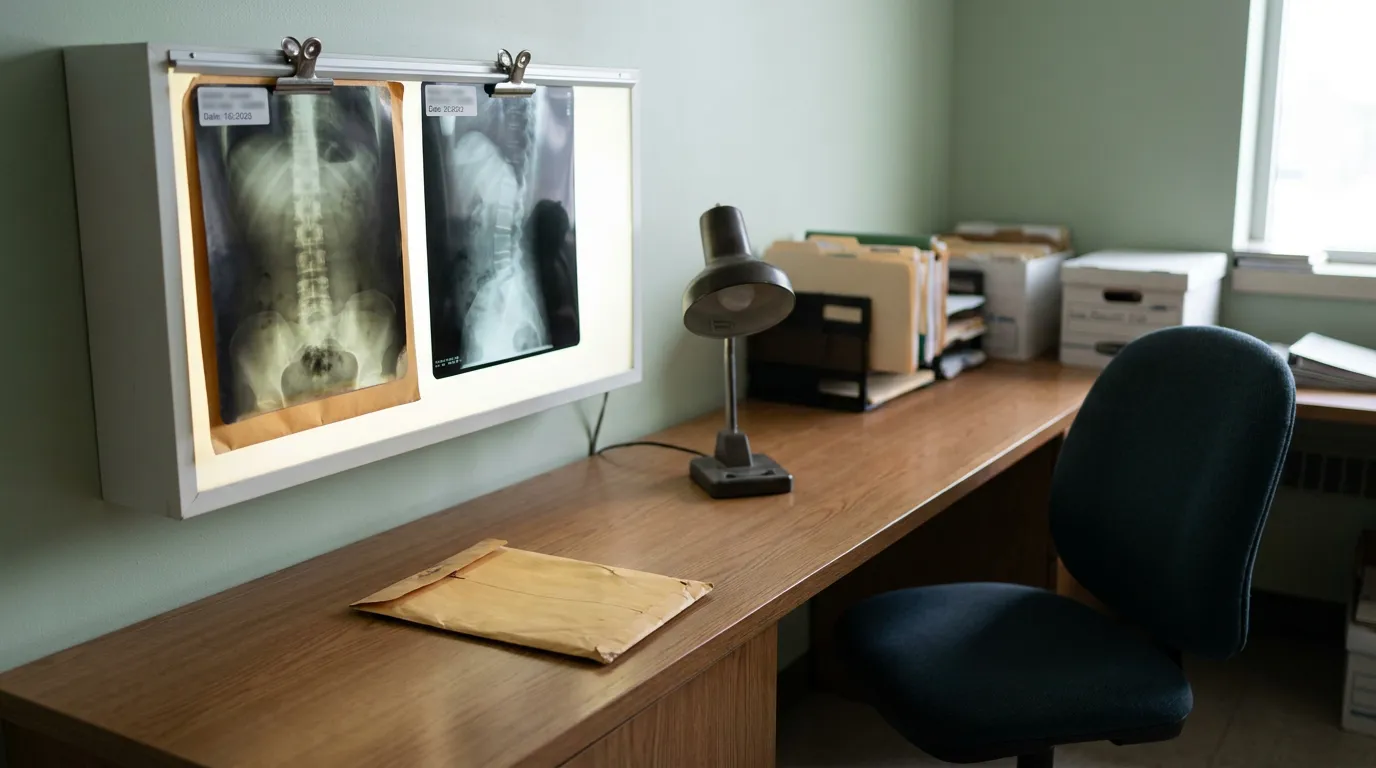
Why Insurers Look Closely at Your Past Treatment
Florida law gives auto insurers broad access to your medical history once you file a personal injury protection (PIP) claim. Under Fla. Stat. § 627.736(6)(b), if the insurer asks, any physician, hospital, clinic, or other medical institution that treated you "before or after" the bodily injury behind the claim must provide a sworn written report of the history, condition, treatment, dates, and costs of that treatment. The provider must also let the insurer inspect and copy the records. The statute limits this to treatment relevant to the claimed injury, so the insurer will likely review related treatment from before the crash.
Providers who share records in compliance with this statute are also protected from certain lawsuits. A claim for violating physician-patient privilege or invading privacy may not be brought against a provider who complies. You should expect your earlier related treatment history to come out during the claim, and if you file a lawsuit, the defense may seek relevant records through discovery. Knowing this ahead of time helps you prepare, so the adjuster is not the first person to tell your medical story.
The Sworn Statement That Separates Old Care From New Care
The same statute requires the provider to identify which treatment costs the crash caused. The provider’s sworn statement must identify "which portion of the expenses for such treatment or services was incurred as a result of such bodily injury." This mirrors the core issue in an aggravation claim: separating care you would have needed anyway from care you needed because of the crash.
You Have a Right to See What the Insurer Gathers
You do not have to guess what records the insurance company is relying on. Fla. Stat. § 627.736(6)(d) provides that the injured person shall be furnished, upon request, a copy of all information the insurer obtains under that section. You can review the full text of Florida’s no-fault insurance statutes for more detail. Under § 627.736(6)(g), complying with the policy terms, including submitting to an examination under oath, is a condition precedent to receiving benefits. Under § 627.736(7), the insurer may also require a medical examination, and an unreasonable refusal to attend may affect your benefits.
💡 Pro Tip: Request a copy of everything the insurer has collected early in the claim. Gaps, missing visits, or records from the wrong patient can sometimes be corrected before they shape the adjuster’s view of your case.
How a Prior Medical Records Car Accident Claim Shows a Change
A strong prior medical records car accident claim generally depends on a clear before-and-after comparison. Your earlier records show what your condition looked like on a normal day. Your post-crash records show what it looks like now. The difference is often the clearest proof of a worsened injury.
Medical baseline evidence can come from many sources. Useful records may include:
- Primary care notes describing your pain levels, mobility, and activity before the crash
- Earlier imaging such as X-rays or MRIs that can be compared with new scans
- Physical therapy discharge notes showing you had recovered or stabilized
- Pharmacy records showing medication changes after the collision
- Work records showing you performed your job without restrictions
Suppose you had mild, occasional back stiffness that never stopped you from working. After a rear-end collision on I-95, you suddenly need injections, can no longer lift your children, and miss weeks of work. Prior records showing light, infrequent care can help a treating physician explain that the crash changed your condition. You may also find it helpful to learn more about lower back pain after a crash.
| Record Type | What It May Show | Why It Matters |
|---|---|---|
| Pre-crash treatment notes | Stable or mild symptoms | Sets the baseline |
| Post-crash emergency or urgent care | New or increased complaints | Creates a dated starting point |
| Comparison imaging | Structural changes | Supports objective findings |
| Treating doctor’s opinion | Medical link to the crash | Addresses causation |
Prompt Treatment Protects Both Benefits and Evidence
Getting care quickly after a Fort Lauderdale crash matters for two reasons. First, under Fla. Stat. § 627.736(1)(a), PIP medical benefits pay "Eighty percent of all reasonable expenses" for medically necessary services, but only if you receive initial services and care within 14 days after the accident. PIP benefits are capped at $10,000 in total, and limited to $2,500 unless a qualifying provider determines you have an emergency medical condition. Missing the 14-day window may cost you PIP medical benefits.
Second, early treatment creates a dated record that can be compared with your prior medical records. A visit within days of the collision documents your symptoms while they are fresh. When weeks pass without care, an insurer may argue that something other than the crash caused the change.
Meeting Florida’s Injury Threshold With a Pre-Existing Condition
Florida’s no-fault system limits when you can sue for pain and suffering. Under Fla. Stat. § 627.737(1), insured owners, operators, and occupants are exempt from tort liability to the extent PIP benefits are payable for the injury. However, you can still recover pain and suffering damages if the injury meets the threshold in subsection (2). That threshold is often the main issue in a pre-existing condition car accident case.
What the Threshold Requires
Fla. Stat. § 627.737(2) allows damages for pain, suffering, mental anguish, and inconvenience only if the injury consists "in whole or in part of" certain qualifying harms. These include significant and permanent loss of an important bodily function, permanent injury within a reasonable degree of medical probability (other than scarring or disfigurement), significant and permanent scarring or disfigurement, or death. The phrase "in whole or in part" matters for aggravation claims. A crash that permanently worsens an existing condition may meet the threshold even though the condition did not begin with the crash.
The Defense May Challenge the Threshold Before Trial
The at-fault party can ask the court to test your threshold evidence before trial. Under Fla. Stat. § 627.737(3), on the defendant’s motion, the court must decide, one time only and 30 days before trial or the pretrial hearing, whether the plaintiff will be able to submit some evidence meeting subsection (2). If not, the court must dismiss the claim without prejudice. Before-and-after medical evidence is often central at this stage.
How Comparative Fault Fits Into an Aggravation Case
Florida follows a modified comparative negligence rule that can reduce or bar recovery. Under Fla. Stat. § 768.81(2), contributory fault chargeable to the claimant diminishes proportionately the amount awarded as economic and noneconomic damages. Fla. Stat. § 768.81(6) adds that in most negligence actions, a claimant found more than 50 percent at fault may not recover any damages. This rule generally applies to causes of action filed on or after March 24, 2023, and does not apply to medical negligence claims. You can read the comparative fault statute directly.
In a Broward County injury claim, the defense may raise both fault and causation arguments at once. Fault concerns who caused the collision, while causation concerns what harm it caused. Clear medical evidence can help answer the second question, and crash reports, witness statements, and photos can help with the first. Comparative fault generally does not reduce PIP benefits, which are paid regardless of fault.
💡 Pro Tip: Be candid with your treating doctors about your medical history. Leaving out a prior injury can damage your credibility if the insurer later finds the records, while an accurate history lets your doctor explain the difference between old and new symptoms.
Common Challenges Crash Victims Face
Insurers may use several tactics when a claimant has a medical history. Some adjusters describe all post-crash treatment as "ongoing care" for an old condition. Others point to a single prior visit to argue a long-standing problem existed. An insurer may also schedule an examination with a doctor who attributes your symptoms entirely to age or degeneration.
These arguments can often be answered with organized, complete records. Gaps in your history, incomplete files, or vague doctor notes can make aggravation damages harder to prove. A Ft Lauderdale personal injury lawyer can help gather those records, work with your treating providers, and respond when an insurer misreads your history.
Frequently Asked Questions
1. Can I still recover compensation if I had a pre-existing condition?
In many cases, yes, depending on the facts. Fla. Stat. § 627.737(2) allows pain and suffering damages when the injury meets the threshold "in whole or in part," which may include a permanent worsening of an earlier condition. Recovery is generally limited to the added harm the crash caused.
2. Will the insurance company see my old medical records?
It is very likely. Fla. Stat. § 627.736(6)(b) allows insurers to request reports from providers who treated you before or after the injury for related conditions. You may request a copy of what the insurer obtains under Fla. Stat. § 627.736(6)(d).
3. How soon do I need to see a doctor after a crash?
To qualify for PIP medical benefits, you generally must receive initial services and care within 14 days under Fla. Stat. § 627.736(1)(a). Prompt care also creates a dated record for comparison with earlier treatment.
4. Does being partly at fault end my claim?
Not necessarily. Under Fla. Stat. § 768.81, your damages may be reduced by your percentage of fault. For most negligence claims filed on or after March 24, 2023, you are barred from recovery if found more than 50 percent at fault.
5. What is the best evidence that a crash made my injury worse?
Before-and-after records reviewed by a treating physician are often the most persuasive. Comparison imaging, therapy notes, and changes in medication or work ability can all support a Ft Lauderdale car accident claim.
Turning Your Medical History Into Clear Proof
Your medical past does not have to work against you. When collected and explained carefully, prior medical records can set a baseline showing how a Fort Lauderdale crash changed your health. Florida law gives insurers access to relevant records, sets a 14-day window for PIP care, requires you to meet a threshold for pain and suffering, and may reduce recovery based on comparative fault. Every claim is different, and the outcome depends on your specific records and circumstances.
If an insurer is blaming your injury on an old condition, you can get help understanding your options. Reach out to Chalik & Chalik Injury Lawyers to talk through your records and your claim. Call 954-476-1000 today or schedule your free consultation to get started.
Disclaimer: This content is for informational purposes only and is not legal advice. Every case is unique, and results may vary. Consult an attorney about your specific circumstances.


A study by the AAA Foundation for Traffic Safety found that mistakes on the part of drivers are the cause of 94 percent of all car accidents, and about 87 percent of drivers engage in unsafe behaviors. Meanwhile, the number of deaths from car accidents has risen sharply. In 2015, there were 38,300 fatalities and...

On Tuesday, December 13th, the National Transportation Safety Board (NTSB) called for the first ever nationwide ban on cell phone use while driving. If approved, this would include the use of cell phones and text messaging from all devices while driving. Although different states have certain cell phone laws prohibiting handheld devices for all age...
 Driver Rear-Ends Trooper’s Car
Florida, along with forty-two other states, has adopted “move over” laws. These laws were designed to protect police officers and emergency workers as they work on the sides of busy highways and interstates. Florida law states that if it is safe, vehicles should move one lane over from a stopped police car or other emergency...

No one expects to be injured in a Florida car accident. However, you can always prepare for this unlikely instance beforehand and protect your legal rights afterward. One of the most difficult things victims of Florida car wrecks can face is being injured in an accident with a negligent driver who does not have insurance....

You can access a car accident report in Davie, FL, in multiple ways. You can obtain your car crash report online, by mail, or in person. It is important to note that there are fees for receiving one or multiple copies of your report. Processing time and availability vary depending on which method you use...

Florida requires a crash report for car accidents involving personal injury, death, property damage up to $500, intoxicated driving, commercial vehicles, and vehicles in hit-and-run accidents. You can request a crash report in Orlando online, by mail, or in person. An accident report can provide crucial details to substantiate your insurance claim or personal injury...

Car accidents can cause serious physical and financial harm, and you may need to file an insurance claim or personal injury lawsuit to recover your losses. If your crash was caused by another person’s negligence, a police report can help substantiate your claim for damages. Learn how to get a police report for a car...

If you or someone you love suffered injuries in a golf cart accident, a Fort Lauderdale personal injury lawyer can hold the at-fault party accountable on your behalf. They will explain how fault is determined in this kind of accident and how your state defines negligence. Typically, the elements that constitute negligence can establish how fault...