
Why a Visible Hazard Does Not Automatically End Your Miami Store Fall Claim
Key Takeaways:An adjuster’s "open and obvious" label is generally a defense argument, not a final ruling on your Miami store fall claim. Florida applies a two-duty framework: a hazard’s visibility may negate the duty to warn, but the separate duty to maintain reasonably safe premises may survive, and Fla. Stat. § 768.0755(2) expressly preserves common-law duties. Under § 768.0755(1), an injured shopper must generally prove the business had actual or constructive knowledge of a transitory foreign substance, shown through duration or recurrence evidence. Even if you were partly inattentive, § 768.81 may reduce recovery proportionally, though Florida’s 2023 amendments generally bar recovery entirely if a plaintiff is found more than 50% at fault. Early evidence, including surveillance video, sweep logs, incident reports, photos, and witness names, can often influence whether an obviousness defense holds up. Filing deadlines under Fla. Stat. § 95.11, generally two years for negligence claims accruing after March 24, 2023, and separate notice requirements for claims against governmental entities, make prompt legal review important.
If a store’s insurance adjuster told you the spill, cord, or uneven mat was "open and obvious," that statement is generally an argument, not a final ruling. Florida law recognizes that a hazard’s visibility may reduce or eliminate a duty to warn, but it does not necessarily erase the distinct duty to maintain the premises in a reasonably safe condition. That distinction is often where a store fall claim is won or lost, and an early denial letter should not be treated as the end of your case.
If you were hurt while shopping in Miami-Dade County, the team at Chalik & Chalik Injury Lawyers can review what happened and explain your options. Call 954-476-1000 or contact us now to discuss preserving surveillance footage and maintenance records before they disappear.
The Statute That Controls Every Miami Store Slip and Fall
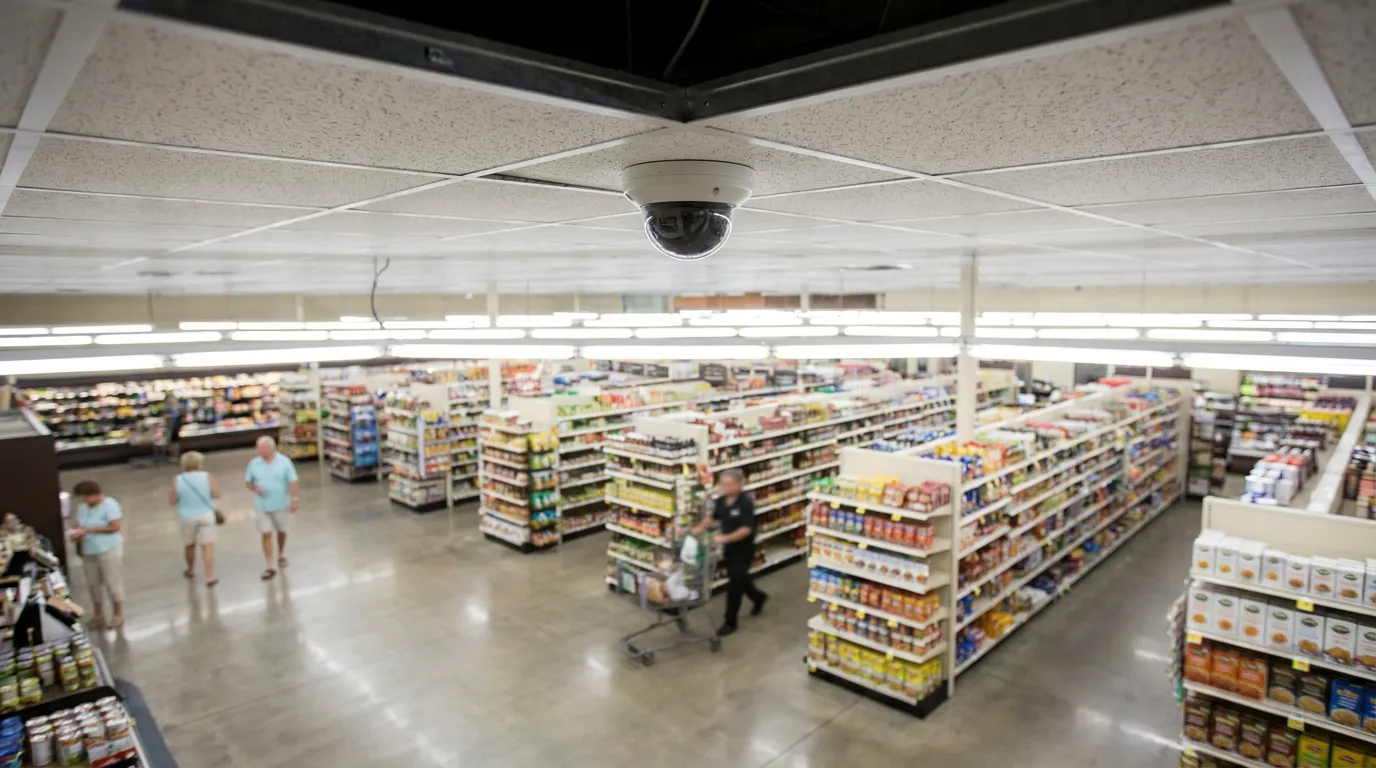
Florida’s slip-and-fall claims against businesses generally start with a specific statutory burden. Under Fla. Stat. § 768.0755(1), if a person slips and falls on a transitory foreign substance in a business establishment, the injured person must generally prove the business had actual or constructive knowledge of the danger and should have remedied it. This applies to grocery stores, big-box retailers, pharmacies, and shopping centers throughout Miami.
The statute is often narrower than many defense letters suggest. Section 768.0755 generally governs transitory substances, temporary things like liquids, produce, or tracked-in rainwater. Falls caused by structural defects, poor lighting, or negligent design are generally analyzed under broader common-law premises liability principles, though some courts have applied the statute broadly where a transitory substance is involved.
Constructive knowledge is frequently the battleground. Fla. Stat. § 768.0755(1)(a)-(b) allows constructive knowledge to be proven circumstantially, by showing the condition existed long enough that ordinary care should have revealed it, or that it occurred with regularity and was foreseeable. These two routes can matter enormously when a store claims the danger was plainly visible, though courts have emphasized the evidence must do more than suggest a mere possibility of notice.
How the Open and Obvious Danger Doctrine Florida Courts Apply Actually Works
The doctrine generally addresses what a business must warn about, not everything it must do. Florida appellate courts recognize a two-duty framework: the duty to warn, which may be negated when a condition is open and obvious, and the separate duty to maintain reasonably safe premises, which may not be automatically negated by obviousness. Still, some decisions have found no liability where a condition was so obvious and not inherently dangerous that no duty was breached. This framework was discussed in the context of Encarnacion v. Lifemark Hospitals of Florida, 211 So. 3d 275 (Fla. 3d DCA 2017), a Florida state court matter involving a slip-and-fall on a transitory foreign substance in a hospital hallway, where the court addressed the duty owed to business invitees and applied the constructive knowledge framework under Fla. Stat. § 768.0755, affirming summary judgment for the defendant because the plaintiff could not establish how long the substance had been on the floor.
The statute expressly preserves common-law duties. Fla. Stat. § 768.0755(2) states the section does not affect any common-law duty of care owed by a person or entity in possession or control of a business premises. The statutory notice requirement generally supplements Florida common law rather than replacing it, though the notice element in subsection (1) still must be satisfied for transitory-substance claims.
Foreseeability of encounter is a recurring theme. A property owner may still owe a duty of reasonable care when it could anticipate customers might encounter the hazard despite its visibility, such as when the only path to a register runs past a wet area. Whether that applies to your situation depends on layout, staffing, and timing.
Invitee Status and What It Means for Shoppers
Customers are generally classified as business invitees, the category owed the highest duty of care, which may include reasonable inspection for hidden dangers and warning of known hazards, unlike lesser duties owed to licensees and trespassers. A shopper in a Miami retail store during business hours ordinarily falls within this category, although a property owner is not an insurer of visitor safety and is not strictly liable for every injury on the premises.
Inadequate maintenance claims may fit naturally into this structure. Legal overviews of premises liability for poor maintenance explain that a property owner may be liable for injuries from a hazardous condition caused by inadequate maintenance if the owner knew or should have known and failed to fix it or warn visitors. Documented failures in a store’s inspection routine may support that theory, though the absence of a sweep log alone does not by itself establish notice.
Comparative Fault Instead of an Automatic Bar
Even if a jury finds you partly at fault, Florida generally uses comparative fault rather than a strict all-or-nothing rule. Fla. Stat. § 768.81 generally reduces a plaintiff’s recovery in proportion to that plaintiff’s own share of fault. Since the 2023 amendments, Florida applies modified comparative negligence to most negligence actions, meaning a plaintiff found more than 50% at fault generally recovers nothing; the prior pure comparative fault rule may still apply to claims accruing before March 24, 2023.
Adjusters sometimes present partial fault as if it ends the claim. It generally does not, so long as your share does not exceed 50% under the current statute. Whether comparative fault reduces recovery, and by how much, is typically a question for the finder of fact after all evidence is presented.
\u{1F4A1} Pro Tip: Write down, on the same day if possible, exactly what drew your attention away from the floor. Displays, signage, and crowded aisles can be relevant facts in an obviousness analysis.
Building the Evidence Record That Answers the Defense
Evidence gathered in the first days can often influence whether a case survives summary judgment. Surveillance video at many Florida retailers may be overwritten within weeks, and maintenance logs generally cannot be obtained without a formal request or litigation. A written preservation letter sent early may support a later spoliation argument if records are destroyed after notice.
Practical steps that may strengthen a Miami store injury claim include:
- Photographing the hazard, surrounding floor, lighting, and your footwear before anything is cleaned
- Reporting the fall to a manager and requesting a copy of the incident report
- Collecting names and phone numbers of every witness, including employees
- Seeking prompt medical evaluation so the injury timeline is documented
- Preserving the clothing and shoes you were wearing, unwashed
Inspection records can potentially convert an obviousness argument into a notice problem for the store. If sweep logs show gaps of an hour or more, that may support the length-of-time route to constructive knowledge, though the evidence must still permit a reasonable inference about how long the substance was present. If logs show recurring spills near a beverage cooler or entrance during rainy season, that may support the regularity route.
| Defense Argument | Evidence That May Rebut It |
|---|---|
| "The spill was plainly visible" | Store layout, display placement, lighting measurements, foot traffic patterns |
| "We had no notice" | Sweep logs, prior incident reports, employee testimony, timestamped video |
| "The customer was not watching" | Witness statements, comparative fault analysis under § 768.81 |
| "No warning was required" | Common-law maintenance duty preserved by § 768.0755(2) |
\u{1F4A1} Pro Tip: Ask whether the store uses a third-party janitorial contractor. Additional responsible parties can affect how a claim is structured.
Deadlines That Can Quietly End a Strong Case
Florida negligence claims are subject to statutory filing deadlines, and missing one may bar recovery entirely. Under Fla. Stat. § 95.11, most general negligence actions accruing on or after March 24, 2023 must be filed within two years, while claims accruing before that date are generally subject to the prior four-year period. The applicable period depends on the accrual date and nature of the claim, so confirming your specific deadline early is important.
Exceptions to limitations periods exist but are generally interpreted narrowly. Tolling and delayed-discovery arguments may apply in limited circumstances and are generally not automatic. Claims involving governmental entities, such as a fall in a publicly owned facility, are subject to Fla. Stat. § 768.28, which generally requires written notice to the agency and the Department of Financial Services and a pre-suit waiting period before suit may be filed, along with damage caps and other conditions that do not apply to private businesses.
Common Challenges Injured Shoppers Face
Insurers often deny these claims quickly, sometimes within days of the report. A fast denial may reflect an initial file review rather than a completed investigation, and it generally does not prevent further development of the case.
Recorded statements can create problems. Casual phrases like "I guess I wasn’t looking" may be quoted back later in a Florida premises liability defense. Understanding the open and obvious defense in Florida falls before speaking with an adjuster may help you describe events accurately without guessing.
Frequently Asked Questions
1. Can I still recover if the spill was clearly visible?
Possibly. Visibility may affect the duty to warn, but under Fla. Stat. § 768.0755(2) the common-law duty to maintain reasonably safe premises is preserved. You would still need to prove the store’s actual or constructive knowledge, and outcomes depend heavily on the facts.
2. What counts as a transitory foreign substance?
Generally, temporary substances such as water, grease, food, or tracked-in rain. Permanent conditions like broken tile are typically analyzed under general premises liability principles instead.
3. How do I prove the store knew about the hazard?
Potentially through actual notice evidence, such as an employee report, or circumstantial constructive-notice evidence permitted by Fla. Stat. § 768.0755(1)(a)-(b), including duration and recurrence proof.
4. Will being partly at fault destroy my claim?
Not necessarily. Fla. Stat. § 768.81 generally reduces recovery in proportion to your share of fault, but under the 2023 amendments a plaintiff found more than 50% at fault in most negligence cases recovers nothing.
5. How long do I have to file?
Deadlines come from Fla. Stat. § 95.11, and most negligence claims accruing on or after March 24, 2023 carry a two-year deadline. Because accrual dates and exceptions vary, prompt legal review is generally the safest way to confirm the applicable period.
Moving Forward After a Fall in a Miami Store
The open and obvious label is generally a defense theory, not an automatic outcome. Florida’s two-duty framework, the preservation of common-law duties in § 768.0755(2), the circumstantial constructive-knowledge routes in § 768.0755(1), and comparative fault under § 768.81 may all give injured shoppers meaningful ground to stand on. Success generally depends on evidence gathered early and analyzed carefully, and every case turns on its own facts.
If an adjuster has already dismissed your Miami store slip and fall, speak with a Florida slip and fall attorney at Chalik & Chalik Injury Lawyers. Call 954-476-1000 or request a free consultation to have your claim reviewed while evidence is still available.
Disclaimer: This content is for informational purposes only and is not legal advice. Every case is unique, and results may vary. Consult an attorney about your specific circumstances.


Critical Steps to Take Right After a Slip and Fall in Plantation, Florida A slip and fall accident in Plantation can happen in seconds, but the steps you take immediately afterward may shape your ability to recover compensation for months or years to come. Whether you slipped on a wet floor at a grocery store,...

When a Ft Lauderdale Restaurant Did Not Cause the Spill, Can It Still Be Held Responsible? Key Takeaways: A Ft Lauderdale restaurant can be liable for a slip and fall even if it did not create the spill, provided it had actual or constructive notice of the hazard. Florida law under Fla. Stat. §768.0755 requires...

Fall accidents send roughly 8.9 million people to the emergency room each year, according to the National Safety Council (NSC). As one of the leading causes of unintentional injuries, it’s important for everyone to know where the dangers lie and take the simple yet necessary precautions to prevent injuries. Common Places for Slip and Fall...

Common Injuries That May Support a Slip and Fall Claim in Ft Lauderdale Slip and fall accidents at Ft Lauderdale businesses can cause injuries ranging from minor bruises to life-altering trauma. If you slipped on a wet floor at a grocery store, tripped over debris at a hotel, or fell in a poorly maintained parking...

A slip and fall accident can cause serious injuries that affect your ability to work, move, and enjoy life as you did before. When you suffer harm because a property owner, business manager, or tenant failed to keep their premises safe, you have the right to seek compensation for your losses. Understanding what damages you...

A transitory foreign substance is any solid or liquid substance, object, or item that is located in a place that it does not belong. The law regarding transitory foreign substances is part of premises liability, and its definition often arises in slip and fall cases. Florida Statute 768.0755 states that if a person slips and...

Yes, if the city has the responsibility for maintenance and owns the portion of the sidewalk on which you slipped and fell and suffered injuries. If another entity (such as a private property owner, or condo or homeowner association) owned the sidewalk or was responsible for its maintenance, you may have to file a claim...

If you slip and fall in a grocery store, you should immediately notify the manager on duty and ask them to call 911 if you need emergency medical assistance. Do not make assumptions about your injuries, either. Report the incident to the store manager and see a doctor. You may even call the police to...