
Why Skin Injuries From a Bike Crash Deserve More Attention Than They Get
Key Takeaways:Road rash is an abrasion injury caused when unprotected skin slides across pavement, and after a Fort Lauderdale crash it can range from a minor scrape to a full-thickness wound requiring debridement, skin grafting, and potentially leaving permanent scarring. Doctors grade these wounds by depth, and that classification often influences the value of a claim. Motorcyclists face these injuries frequently in Broward County because they have no protective cage, and Florida’s helmet exemption for insured riders over 21 does not prevent extensive skin damage or establish fault. Medically, road rash carries real risks of infection, traumatic tattooing, nerve damage, and psychological effects from visible disfigurement. Legally, Florida’s modified comparative negligence rule under Fla. Stat. § 768.81 generally reduces recovery by the claimant’s share of fault and generally bars recovery entirely when that share exceeds 50 percent, while § 95.11(3) generally allows two years to file for negligence claims accruing on or after March 24, 2023. Thorough documentation, prompt medical care, and early evidence preservation can help place injured riders in a stronger position.
Road rash is the common name for an abrasion injury caused when unprotected skin slides across pavement. After a Fort Lauderdale crash, it can range from a superficial scrape to a full-thickness wound that may destroy nerve endings, require surgical debridement, and leave permanent scarring. Riders often underestimate these wounds since they aren’t fractures or brain bleeds, an assumption that can be costly given the real infection risk and long-term damages severe abrasions carry.
If you or a loved one suffered a motorcycle road rash injury on A1A, Broward Boulevard, or I-95, the team at Chalik & Chalik Injury Lawyers is available to review what happened. Call 954-476-1000 or contact us now to discuss your options with a Florida attorney.
How Doctors Grade Road Rash Severity
Medical providers generally classify abrasions by depth, and that classification can significantly influence the value of a claim. First-degree road rash affects only the outer skin layer and typically heals without scarring. Second-degree wounds break through the epidermis into the dermis, frequently leaving discoloration or texture changes even with proper care.
Third-degree road rash removes all skin layers and may expose fat, muscle, or bone. These wounds generally cannot heal on their own and may require grafting, staged reconstruction, and months of wound management. Riders facing this level of injury may benefit from understanding skin grafts to treat road rash before deciding on settlement.
| Severity | Depth | Typical Course |
|---|---|---|
| First-degree | Outer layer only | Home wound care; usually no scarring |
| Second-degree | Into the dermis | Cleaning and dressing; scarring possible |
| Third-degree | Full thickness | Debridement, grafting, permanent scarring likely |
💡 Pro Tip: Photograph the wound at every stage of healing, not just the day of the crash. Progressive images often communicate severity to an adjuster far better than a medical narrative alone.
Why Motorcycle Road Rash Happens So Often in Broward County
Motorcyclists have no cage, crumple zone, or airbag between their bodies and the roadway. In a South Florida collision, a rider is frequently ejected and travels along the asphalt at highway speed, the exact mechanism that produces widespread abrasion injuries. Heat and humidity also encourage lighter clothing, reducing the barrier between skin and pavement.
Florida’s helmet rule adds another layer riders should understand. Under Fla. Stat. § 316.211, a person generally may not ride without protective headgear complying with Federal Motorcycle Vehicle Safety Standard 218. An exception allows a rider over 21 to skip headgear if covered by an insurance policy providing at least $10,000 in medical benefits for crash injuries. That exception doesn’t remove the separate eye-protection requirement, and doesn’t apply to every category of two- or three-wheeled vehicle in the statute. Riding legally without a helmet doesn’t prevent extensive skin injury, and doesn’t, by itself, establish fault.
Other traffic rules can also become relevant to how a crash is reconstructed. Fla. Stat. § 316.304 generally prohibits wearing a headset while driving, with an exception for a motorcyclist using a helmet-installed headset positioned so speakers don’t block outside sound. Florida separately requires bicycle riders and passengers under 16 to wear a properly fitted helmet under Fla. Stat. § 316.2065(3); that provision doesn’t apply to motorcyclists or affect a motorcycle rider’s claim.
What Makes Abrasion Injuries Medically Serious
Skin is the body’s primary barrier against infection, and road rash breaches it across a wide surface area. Embedded gravel, glass, and asphalt particles can cause traumatic tattooing and, if not fully removed, chronic inflammation. Cellulitis, staph infection, and sepsis are recognized complications in deep contaminated wounds.
Long-term consequences frequently extend beyond the skin itself. Riders may experience nerve damage, reduced range of motion when scarring crosses a joint, heightened sun sensitivity, and psychological effects tied to visible disfigurement. Recovery timelines are highly fact-dependent, and treating physicians are the appropriate source for prognosis in any individual case.
Practical Steps After a Ft Lauderdale Motorcycle Accident
- Seek emergency evaluation promptly, even if the wound looks superficial.
- Request that all foreign material removal be documented in the medical record.
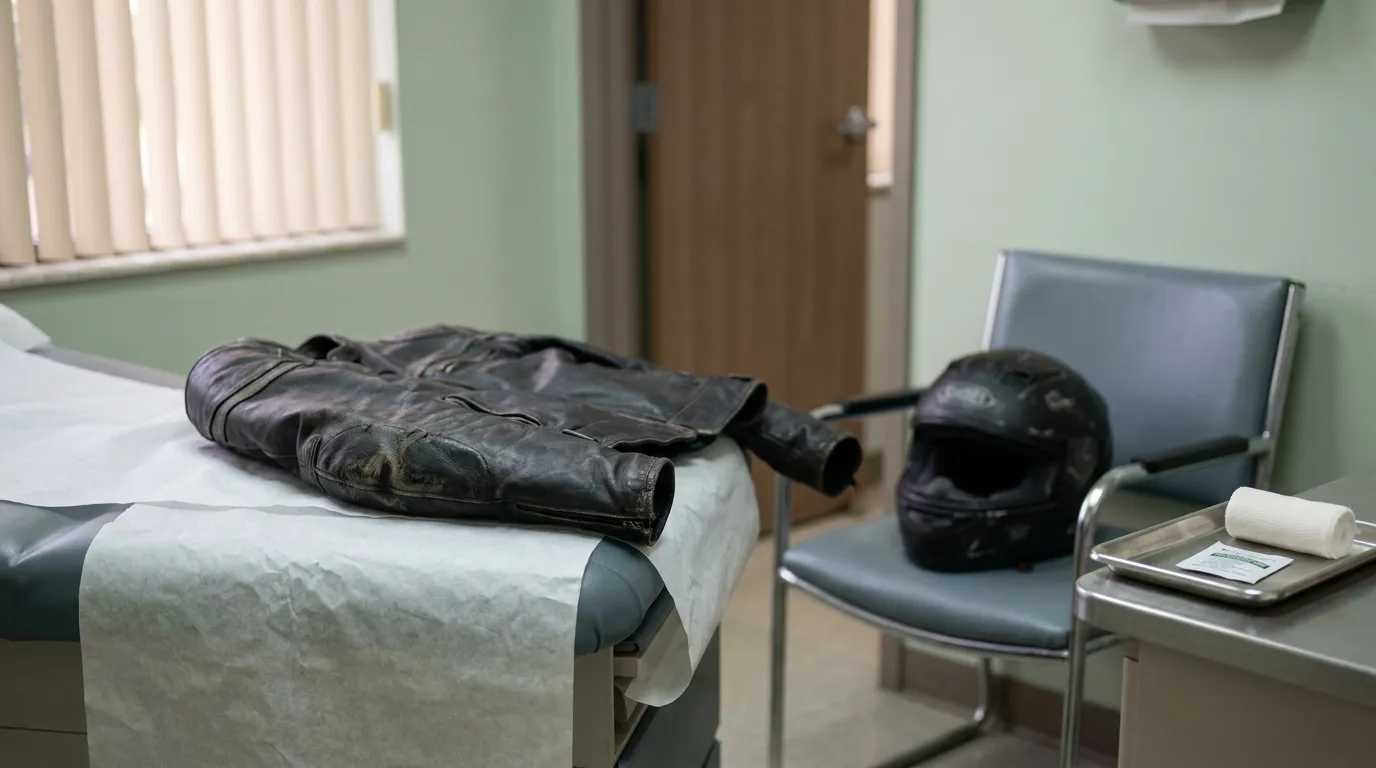
- Preserve damaged gear, jackets, and boots without washing them.
- Obtain the official report through the Florida crash report portal.
- Follow every wound care instruction and attend all follow-up appointments.
How Florida Law Handles Fault in Rider Injury Claims
Florida applies a modified comparative negligence framework, which can directly affect recovery. Under Fla. Stat. § 768.81(2), contributory fault chargeable to the claimant diminishes proportionately the damages awarded for that fault. Judgment is generally entered against each liable party based on their percentage of fault, subject to statutory exceptions.
The threshold matters enormously. Under Fla. Stat. § 768.81(6), a party found more than 50 percent at fault for their own harm may not recover any damages. That bar doesn’t apply to medical negligence actions, and the 2023 amendment applies to causes of action filed after its effective date. A Broward rider found 45 percent responsible could still recover a reduced award, while one found 55 percent responsible would generally be barred from recovering.
Pure Versus Modified Systems
Comparative negligence jurisdictions fall into two general categories: "pure" and "modified." Cornell’s Legal Information Institute describes comparative negligence as a partial defense reducing recoverable damages based on the plaintiff’s share of responsibility. Florida shifted from the pure model reflected in earlier versions of Fla. Stat. § 768.81 to the modified 50 percent bar now in effect, and which version governs a claim depends on when the cause of action arose and when suit was filed.
Assumption of Risk Arguments
Insurers sometimes suggest that riders accept the dangers of motorcycling. Florida recognizes assumption of inherent risk in specific recreational contexts: Fla. Stat. § 316.0085 provides that participants in activities such as skateboarding, inline skating, paintball, and off-road bicycling assume the known and unknown inherent risks of those activities. That statute doesn’t extend to motorcyclists lawfully using public roads; Florida courts generally analyze motorcycle claims under ordinary negligence and comparative fault principles instead.
Insurance Thresholds and Motorcycle Crash Injuries
Florida’s no-fault framework doesn’t operate the same way for motorcyclists as it does for drivers. Personal injury protection applies to motor vehicles as defined in the relevant statute, and motorcycles fall outside that definition, so PIP benefits generally aren’t available to injured motorcyclists. Separately, § 316.211 conditions the helmet exemption on carrying at least $10,000 in medical benefits coverage, which is not the same as PIP. Coverage questions depend on the policy language and facts of each case.
Where a tort threshold does apply, permanent scarring can be significant. Fla. Stat. § 627.737 limits recovery for pain, suffering, mental anguish, and inconvenience against certain PIP-covered owners and operators unless the injury meets a statutory threshold, including significant and permanent scarring or disfigurement. Because motorcyclists generally aren’t subject to PIP, this threshold often doesn’t restrict a rider’s claim against an at-fault driver, but whether it applies at all is a fact- and coverage-specific determination best evaluated by counsel.
Deadlines That Can End a Florida Rider Injury Claim
Florida sets firm outer limits on when a negligence lawsuit may be filed. Under Fla. Stat. § 95.11, negligence actions are generally subject to a two-year limitations period for causes of action accruing on or after March 24, 2023, and a four-year period for those accrued earlier. Missing the applicable window generally bars recovery entirely.
Exceptions exist, but courts interpret them narrowly. Tolling provisions and discovery-based accrual rules may apply in limited circumstances and should never be assumed automatic. Claims involving governmental entities are also subject to separate presuit notice requirements under Fla. Stat. § 768.28 that operate alongside the applicable limitations period.
💡 Pro Tip: Start the evidence preservation process early. Surveillance video from Fort Lauderdale businesses is frequently overwritten within weeks, long before any deadline approaches.
Working With a Broward Motorcycle Lawyer
Documentation can be what separates a fairly valued abrasion claim from an undervalued one. Adjusters may characterize road rash as a minor cosmetic issue, so wound care records, photographs, treating physician opinions, and, in appropriate cases, life care planning testimony can carry substantial weight. A Broward motorcycle lawyer can also help identify all potentially responsible parties and applicable coverage layers.
Every case turns on its own facts. Outcomes depend on liability evidence, medical proof, available insurance, and how a jury might apportion fault under Florida’s comparative negligence statute. No attorney can predict a result, and this article is not a substitute for advice about your particular situation.
Frequently Asked Questions
1. Is road rash considered a serious injury under Florida law?
It depends on severity and on whether any injury threshold applies. Deep abrasions producing significant and permanent scarring can satisfy the threshold in Fla. Stat. § 627.737 where that section governs, though motorcyclists frequently fall outside it since PIP generally doesn’t apply to them. Either way, severity is proven through medical evidence case by case.
2. Can I recover damages if I was not wearing a helmet?
Possibly. Fla. Stat. § 316.211 permits riders over 21 who carry at least $10,000 in medical benefits coverage to ride without headgear, and helmet status is most relevant to head injuries rather than road rash on the limbs or torso. A defendant may still try to raise helmet use as a comparative fault or damages issue, so discuss this with counsel.
3. What happens if the insurer says I was partly at fault?
Your recovery may be reduced proportionately under Fla. Stat. § 768.81(2). If you’re found more than 50 percent at fault, § 768.81(6) generally bars recovery entirely in covered negligence actions, which is why fault allocation is often the most contested issue.
4. How long do I have to file a Florida rider injury claim?
Generally two years from accrual under Fla. Stat. § 95.11 for causes of action accruing on or after March 24, 2023, and generally four years for those accrued earlier. Limited exceptions and separate rules for government defendants exist, and courts construe them narrowly.
5. Does road rash treatment cost factor into my claim?
It can. Debridement, grafting, scar revision, and future cosmetic procedures may all be presented as economic damages when supported by medical documentation and physician testimony.
The Bottom Line for Injured South Florida Riders
Road rash sits at the intersection of medicine and law in ways that surprise many riders. What looks like a scrape can require grafting, produce permanent scarring, and support meaningful damages, while Florida’s modified comparative negligence rule and two-year limitations period can quietly erode a claim that isn’t handled promptly. Careful documentation, early medical care, and an accurate understanding of the governing statutes can help give injured riders stronger footing.
If a crash in Fort Lauderdale left you with painful abrasions and mounting bills, Chalik & Chalik Injury Lawyers offers direct attorney contact and a free case review. Call 954-476-1000 or request your consultation to get started today.
Disclaimer: This content is for informational purposes only and is not legal advice. Every case is unique, and results may vary. Consult an attorney about your specific circumstances.

After being involved and injured in a motorcycle crash, it might be hard to find someone who you can rely on and trust. When you are looking at different attorneys to handle your case, keep in mind that the only way an attorney can represent you the best is if he or she knows everything....

On November 20th, 2011, a motorcycle passenger was killed in a Sunday afternoon crash in Florida. According to the Florida Highway Patrol, Basmattie Persad, 43, was not wearing her helmet at the time of the motorcycle crash. She was riding on her uncle’s motorcycle without a helmet; however, her uncle Ramlakhan Singh, 58, of Groveland,...

In the Sunshine State, if you are at least 21 years old and carry a minimum of $10,000 in a medical insurance policy, then you can bypass the helmet law. However, the question is: Why would you want to increase your risk for injuries? Although most people know that wearing a motorcycle helmet can keep...

The Sun Sentinel recently released an article focusing on the fact that more motorcyclists are wearing helmets, but the numbers are not even close to the numbers of riders wearing helmets prior to the helmet law repeal over a decade ago. Due to crash statistics and the injuries that occur to unhelmeted riders, South Florida...

The Thunder Beach Motorcycle Rally draws hundreds of vendors and entertainers, plus tens of thousands of bikers, to Panama City Beach twice each year. If you get involved in a bike crash at the rally, you can protect your health and your rights by getting immediate medical assistance and seeking legal help from a Florida...
 What to Do Following a Motorcycle Accident?
The most important thing you can do following a motorcycle accident is prioritize your health and safety and do everything within your power to protect your right to receive fair compensation for your injuries. Contacting a Fort Lauderdale motorcycle accident lawyer who can speak on your behalf and guide you through the complexities of a...

According to the National Highway Traffic Safety Administration (NHTSA), the most common motorcycle injury is to a rider’s feet or legs. The organization found that 30% of all non-fatal injuries involve this type of trauma. The Association for the Advancement of Automotive Medicine reports that in the course of their research, they found that the...

The answer to this question is both yes and no. Florida law generally requires protective headgear for motorcycle riders, but the statutes include exceptions to the rule. Florida’s General Rule for Motorcycle Helmet Use Florida Statute § 316.211 prohibits people from driving or riding on a motorcycle without a motorcycle helmet. The headgear must meet...