
Understanding NEC in Fragile Newborns and the Role of NICU Care
Key Takeaways:Necrotizing enterocolitis (NEC) is a severe intestinal condition that primarily affects premature, very low birth weight infants in the NICU, causing inflammation, infection, and tissue death that can progress to perforation. Because prematurity itself carries independent risk, a NEC diagnosis alone does not establish malpractice. A claim generally arises only when care falls below the professional standard defined in Fla. Stat. § 766.102, such as missed feeding intolerance, overly rapid enteral feeding advancement, delayed imaging, or delayed pediatric surgical consultation. Florida generally requires a presuit investigation, a corroborating written medical opinion, and formal presuit notice followed by a 90-day presuit period, under Fla. Stat. §§ 766.203, 766.104, and 766.106, before suit may be filed. Deadlines are tight, with a general two-year limitations period and a four-year statute of repose that, by its terms, does not bar an action brought on behalf of a minor on or before the child’s eighth birthday under Fla. Stat. § 95.11(5)(c). Causation is often the most contested element, and complete certified NICU records are generally the foundation for any meaningful review.
Necrotizing enterocolitis (NEC) is a serious gastrointestinal condition in which portions of a newborn’s intestinal tissue become inflamed, infected, and can begin to die. It occurs overwhelmingly in premature babies, particularly those with very low birth weight receiving NICU care. NEC is not automatically the result of negligence, since prematurity itself carries substantial medical risk. It may, however, rise to the level of medical malpractice when a provider fails to recognize warning signs, ignores feeding-related risk factors, or delays surgical consultation in a way that departs from the accepted standard of care.
If your child developed necrotizing enterocolitis in a South Florida NICU and you are questioning the care provided, Chalik & Chalik Injury Lawyers may be able to review the medical records and explain your options. Call 954-476-1000 to discuss what happened, or contact us now to request a confidential case review.
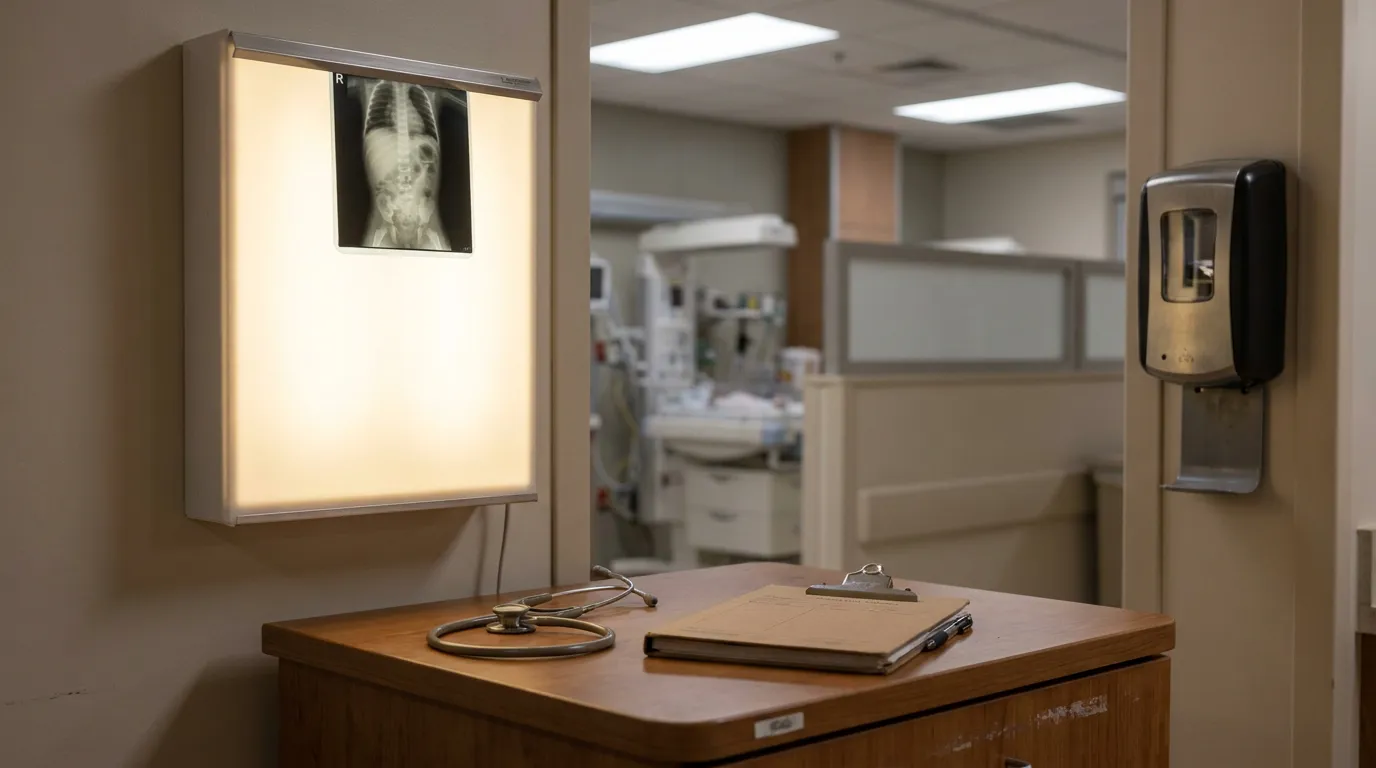
What Parents Should Know About Necrotizing Enterocolitis in Premature Infants
NEC typically develops in the first weeks of life, often after feeding has begun. A preemie’s immature intestinal lining is more vulnerable to bacterial invasion and reduced blood flow, which can trigger rapidly progressing inflammation. In severe cases, the intestinal wall perforates, allowing bacteria to spread into the abdominal cavity and bloodstream.
Early symptoms are frequently subtle. Parents may hear clinicians describe a swollen or discolored abdomen, feeding intolerance, bile-stained vomiting, bloody stools, temperature instability, apnea, or lethargy. These findings generally call for prompt evaluation, including stopping feeds, abdominal imaging, lab testing, and pediatric surgery consultation.
Treatment depends on how advanced the condition is when identified. Milder cases may be managed with bowel rest, IV nutrition, and antibiotics. Advanced cases can require surgery to remove necrotic bowel, which may lead to short bowel syndrome, an ostomy, feeding difficulties, developmental delays, or lifelong nutritional support.
When a Preemie Intestinal Injury May Become a Malpractice Claim
A NEC birth injury may become a potential malpractice matter when care falls below the professional standard applicable to similar providers. Under Fla. Stat. § 766.102, the prevailing professional standard of care generally means the level of care, skill, and treatment that reasonably prudent similar health care providers recognize as acceptable given the circumstances. That statutory benchmark, not a bad outcome alone, is generally the measuring stick in a NEC malpractice case, and the statute also imposes qualification requirements on experts who testify about it.
Florida also defines medical malpractice broadly for limitations purposes. Under Fla. Stat. § 95.11(5)(c), an "action for medical malpractice" is a claim for damages arising from death, injury, or monetary loss from medical, dental, or surgical diagnosis, treatment, or care by a health care provider. Claims involving delayed NEC diagnosis, improper feeding protocols, or inadequate NICU monitoring generally fall within this framework, though whether a claim sounds in medical or ordinary negligence is fact-specific. Fla. Stat. § 766.202 supplies related definitions for terms like "claimant," "health care provider," and "medical negligence."
Common Allegations in NICU Negligence Cases
Whether any of the following amounts to a breach of the standard of care is fact-dependent and generally requires review of the complete medical chart by qualified reviewers:
- Failure to recognize and act on documented feeding intolerance or abdominal distension
- Advancing enteral feeds too rapidly for a high-risk preterm infant
- Delayed abdominal imaging or delayed pediatric surgical consultation
- Inadequate charting, communication, or shift-to-shift handoff of deteriorating symptoms
- Failure to obtain informed consent regarding known feeding-related risks
How Fault Is Allocated When a Teaching Hospital Is Involved
Academic NICUs are common in South Florida, and Florida law may treat them differently at judgment. Under Fla. Stat. § 768.81(5), if damages are apportioned to a teaching hospital as defined in Fla. Stat. § 408.07, the court generally enters judgment against it based on its percentage of fault rather than joint and several liability. The identity and status of each defendant can potentially affect recovery, subject to the facts, apportionment findings, and trial proof.
Separately, Florida imposes adverse-incident reporting duties on licensed facilities in certain newborn situations. Fla. Stat. § 395.0197 identifies reportable events including transferring a newborn to a NICU within the first 72 hours after birth if the stay exceeds 72 hours, or transferring a newborn to a NICU due to a traumatic physical or neurological birth injury, including any degree of brachial plexus injury. These regulatory obligations are administrative and distinct from a civil lawsuit, and much of the internal risk management material generated in that process is confidential or privileged from discovery under Florida law, so access is limited and fact-dependent. Families researching related conditions may find it helpful to review Florida birth injury types and the protections that apply.
💡 Pro Tip: Request a complete certified copy of both the mother’s labor and delivery records and the infant’s full NICU chart, including nursing flow sheets, feeding logs, and imaging reports. Summary discharge documents rarely capture the hour-by-hour details that matter most.
Florida’s Presuit Requirements Before a NEC Diagnosis Claim Is Filed
Florida generally does not allow a medical negligence lawsuit to be filed immediately. Fla. Stat. § 766.203 requires a presuit investigation of claims and defenses, intended to verify reasonable grounds exist to believe negligence occurred and caused injury, and requires the claimant’s presuit notice to be corroborated by a verified written medical expert opinion. This is generally a threshold procedural requirement, not a formality, and failure to comply can jeopardize a claim.
A corroborating medical opinion is also generally required at the outset. Fla. Stat. § 766.104 provides that a medical negligence action may not be filed unless counsel has conducted a reasonable investigation giving rise to a good faith belief that grounds exist, working together with the verified expert opinion requirement of § 766.203. In NEC cases, that opinion typically comes from a physician with relevant neonatology or pediatric surgery experience who has reviewed the chart, and § 766.104(2) also permits a limited 90-day extension of the limitations period to complete that investigation.
Formal notice to prospective defendants generally follows the investigation. Fla. Stat. § 766.106 requires claimants to provide presuit notice to prospective defendants and provides a 90-day presuit period during which the defendant investigates and responds before suit may be filed. Service of notice generally tolls the limitations period during the presuit period and briefly afterward, and the statutory presuit provisions of Fla. Stat. §§ 766.201-766.212 govern much of the process.
| Requirement | Governing Statute | General Purpose |
|---|---|---|
| Presuit investigation | Fla. Stat. § 766.203 | Confirm reasonable grounds for the claim |
| Corroborating medical opinion | Fla. Stat. § 766.104 | Support good-faith basis before filing |
| Presuit notice and 90-day period | Fla. Stat. § 766.106 | Allow defense investigation and evaluation |
| Standard of care | Fla. Stat. § 766.102 | Define the applicable duty owed |
Deadlines That Can Affect a NEC Medical Malpractice Case
Florida’s civil limitations period for medical negligence is comparatively short. Under Fla. Stat. § 95.11(5)(c), an action for medical malpractice must be commenced within 2 years from the incident giving rise to the action or within 2 years from when it is discovered or should have been discovered with due diligence. Provisions such as the presuit tolling in § 766.106 and the extension in § 766.104(2) can affect this calculation. Courts have often interpreted discovery and tolling arguments narrowly, so no family should assume an extension applies to their situation.
The Four-Year Repose Period and the Minor’s Exception
Florida layers an outer limit on top of the two-year period. Fla. Stat. § 95.11(5)(c) provides that the action shall not be commenced later than 4 years from the incident, subject to limited exceptions involving fraud, concealment, or intentional misrepresentation that prevented discovery of the injury, where the outer boundary generally extends to no more than 7 years. The statute further states this 4-year period shall not bar an action brought on behalf of a minor on or before the child’s eighth birthday, with the same protection applying to the 7-year period in fraud and concealment scenarios.
That minor’s provision can matter enormously in NEC cases because the patients are newborns. Importantly, the eighth-birthday language is an exception to the repose periods, not an independent deadline giving every minor until age 8 to sue. Florida courts have generally held that the 2-year limitations period, running from the incident or its reasonable discovery, continues to apply to a minor’s claim, so a claim can be time-barred well before age 8. This interaction has been the subject of considerable litigation, as discussed in analyses of the medical malpractice statute of limitations published by The Florida Bar. Whether a particular deadline preserves a claim depends on the specific facts and applicable case law.
💡 Pro Tip: Presuit notice under Fla. Stat. § 766.106 generally must be served before suit, and preparing the required investigation and corroborating opinion takes time. Waiting until a deadline is close can compress that process significantly.
Building a NEC Claim: Evidence, Causation, and Damages
Causation is often the most contested element in an infant bowel injury case. Because premature infants carry an independent baseline risk of NEC, the defense may argue the outcome would have occurred regardless of care rendered. Establishing causation generally requires medical review linking a specific deviation, such as delayed imaging or inappropriate feeding advancement, to the severity of the resulting damage, under Florida’s requirement that negligence more likely than not caused the injury.
Damages in these cases can extend across a lifetime, and documentation is generally essential. Families and counsel typically evaluate past and future medical treatment, surgical care, parenteral nutrition, developmental therapies, assistive equipment, home health needs, and, where supported, non-economic harm. Recoverable damages may also be affected by comparative fault under Fla. Stat. § 768.81 and, where a government-affiliated facility or employee is involved, sovereign immunity limits under Fla. Stat. § 768.28. Life-care planning may be appropriate when the child faces ongoing intestinal, nutritional, or neurodevelopmental complications.
Choosing counsel who regularly handles neonatal cases may affect how thoroughly a claim is developed. A necrotizing enterocolitis in premature infants lawyer can help coordinate record collection, retain qualified medical reviewers, and navigate the presuit sequence. No outcome can be promised in any case, and results depend entirely on the evidence and governing law.
Frequently Asked Questions
1. Does a NEC diagnosis by itself mean malpractice occurred?
No. NEC occurs in premature infants even with appropriate care. A claim generally requires evidence that a provider breached the standard of care described in Fla. Stat. § 766.102 and that the breach more likely than not caused or worsened the injury.
2. How long do Florida families have to bring a NEC claim?
Fla. Stat. § 95.11(5)(c) generally sets a two-year period from the incident or its reasonable discovery, with a four-year statute of repose that does not bar an action brought on behalf of a minor on or before the child’s eighth birthday. The eighth-birthday language is an exception to the repose period rather than a separate deadline, and the two-year period can still bar a minor’s claim earlier. These provisions interact in fact-specific ways and have generally been interpreted narrowly by courts.
3. What must happen before a lawsuit can be filed?
Under Fla. Stat. §§ 766.203, 766.104, and 766.106, a presuit investigation, a corroborating verified written medical expert opinion, and formal presuit notice followed by a 90-day presuit period are generally required.
4. Can more than one provider be held responsible?
Potentially. Nurses, neonatologists, surgeons, and facilities may each be evaluated, and hospitals may face claims based on their own negligence or the conduct of those acting as their agents. Where fault is apportioned to a teaching hospital, Fla. Stat. § 768.81(5) generally directs judgment based on that party’s percentage of fault rather than joint and several liability.
5. What records should parents gather first?
Complete NICU nursing notes, feeding orders and logs, vital sign records, abdominal imaging, surgical reports, and consultation notes are typically central. Certified copies obtained early tend to be the most reliable foundation for review.
Moving Forward After a Devastating NICU Outcome
Necrotizing enterocolitis is a medically complex condition, and distinguishing an unavoidable complication of prematurity from actionable NICU negligence generally requires careful review of the entire clinical record against the standard set by Fla. Stat. § 766.102. Florida’s presuit framework under Fla. Stat. §§ 766.201-766.212 and the limitations provisions in Fla. Stat. § 95.11(5)(c) mean that timing and preparation both matter. Every case turns on its own facts, and nothing here should be treated as a prediction about any individual claim.
To have your child’s NICU records reviewed and your questions answered, reach out to Chalik & Chalik Injury Lawyers for NEC legal help. Call 954-476-1000 or schedule your free consultation to learn what options may be available to your family.
Disclaimer: This content is for informational purposes only and is not legal advice. Every case is unique, and results may vary. Consult an attorney about your specific circumstances.


In June 2015, The Federal Centers for Medicare & Medicaid Services launched an investigation into the unusually high mortality rate among infants who underwent open heart surgery between 2011 and 2013 at St. Mary’s Medical Center in West Palm Beach, Florida. The investigation was triggered by a CNN report which stated that 12.5% of infant...

Many Florida parents have had their life changed in the blink of an eye when their babies suffered birth injuries at the hands of negligent medical doctors. What once was a happy occasion turned into a traumatic situation and medical emergency. When an expectant mother goes into labor, she is thinking about the excitement of...

Erb’s Palsy, which is also referred to as brachial plexus birth palsy, is a type of obstetric brachial plexus injury that can occur due to complications at the time of delivery. The brachial plexus is a system of spinal nerves that convey messages from the spine to the shoulders, arms and hands. The most typical...

The United States has a high caesarean-section rate of 32.5 percent in comparison to the average of 28 percent among developed nations. The high rate has been controversial as the surgical procedure is not always medically necessary. While C-sections may be performed due to a woman’s personal preference, in some cases they are required for...

There is no one single cure for Erb’s palsy. The likelihood of recovery depends on the severity of the underlying injury. Proper medical and therapeutic care may remedy the effects of the injury or lessen the long-term impact. Unfortunately, the effects may be permanent in the most severe cases of nerve damage. Common Erb’s Palsy...

When a mother hears that her newborn baby suffered a birth injury, she is often not prepared for this news and doesn’t know much about birth injuries. So, when a mother hears the terms Erb’s palsy and shoulder dystocia used after her baby is born, she needs to understand the connections between the two birth...

Some common birth injuries associated with C-sections include: Facial or body cuts Fractures Spinal cord injuries In addition to these common C-section birth injuries, other risks are present if the anesthesiologist did not administer the drug properly during a C-section delivery procedure. These potential injuries include low blood pressure, blood clots, and internal bleeding. There...

Wrongful birth is a type of pediatric malpractice. It occurs when a parent is not given information about potential birth defects or medical complications that could influence the parent’s decision to avoid conception or terminate a pregnancy. Depending on the circumstances, you may be eligible to recover compensation from the doctor who performed a wrongful...