
When the Government Runs the Airport: What Injured Travelers in Broward Need to Know
Key Takeaways:Getting injured at a government-operated Broward airport requires navigating Florida’s sovereign immunity framework and its strict dual-notice rule. You must identify the correct government agency (and any contractors sharing its immunity), prepare a written claim, present it to both the appropriate agency and the Florida Department of Financial Services, and receive a written denial or wait out the statutory disposition period before filing suit. Notice generally must be presented within 3 years of accrual (2 years for wrongful death), while the negligence lawsuit faces a 2-year statute of limitations after HB 837. Recovery is capped at $200,000 per person and $300,000 per incident under § 768.28(5), absent a legislative claim bill. Because identifying responsible parties and meeting each deadline is complex, timely action offers the strongest protection for your claim.
Getting hurt at a government-operated airport in Broward County involves a different legal path than a typical slip-and-fall at a private store. When the airport authority is a public entity, your case runs through Florida’s sovereign immunity framework, which demands a specific pre-suit notice process before you can step into a courtroom. Meeting the dual-notice rule correctly is critical to protecting your right to recover.
If you or a loved one was injured at a Broward airport, the team at Chalik & Chalik Injury Lawyers can help you understand your options and deadlines. Call us at 954-476-1000 or reach out through our online case review request to discuss what happened.
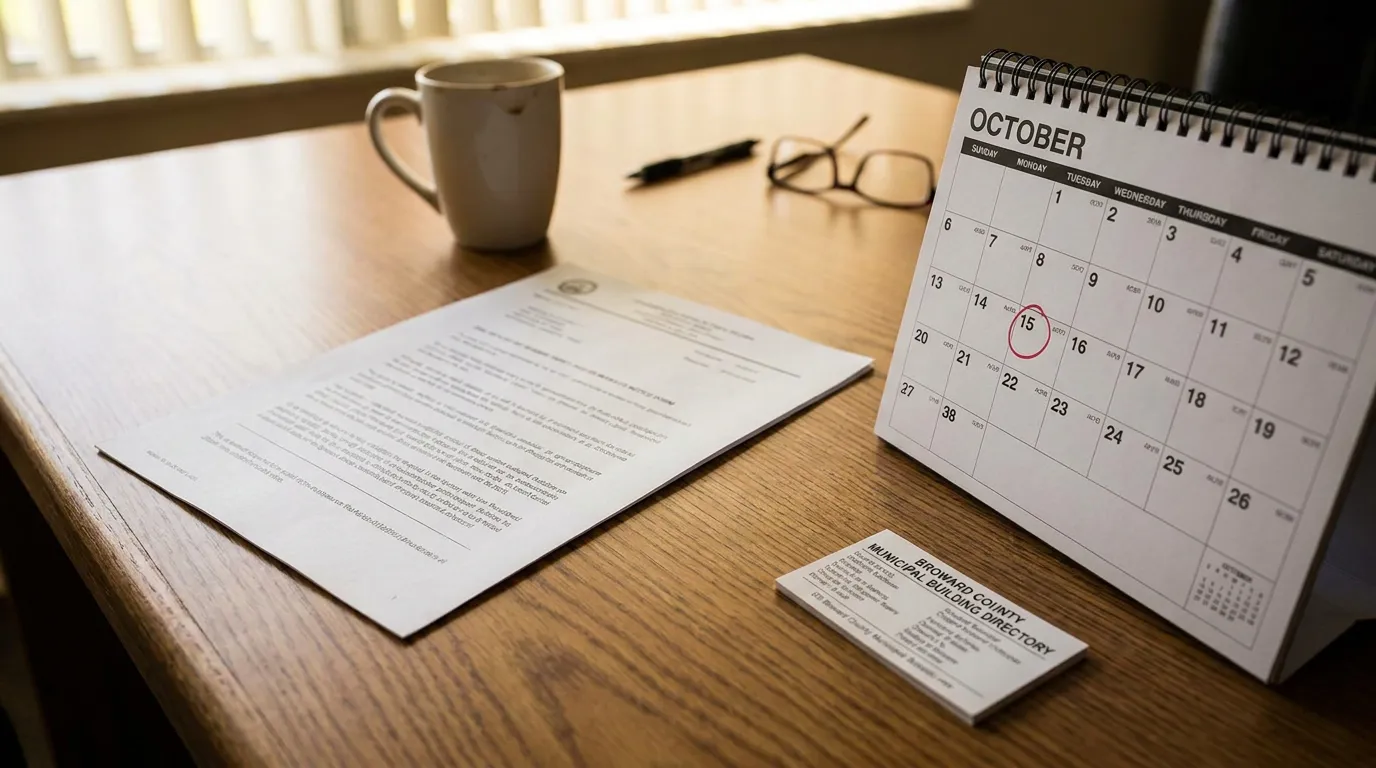
Why Sovereign Immunity Shapes Your Airport Claim
Sovereign immunity is the legal backdrop for any injury claim against a government-operated airport authority. Under Florida law, the government generally cannot be sued for torts unless it has agreed to allow it. Section 768.28 waives sovereign immunity for liability for torts committed by the state, its agencies, or subdivisions, but only to the extent and subject to the conditions set out in the statute.
That waiver comes with strict conditions. Fla. Stat. § 768.28 provides a limited waiver of sovereign immunity, allowing individuals to sue the state for negligence. Because it is a limited waiver, strict compliance with the notice conditions is treated as a prerequisite to recovery. Missing a required step can end a case before the merits are considered.
Identifying every potentially responsible party matters. Airports rely heavily on outside vendors, and contractors performing work for a government entity may claim the entity’s limited sovereign immunity if they act as its agent. A defendant may purport to be a corporation acting as an instrumentality or agency of the state, thus entitling the defendant to immunity by virtue of §768.28(2). That means the party who caused your injury may be entitled to the same protections as the airport authority itself.
Understanding the florida 768.28 notice of claim
The florida 768.28 notice of claim is the formal written notice you must deliver before filing a lawsuit against a government entity. Section 768.28 requires a claimant to present the claim in writing to the appropriate agency and, for most claims, also to the Florida Department of Financial Services before suing. Specifically, Fla. Stat. § 768.28(6)(a) provides that an action may not be instituted unless the claimant presents the claim in writing to both entities, with a carve-out under which notice to the Department is not required for claims against a municipality, county, or the Florida Space Authority.
This two-part requirement is often called the dual-notice rule. The 768.28 notice requirement is not satisfied by informally reporting the incident to airport staff or filling out an on-site report. It requires deliberate, written government claim notice sent to the correct recipients. You can review the current statutory text of the limited waiver of sovereign immunity to see how the presentment language is structured.
Because agents of the government can also invoke immunity, careful analysis of each defendant is essential. When a security or transportation contractor may share in the airport’s immunity, proper notice to all governmental parties becomes critical. This is one reason many injured travelers consult a Florida 768.28 notice of claim lawyer early in the process.
Steps to Satisfy the Dual-Notice Rule
Meeting the dual-notice rule is a sequence of deliberate steps rather than a single filing. Below is a general roadmap of the pre-suit notice steps that typically apply in a Broward airport injury claim:
- Identify the correct government agency. Determine which public entity operates the airport and which agents or contractors may share its immunity.
- Prepare a written claim. Draft a clear, written statement of your claim rather than relying on an incident report.
- Present to the appropriate agency. Deliver the written claim to the responsible governmental body.
- Present to the Department of Financial Services. For most claims, a second written notice must also go to the Department of Financial Services.
- Wait for the written denial. The agency or DFS must deny the claim in writing before suit can proceed.
The waiting period and written denial requirement are easy to overlook. Under Fla. Stat. § 768.28(6)(a), the claim must be denied in writing before a lawsuit can move forward. If the Department of Financial Services or the appropriate agency fails to make final disposition within 6 months after filing, that failure is deemed a final denial (90 days for medical malpractice and wrongful death claims). Filing suit too early can jeopardize the case.
Common Challenges Injured Travelers Face
Practical obstacles frequently trip up unrepresented claimants. Determining who actually operates the airport and whether a shuttle operator or security company is an agent of the government is rarely obvious from the scene. Road maintenance contractors, transportation companies, and security contractors may claim immunity as agents of the state.
Evidence preservation runs parallel to the notice process. Security footage, incident reports, and witness contact information can disappear quickly, so gathering them early supports both your notice and your eventual negligence case. For a practical overview of first steps, our guide on what to do after an airport injury walks through evidence-preservation basics.
💡 Pro Tip: Keep copies of every notice you send, along with proof of delivery. Documentation of when and to whom you presented your written claim can become critical if a defendant later argues that the notice requirement was not met.
Deadlines That Can Make or Break Your Claim
Two distinct sets of deadlines apply to a government airport claim. One is the civil statute of limitations governing when a lawsuit must be filed. The other is the government administrative notice deadline built into the sovereign immunity waiver. Both must be satisfied.
The notice deadline under Section 768.28 has its own timeline. Written notice must generally be presented within 3 years after the claim accrues, and for wrongful death claims the presentment period is 2 years. As set out in Fla. Stat. § 768.28(6), the case may proceed only after a written denial or after the statutory disposition period (generally 6 months, or 90 days for wrongful death) has passed.
The civil statute of limitations tightened significantly after recent tort reform. With the 2023 changes under HB 837, Florida reduced the limitations period for ordinary negligence from four years to two years for causes of action accruing on or after March 24, 2023. You can review the amended limitations on civil actions to see the current negligence period reflected in § 95.11(4)/(5)(a).
| Obligation | General Timing | Governing Authority |
|---|---|---|
| Written notice of claim | Within 3 years of accrual | Fla. Stat. § 768.28(6) |
| Wrongful death notice | Within 2 years | Fla. Stat. § 768.28(6) |
| Negligence lawsuit filing | Generally 2 years (post-3/24/2023) | Fla. Stat. § 95.11 |
Damage Caps and Proving Negligence at the Airport
Even a well-documented claim faces statutory limits on recovery against a government entity. Fla. Stat. § 768.28(5) caps liability at $200,000 per person and $300,000 per incident, absent a separate legislative claim bill. A judgment may be entered above these amounts, but the excess can be paid only through a legislative claim bill.
On the merits, airport injuries are analyzed under Florida’s premises liability standard. For slip-and-fall injuries in a business establishment, Fla. Stat. § 768.0755(1) provides that the injured person must prove the establishment had actual or constructive knowledge of the dangerous condition and should have taken action to remedy it. Constructive knowledge can be shown through evidence that the condition existed long enough that ordinary care should have revealed it, or that it occurred with regularity and was therefore foreseeable.
Frequently Asked Questions
1. Does reporting my injury to airport staff satisfy the notice rule?
No. An on-site incident report is not the same as the formal written government claim notice required under Fla. Stat. § 768.28(6). The statute requires written presentment to the appropriate agency and, in most cases, to the Department of Financial Services.
2. Who counts as a government entity at the airport?
It depends on how the airport is operated and who employs the party at fault. A publicly operated airport authority is a subdivision covered by the sovereign immunity waiver, and certain contractors may share that immunity as agents.
3. How long do I have to send the notice of claim?
Notice must be presented within 3 years of the date the claim accrues. For wrongful death claims, the period is 2 years under Fla. Stat. § 768.28(6). These deadlines are separate from the lawsuit filing deadline in § 95.11.
4. Is my recovery limited when I sue a government airport?
Yes. Fla. Stat. § 768.28(5) caps damages at $200,000 per person and $300,000 per incident, absent a legislative claim bill. This cap applies regardless of how strong the underlying negligence case may be.
5. Do I have to wait after sending notice before filing suit?
Yes. Under § 768.28(6)(a), the agency or the Department of Financial Services must deny the claim in writing before a lawsuit can proceed; however, if no final disposition is made within 6 months of filing (90 days for wrongful death), the claim is deemed denied and suit may proceed.
Protecting Your Right to Recover After an Airport Injury
The dual-notice rule is a strict but manageable gateway to holding a government-operated airport accountable. Between identifying the right agency, delivering written notice to both the agency and the Department of Financial Services, respecting the presentment and denial requirements, and tracking the shortened negligence limitations period, there is little room for error.
You do not have to navigate the sovereign immunity process alone. The team at Chalik & Chalik Injury Lawyers helps injured travelers and families understand their notice obligations, deadlines, and options after a Broward airport injury. Call 954-476-1000 or submit a confidential case evaluation form today to take the next step with clear guidance and your deadlines protected.


 Hidden slip and fall hazards of steps and stairways
Slip and fall accidents on stairs can cause serious injuries. Stairways come with inherent dangers that are usually not present on level surfaces. While sometimes the hazards may be obvious, in other cases they may be harder to detect. Property owners can be liable for stair accidents just like slip and falls in other locations....

How the Open and Obvious Defense Could Affect Your Ft Lauderdale Fall Claim If you slipped and fell on someone else’s property in Ft Lauderdale, you may expect the property owner to take responsibility, but the defense they raise could change everything. One of the most common strategies property owners and insurers use in Florida...

Over 3 Million Fall Victims Need Emergency Care: Getting Legal Help After Your Miami Slip and Fall In 2023, more than 3.85 million older adults were treated in emergency departments for fall-related injuries, and in 2024 alone, 43,020 individuals aged 65 and older died as a result of preventable falls, according to the National Safety...

Understanding Your Rights After a Slip and Fall Attorney in Plantation Can Help When you’ve suffered a slip and fall injury in a Plantation store, restaurant, or other business establishment, the physical pain and financial stress can feel overwhelming. You’re likely dealing with medical bills, missing work, and wondering whether the property owner bears responsibility...

If you slip and fall in a grocery store, you should immediately notify the manager on duty and ask them to call 911 if you need emergency medical assistance. Do not make assumptions about your injuries, either. Report the incident to the store manager and see a doctor. You may even call the police to...

If you slip and fall at a dollar store, these are the following steps you should take to ensure your health and possibly support your personal injury or premises liability claim: You should check for injuries and get immediate medical attention to address them. You should collect evidence while still inside the store by taking...

Yes, if the city has the responsibility for maintenance and owns the portion of the sidewalk on which you slipped and fell and suffered injuries. If another entity (such as a private property owner, or condo or homeowner association) owned the sidewalk or was responsible for its maintenance, you may have to file a claim...

A slip and fall accident can cause serious injuries that affect your ability to work, move, and enjoy life as you did before. When you suffer harm because a property owner, business manager, or tenant failed to keep their premises safe, you have the right to seek compensation for your losses. Understanding what damages you...