
How Vessel Length Shapes Liability After a South Florida Boating Crash
Key Takeaways:Florida’s 26-foot vessel length threshold acts as a legal dividing line that determines which safety and equipment rules apply to a boat, making it a central issue in Ft Lauderdale boat accident claims. Vessels under 26 feet face requirements such as the child life jacket rule for passengers under 6 years old and the federal engine cut-off switch use rule, while larger vessels follow different obligations. Chapter 327 of the Florida Statutes supplies the careless operation standard, accident reporting duties, and length-based equipment rules that can turn safety violations into liability evidence. Engine cutoff switch failures may carry particular weight because federal law requires the link’s use on most vessels under 26 feet, Florida’s boater education curriculum teaches the device’s lifesaving function, and state law requires its use during water sport instruction. A rule violation may be powerful evidence but does not by itself establish causation or damages, and Florida’s comparative fault system can reduce recovery. Marine evidence like the vessel, helm hardware, and rental records can disappear quickly. Deadlines vary depending on whether state negligence law, federal maritime principles, or government notice requirements apply, so early legal evaluation is critical.
Vessel length is not a trivia question. In Florida, the 26-foot mark functions as a legal dividing line that changes which safety rules apply to a boat, and those rules often become the backbone of a Ft Lauderdale boat accident claim. Florida and federal frameworks sort vessels into length categories, and those categories drive registration classifications, required safety equipment, and operational duties. When a smaller recreational boat is involved in a propeller strike, ejection, or fall overboard, the sub-26-foot classification may help determine whether the operator broke a rule and whether that violation contributed to the injury.
If you or a loved one were hurt on the water in Broward County, Chalik & Chalik Injury Lawyers can review how vessel size, equipment rules, and operator conduct intersect in your situation. Call 954-476-1000 or contact us now to discuss what happened before evidence disappears.

What the 26 Foot Recreational Vessel Rule Actually Means
The 26-foot threshold is a regulatory sorting mechanism, not a single rule. Florida law and incorporated federal standards attach different obligations to vessels depending on length, which is why the same conduct can be lawful on a 30-foot cabin cruiser and unlawful on a 22-foot center console.
Florida’s child life jacket requirement illustrates this well. Generally, a person may not operate a vessel less than 26 feet in length unless every person under 6 years of age aboard wears a Coast Guard-approved personal flotation device, used per its label, while underway. That rule generally applies only below the 26-foot line. Separately, all vessels must carry approved wearable PFDs for each person aboard regardless of length, and everyone on a personal watercraft must wear one, so the 26-foot line narrows rather than eliminates flotation duties on larger boats.
Which Vessels Typically Fall Below the Line
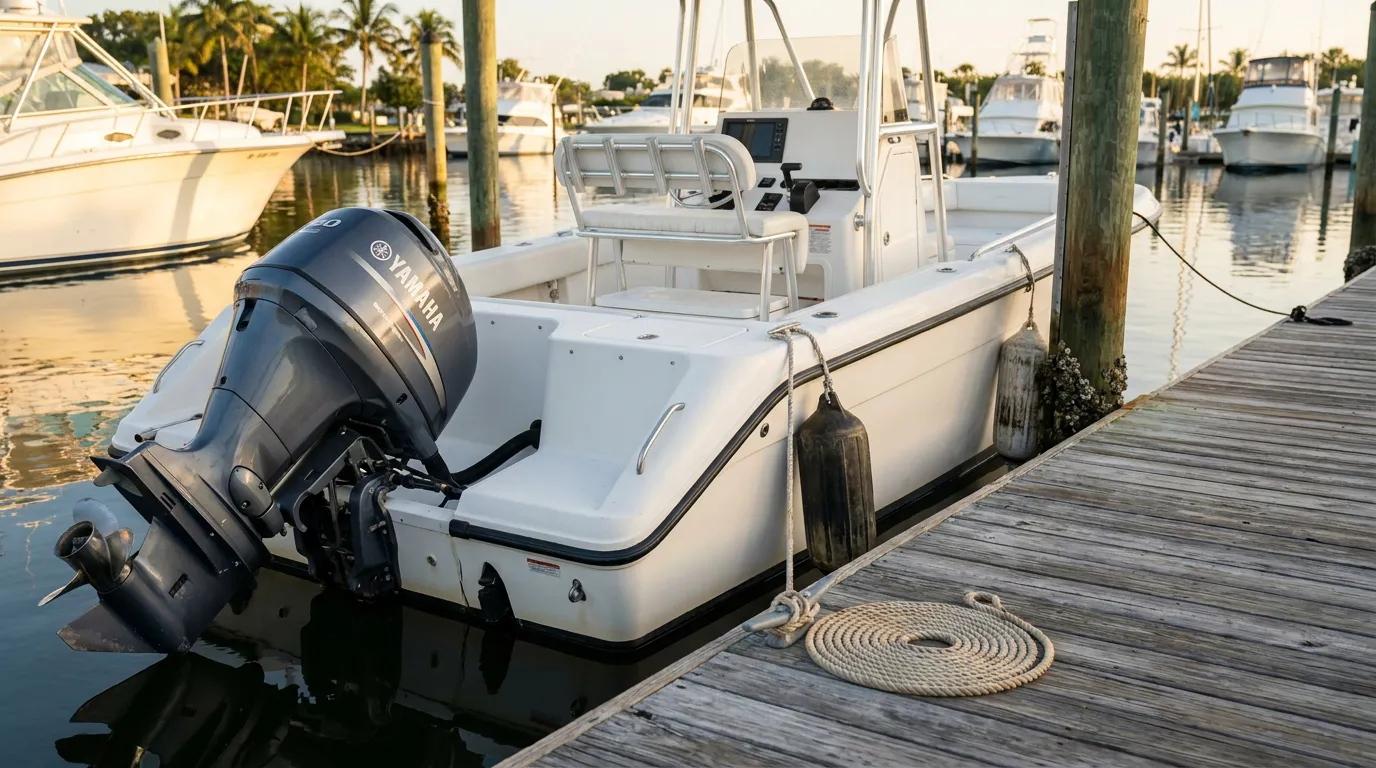
Most recreational boats on the New River, along the Intracoastal, and off Ft Lauderdale beaches measure under 26 feet. Skiffs, bay boats, many center consoles, and personal watercraft commonly sit in this category, while cabin cruisers and larger sportfishers often exceed it. A taxonomy of Florida vessels helps explain why smaller hull types dominate recreational injury claims.
Florida statutes define "vessel" broadly, with subcategories based on length and use, and that definition often influences how insurers evaluate coverage after a crash.
Why Classification Affects Insurance Positions
Insurers frequently build early positions around how a vessel is classified. A carrier may argue an equipment requirement didn’t apply, or that a rental vessel fell outside a policy definition. Documenting the boat’s actual measured length, registration, and configuration early can matter considerably.
The Boat Engine Cut Off Switch Law and Its Role in Injury Claims
Engine cutoff switches exist because an unmanned boat under power is extraordinarily dangerous. When an operator is ejected, a functioning cutoff link is designed to kill the engine before the vessel circles back toward people in the water. Under 46 U.S.C. § 4312, an individual operating a covered recreational vessel, generally one less than 26 feet capable of producing at least 115 pounds of static thrust, must use the engine cut-off switch link while operating on plane or above displacement speed. Exceptions apply, including where the main helm is inside an enclosed cabin, and the installation mandate generally reaches covered vessels built on or after January 1, 2020.
Florida reinforces the practice through education. The state’s mandatory boating safety curriculum must cover the proper use and lifesaving benefits of an engine cutoff switch. That requirement may carry evidentiary weight: when the state mandates that operators be taught a safety practice, a plaintiff may reasonably argue a prudent operator knew or should have known about it. The boat engine cut off switch law can therefore support negligence theories even without a criminal citation, though a violation is generally treated as evidence bearing on negligence rather than automatic liability.
Florida law also imposes a targeted cutoff switch duty in one context. Under Fla. Stat. § 327.50(4), the operator of a vessel used in instruction of a water sport must use an engine cutoff switch and wear an operative link when a participant is in the water; violation is generally charged as a second-degree misdemeanor. Wakeboarding, waterskiing, and tow-sport lessons in Broward County may fall within this provision.
Related Operational Dangers Taught Alongside Cutoff Switches
The same educational standard addresses errors that often appear in the same accident files. Florida’s curriculum covers starting a vessel with the engine in gear and leaving it running when a passenger is boarding or disembarking. These behaviors often accompany cutoff switch failures in dock and swim-platform injuries.
💡 Pro Tip: Photograph the helm area, including the cutoff switch, its lanyard, and any wireless fob, as soon as it’s safe. That hardware is frequently repaired, replaced, or lost before an investigator ever sees the vessel.
How Florida Statutes Turn Safety Violations Into Liability Evidence
Chapter 327 of the Florida Statutes is the backbone of most boating negligence claims in this state. It governs vessel operation, equipment, and safety, with provisions that vary by length. The Florida Vessel Safety Law sets baseline duties applying to residents and visitors alike.
Several provisions often do the heaviest lifting in injury cases:
- Fla. Stat. § 327.33 defines careless and reckless operation: a person operating any vessel must do so reasonably and prudently, with regard for other waterborne traffic, posted speed and wake restrictions, and other circumstances, so as not to endanger life, limb, or property.
- Fla. Stat. § 327.30 covers accidents involving vessels, the duty to render assistance, and reporting obligations, often generating the earliest official record of a crash.
- Fla. Stat. § 327.50 and related equipment sections set requirements that differ by length category.
- Fla. Stat. § 327.33(1) further provides that reckless operation causing serious bodily injury as defined in s. 316.192 may constitute a third-degree felony, punishable under s. 775.082, s. 775.083, or s. 775.084.
Generally, the owner and operator of every vessel must carry, store, maintain, and use safety equipment per current U.S. Coast Guard requirements, unless expressly exempted. That incorporation means a Coast Guard equipment failure may also amount to a state-law violation, separate from any civil damages claim.
| Length Category | Common Vessel Types | Why It Matters in a Claim |
|---|---|---|
| Under 16 feet | Skiffs, jon boats, small PWC | Distinct equipment minimums under Chapter 327; child PFD and federal cutoff switch rules apply |
| 16 to 26 feet | Bay boats, center consoles, most PWC | Child PFD rule and federal cutoff switch use rule apply; heaviest recreational claim volume |
| Over 26 feet | Cabin cruisers, sportfishers | Different equipment set; child PFD and federal cutoff switch rules generally do not apply |
Proving Fault When a Safety Rule Was Broken
Florida ties fault determinations in boating cases to the navigation rules. Unless otherwise provided in Chapter 327, fault in vessel operations and boating accidents is generally determined according to the navigation rules. A documented violation of a vessel size or equipment standard may become central to establishing liability, though a violation alone doesn’t automatically resolve causation or damages, and Florida’s comparative fault framework may reduce or bar recovery where the injured person is more than 50 percent at fault.
Causation still requires proof. A missing cutoff lanyard may matter legally when evidence supports that a functioning link would likely have prevented or reduced the harm. Courts may consider operator training, the sequence of the ejection, engine throttle position, and witness accounts in weighing that question, and outcomes remain highly fact-dependent.
Evidence That Tends to Disappear Quickly
Marine evidence degrades faster than roadway evidence. Vessels are often moved, cleaned, repaired, or returned to rental fleets within days, and saltwater exposure can destroy physical traces. Preserving the following early may strengthen a claim:
- The vessel itself, including hull, propeller, and helm controls
- Registration and documentation establishing measured length
- Rental agreements, waivers, and pre-departure checklists
- FWC or Coast Guard incident reports and any citations issued
- Marina, bridge, and waterfront property surveillance footage
💡 Pro Tip: Send a written preservation request to the vessel owner, rental company, and their insurer promptly. Once a boat is sold or repaired, reconstructing the equipment configuration becomes substantially harder.
Deadlines and Jurisdictional Wrinkles Boating Victims Should Understand
Boating cases can involve overlapping legal frameworks, and the applicable deadline depends on the facts. Florida general negligence claims accruing on or after March 24, 2023 are generally subject to a two-year statute of limitations, while earlier claims may fall under the prior four-year period; wrongful death claims have their own deadline. Incidents on navigable waters may instead implicate federal maritime law, which generally applies a three-year limitation period for personal injury and death, and vessel owners may invoke limitation-of-liability procedures with short response windows. If a government entity or public agency vessel is involved, separate pre-suit notice requirements under Fla. Stat. § 768.28 or federal law may apply, distinct from the filing deadline.
Tolling doctrines and delayed discovery principles may apply in certain circumstances, but courts generally interpret such exceptions narrowly. Because determining which framework and deadline governs is itself fact-specific, prompt case evaluation is the safer course. Additional guidance appears throughout our recreational boating law Florida resources.
Identifying Every Potentially Responsible Party
Liability rarely stops with the person at the wheel. Depending on the facts, a claim may involve the vessel owner who permitted an untrained operator, a rental company that failed to provide functional safety equipment or adequate instruction, a tow-sport operation, or a manufacturer whose cutoff system malfunctioned. A boat engine cut off switch law lawyer can evaluate which theories the evidence may support.
Frequently Asked Questions
1. Does the 26-foot threshold apply to personal watercraft?
Personal watercraft generally fall well below 26 feet. That means sub-26-foot requirements, including the child PFD rule for passengers under 6 while underway, typically apply. Everyone aboard a PWC must also wear an approved PFD, and PWC operators are among those the state’s curriculum and federal cutoff switch rules specifically address.
2. Can a cutoff switch violation alone win my case?
A violation is evidence, not an automatic verdict. Florida generally ties fault in boating accidents to the navigation rules, and a plaintiff must still establish duty, breach, causation, and damages. An equipment violation may strengthen the negligence theory considerably without deciding the outcome by itself.
3. What if the boat was a rental?
Rental incidents often add parties and documents. Rental agreements, orientation records, maintenance logs, and equipment checklists may become important, and the rental company’s own compliance with boat safety obligations may be at issue. Waivers signed at the counter do not necessarily bar all claims, and Florida courts generally construe such releases strictly against the drafter, though their effect is fact-specific.
4. Do federal and Florida rules conflict?
They generally work together rather than against each other. Florida law incorporates current U.S. Coast Guard safety equipment requirements, subject to commission exemptions. Where a case arises on navigable waters, federal maritime doctrine may also influence procedure and available remedies, and can preempt inconsistent state rules in some circumstances.
5. Should I give a recorded statement to the boat owner’s insurer?
Speaking with an insurer before understanding your rights carries risk. Adjusters may ask questions designed to establish comparative fault or minimize injury severity. Consulting a boating accident attorney in Florida first is generally advisable.
Bringing the Pieces Together After a Boating Injury
The 26-foot threshold matters because Florida law does not treat all vessels alike. Length can determine which equipment rules apply, and those rules, combined with the careless operation standard in Fla. Stat. § 327.33 and the accident reporting duties in Fla. Stat. § 327.30, may form part of the framework injured people use to show what went wrong. When an engine cutoff switch was missing, disconnected, or ignored, that failure may become a focal point of the claim, though every case turns on its own facts and evidence.
If a boating crash in Ft Lauderdale changed your life, Chalik & Chalik Injury Lawyers is prepared to investigate the vessel, the equipment, and the operator’s conduct. Call 954-476-1000 or reach out today for a confidential discussion of your options.
Disclaimer: This content is for informational purposes only and is not legal advice. Every case is unique, and results may vary. Consult an attorney about your specific circumstances.

In 2012, there were 704 reported boating accidents in Florida and 55 fatalities, reports the Florida Fish and Wildlife Conservation Commission (FFWCC). Boating is a way of life for many Florida residents, including teens, and a common way to kick back and relax. It’s vital that we help our kids learn sound boating safety tips...
 When Do You Have to Report a Boating Accident to the FWC in Florida?
Florida’s Boating Accident Reporting Rules After a Crash on the Water Key Takeaways: In Florida, you generally have to send the FWC a written boating accident report if the accident causes a death, a person’s disappearance, an injury that needs more than first aid, or damage to vessels or other property totaling at least $2,000....

You can double the fun of a boating trip by including water tubing, but only when you follow the right safety steps! Before you climb aboard an inflatable vessel, make sure you’re prepared – make sure everyone and everything is in top shape for a fun day on the lake or at the beach! Inspecting...