
What Happens After You Send a Malpractice Notice in Florida
Key Takeaways:After a Notice of Intent to Initiate Litigation is served on each prospective defendant, Florida law generally imposes a 90-day presuit screening period under Fla. Stat. § 766.106(3)(a) during which a lawsuit generally may not be filed. The provider or its insurer must review the claim’s liability while the claimant’s side gathers records and expert support. The two-year statute of limitations is generally tolled during this window under Fla. Stat. § 766.106(4), though the four-year statute of repose and narrow fraud-based extensions may still apply. At or before the end of the period, the insurer must reject the claim, offer settlement, or offer admission of liability with arbitration on damages, and the parties may stipulate to an extension. A denial is not a verdict, and early offers may understate future care and lost earning capacity. Because notice defects, missed defendants, and record delays can jeopardize a claim, early preparation with experienced counsel can be important.
Once a medical malpractice notice is served in Florida, the case generally enters a mandatory 90-day waiting and review stage. A lawsuit generally may not be filed, the prospective defendant and insurer investigate the claim, and the two-year limitations clock is generally paused. For families in Fort Lauderdale who feel they’ve already waited long enough, this stage can be frustrating, but it exists to encourage both sides to evaluate the medical evidence before litigation begins.
If you believe a hospital or physician in Broward County caused serious harm, the team at Chalik & Chalik Injury Lawyers can review your medical timeline and explain how the presuit rules may apply. Call 954-476-1000 or contact us now to discuss what deadlines may already be running in your case.
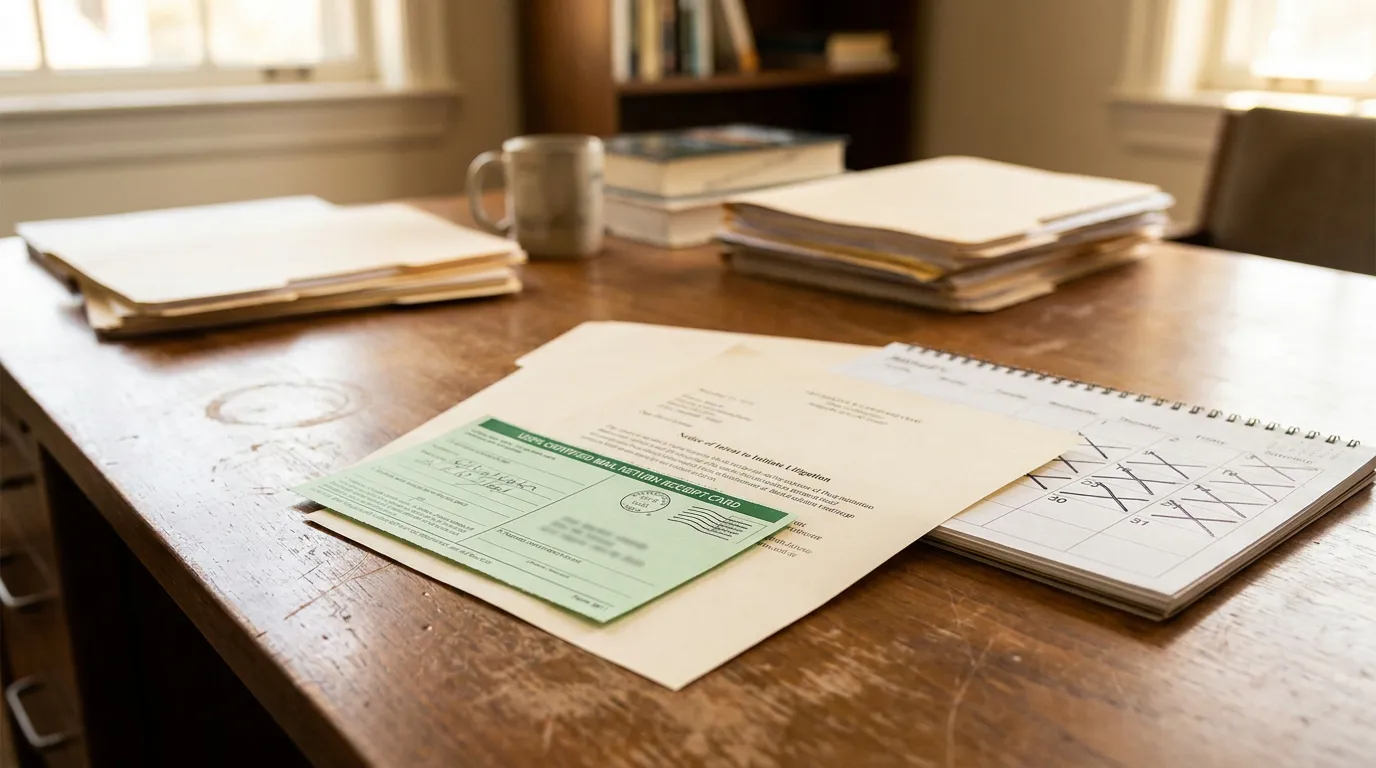
Why the Notice of Intent to Initiate Litigation Florida Requires Comes First
Florida generally does not allow a medical negligence lawsuit to be filed out of the blue. Under Fla. Stat. § 766.106(2)(a), after completing the presuit investigation required by § 766.203(2) and before filing suit, a claimant must notify each prospective defendant of intent to initiate litigation by at least one of the following verifiable means: (1) USPS certified mail, return receipt requested; (2) USPS mail with a tracking number; (3) an interstate commercial mail carrier or delivery service; or (4) any person authorized by law to serve process. This Notice of Intent formally opens the presuit screening process.
The notice is not merely a courtesy letter. It identifies the claim and providers involved, and generally must include a verified written medical expert opinion corroborating reasonable grounds to believe negligence occurred, per Fla. Stat. §§ 766.203(2) and 766.104(1). Florida courts have historically treated compliance with these presuit conditions as a serious threshold issue; defects may lead to dismissal or delay, though courts have sometimes allowed amendment depending on the facts and timing.
Timing matters enormously. Because notice must be served on each prospective defendant, identifying every potentially responsible provider, group, or facility early can be critical. A missed defendant may mean a missed opportunity, especially near the limitations deadline. Fla. Stat. § 766.104(2) also permits a claimant to petition for an automatic 90-day extension of the limitations period to complete the presuit investigation, separate from presuit tolling.
Understanding the 90-Day Presuit Screening Period
The statute is direct about the pause. Fla. Stat. § 766.106(3)(a) provides that no suit may be filed for 90 days after notice is mailed to any prospective defendant, and that during that period, the prospective defendant or insurer shall conduct a review to determine liability. In practical terms, the claimant generally waits while the other side studies the records.
This review is generally not optional. Under Fla. Stat. § 766.106(3)(a) and § 766.203(3), the prospective defendant or insurer must evaluate the claim and conduct a good faith review of whether reasonable grounds exist before rejecting it. Providers may request records, consult reviewing physicians, and evaluate the claim’s strength. Fla. Stat. § 766.106(6) also authorizes informal presuit discovery during this period.
Claimant experiences vary. Some receive informal settlement discussions within weeks; others hear little until the period nears its end. A florida malpractice attorney can use this time productively, gathering records, securing reviewing physician opinions, and preparing for potential litigation.
What Both Sides Typically Do During Presuit Investigation
- Claimant’s counsel continues collecting imaging, nursing notes, medication records, and billing files
- The defense reviews the corroborating opinion and may retain its own reviewing physician
- Informal discovery, including unsworn statements and written questions, may occur under Chapter 766
- Both sides evaluate whether early resolution is realistic
How the Presuit Response Can Change Your Path Forward
The end of the screening window generally produces one of several outcomes. Fla. Stat. § 766.106(3)(b) requires the insurer, at or before the end of the 90 days, to reject the claim, offer settlement, or offer admission of liability with arbitration on damages. Under § 766.106(4), parties may also stipulate to extend the period, which sometimes happens when records arrive slowly.
A rejection is not a verdict on your case. Some strong claims are denied at presuit and later resolve favorably after formal discovery reveals information the defense didn’t initially weigh. Outcomes depend heavily on the medical facts, expert support quality, and how a court applies the standard of care.
A settlement offer deserves careful analysis. Early offers may not account for future medical care, lost earning capacity, or the full scope of long-term harm. Evaluating an offer’s reasonableness generally requires a fully documented damages picture, rarely complete within 90 days of the notice.
💡 Pro Tip: Keep a written log of symptoms, appointments, missed work, and out-of-pocket costs beginning the day you suspect something went wrong. Contemporaneous records are often more persuasive than reconstructed memories.
How Tolling Interacts With the Malpractice Claim Timeline
Florida sets a strict outer boundary on malpractice filings. Under Fla. Stat. § 95.11(5)(c), a malpractice action must commence within 2 years from the incident or its discovery, but in no event later than 4 years from the incident. That four-year cap functions as a statute of repose and is typically applied strictly; Florida courts hold it is not extended by ordinary tolling doctrines.
Presuit tolling is a narrow, specific mechanism. Fla. Stat. § 766.106(4) provides that the notice of intent tolls the limitations period during the 90-day presuit window, with a short additional filing window afterward. Florida’s general statute of limitations tolling rules reinforce this narrowness: under § 95.051(2), a disability or other reason does not toll a limitations period except as specified in that section, s. 95.091, the Probate Code, or Guardianship Law. Enumerated grounds include the pendency of an arbitral proceeding pertaining to the dispute, under § 95.051(1)(g), reflecting the legislature’s pattern of pausing the clock only during defined dispute-resolution processes.
Fraud-based extensions exist but are limited. Fla. Stat. § 95.11(5)(c) permits the period to extend 2 years from discovery where fraud, concealment, or intentional misrepresentation prevented discovery, but never beyond 7 years from the incident, with a separate rule allowing certain minors’ claims before their eighth birthday. Courts generally interpret these exceptions narrowly, and no claimant should assume tolling applies automatically.
| Deadline Concept | General Rule Under Florida Law |
|---|---|
| Limitations period | 2 years from incident or discovery, § 95.11(5)(c) |
| Statute of repose | 4 years from the incident, § 95.11(5)(c) |
| Fraud-based extension | Up to 7 years maximum, § 95.11(5)(c) |
| Presuit tolling | Limitations generally tolled during the 90-day period, § 766.106(4) |
| Investigation extension | Automatic 90-day extension available on petition, § 766.104(2) |
Lessons From Presuit Compliance Disputes in Florida Courts
Litigation over presuit compliance is common enough that appellate courts regularly address it. The dispute in LifeSouth Community Blood Centers v. Fitchner involved Florida’s presuit screening requirements under Chapter 766, illustrating how courts evaluate whether a claimant was required to serve a Notice of Intent at all, including the threshold question of whether an entity such as a blood bank qualifies as a "health care provider" entitled to Chapter 766 protections under the 2003 amendment to § 766.202(4), and whether that amendment could be applied retroactively to bar a pre-existing negligence claim.
The broader takeaway for claimants is procedural discipline. Whether a defendant qualifies for Chapter 766 protections, whether notice was properly served, and whether the corroborating opinion meets statutory standards are all fact-dependent questions. A ruling in one case doesn’t guarantee a similar result in another with different facts.
An Overlooked Effect of the Notice on the Provider
The notice of intent can have consequences outside the civil case. Under Fla. Stat. § 458.331(6), documents that may trigger a Department of Health review include a presuit notice submitted under s. 766.106(2), and the physician may submit a written response within 45 days after service. That means a licensing review may proceed on a separate track from the civil claim.
These are distinct processes. A regulatory proceeding is generally not a substitute for a civil malpractice action and generally does not produce compensation for the patient. Filing a licensing complaint also generally does not extend any civil filing deadline.
Practical Steps Fort Lauderdale Claimants Can Take Now
Preparation before the notice often shapes what happens after it. Requesting complete medical records, including nursing flow sheets and imaging studies, often takes longer than families expect. Building that file early may give a reviewing physician room to evaluate the standard of care without deadline pressure.
Local considerations can also shape strategy. Broward County hospitals, surgical centers, and physician groups often carry different insurance structures, and identifying the correct corporate entity matters. Working with a fort lauderdale medical malpractice attorney familiar with area providers may reduce the risk of serving notice on the wrong party.
💡 Pro Tip: Request your records in writing and keep proof of the request date. If a facility delays production, that documentation may become relevant later.
Common Challenges Claimants Encounter
Delays in obtaining records are among the most frequent obstacles. Providers may produce incomplete files, omit electronic audit trails, or route requests through third-party vendors. Persistent, documented follow-up is often necessary.
Identifying every responsible party can be a second challenge. Emergency physicians, anesthesiologists, radiologists, and hospitalists are frequently independent contractors rather than hospital employees, which may affect who must receive notice under Chapter 766.
Frequently Asked Questions
1. Does the 90-day presuit screening period always last exactly 90 days?
Generally, yes, but parties may stipulate to extend it under § 766.106(4). Certain procedural events, including a defendant’s failure to comply with presuit obligations, can also affect the timeline.
2. Is my lawsuit deadline safe while presuit is pending?
Fla. Stat. § 766.106(4) generally tolls the limitations period during the 90-day window and allows a short filing window afterward, but tolling is limited and does not extend the four-year statute of repose. Deadline calculations are fact-specific and should be reviewed carefully.
3. What happens if the insurer never responds?
Under § 766.106(3)(b), failure to reply within the period is generally deemed a rejection, and the claimant may proceed with filing suit within the time the statute allows.
4. Do I need a medical opinion before sending the notice?
Florida’s presuit framework generally requires a verified written medical expert opinion corroborating reasonable grounds for the claim, under §§ 766.203(2) and 766.104(1). Serving notice without adequate support may expose the claim to dismissal.
5. Can I still negotiate after the presuit response is a denial?
In many cases, yes. Settlement discussions frequently continue after a denial, particularly once formal discovery develops the record further.
Bringing the Presuit Timeline Into Focus
The 90-day presuit screening period is generally a required checkpoint, not a detour. Florida Statute 766.106 generally pauses the limitations clock, obligates the other side to review the claim and act in good faith before rejecting it, and can create an early opportunity for resolution before litigation costs mount. Because tolling rules, repose deadlines, and defendant identification are all fact-sensitive, the safest approach is generally to evaluate your options well before any deadline approaches.
If you are weighing whether to send a notice of intent to initiate litigation Florida law requires, the attorneys at Chalik & Chalik Injury Lawyers are available to review your circumstances. Call 954-476-1000 or request a case review to get answers about your malpractice claim timeline.
Disclaimer: This content is for informational purposes only and is not legal advice. Every case is unique, and results may vary. Consult an attorney about your specific circumstances.

Parents of injured children often struggle with questions such as – Should I hire an attorney to pursue compensation in a medical malpractice claim? The answer depends on the extent and cause of the injury. An attorney can provide legal representation if a parent believes a doctor or hospital’s mistake caused a medical malpractice, such...

Patients rely on their doctors and pharmacists to provide them with the right medications in the proper dosages, and to inform them of any possible drug interactions. Unfortunately, prescription errors are not uncommon and wind up harming numerous patients each year. When a patient is harmed because of a careless mistake by a physician, nurse,...
 What Is Anesthesia Awareness and When Is It Malpractice in Miami?
Waking Up During Surgery: What Florida Patients Need to Know Key Takeaways: Anesthesia awareness occurs when a patient regains consciousness during a procedure meant to render them unconscious, sometimes perceiving sound, pressure, or pain while unable to signal for help, and the psychological aftermath can be lasting. In Florida, this may amount to malpractice only...

Preeclampsia, also known as pregnancy-induced hypertension, affects a little over 5% of pregnancies in this nation. It can cause harm to the expectant mother as well as to the unborn child. Preeclampsia generally shows up around the 20th week of pregnancy and is often identified by protein in the mother’s urine and high blood pressure....

It is more common than you might think for people to be unsure whether they are victims of medical malpractice. The only way you can win a medical malpractice lawsuit is by proving that a medical error was made or medical negligence occurred. Unfortunately, it may not always be clear whether these mistakes occurred. With...

If you or someone you love suffered an injury during a dental procedure, you might be able to seek compensation—but only if the dental professional was negligent. However, to file a dental malpractice claim in Florida, you must do so before the filing deadline passes and obtain a Certificate of Merit attesting to the substandard...

It is more common than you might think for people to be unsure whether they are victims of medical malpractice. The only way you can win a medical malpractice lawsuit is by proving that a medical error was made or medical negligence occurred. Unfortunately, it may not always be clear whether these mistakes occurred. With...

A Novocaine injection can cause permanent numbness in rare cases. If you suffered permanent numbness because a dental professional administered it incorrectly in your case, a Fort Lauderdale medical malpractice lawyer could help you identify the precise cause. They can also review your medical or dental records with an expert to determine whether the practice...