
Understanding Your Rights After a Fall at Miami International Airport
Key Takeaways:Miami International Airport and businesses within it owe travelers, classified as business invitees, a high duty of care to maintain safe walkways and warn of hazards. Under Florida’s transitory foreign substance statute, Fla. Stat. § 768.0755, injured travelers must prove the establishment had actual or constructive knowledge of the hazard. Constructive knowledge can be shown when a hazard existed long enough that ordinary care would have revealed it, or when the condition occurred with regularity, making evidence like incident reports, security footage, and photographs critical. Valid claims require proving duty, breach, causation, and damages. Because multiple parties may share responsibility and Florida imposes strict deadlines, with government facilities involving sovereign immunity and separate notice rules, acting quickly matters.
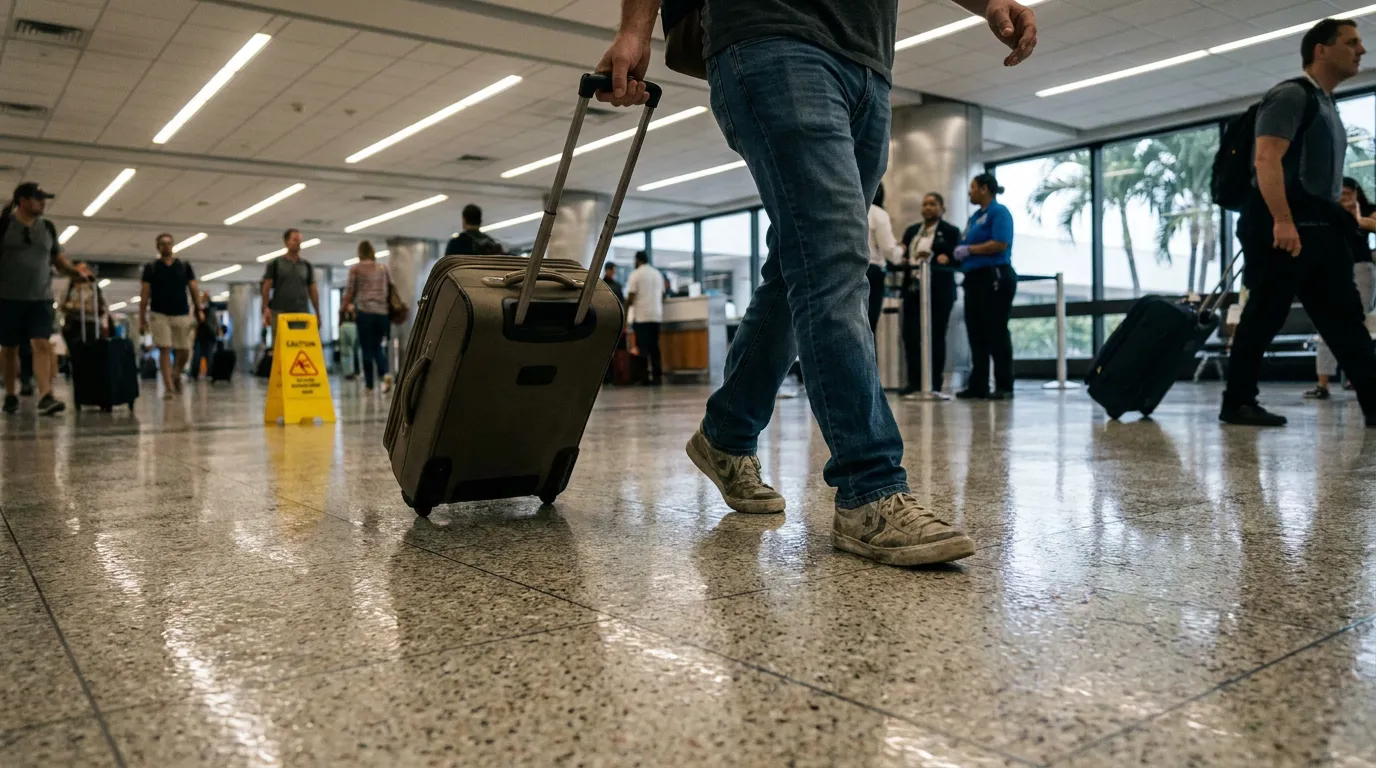
A wet floor at Miami International Airport is not just an inconvenience; it can be the basis of a valid injury claim. Under Florida law, the airport and businesses within it owe travelers a duty to keep walkways reasonably safe and warn of hazards they knew or should have discovered. When a spilled drink, leaking cooler, or freshly mopped floor causes a fall, injured travelers may pursue compensation if the facility failed to act with reasonable care.
If you were hurt on a wet floor at a Miami terminal, the team at Chalik & Chalik Injury Lawyers can help you understand your options. Call us at 954-476-1000 or reach out through our online case review form to discuss what happened.
How Florida Law Defines a Property Owner’s Duty
Florida premises liability law ties the duty of care to the visitor’s legal classification. The extent of a landowner’s duty depends on whether a visitor was a trespasser, licensee, or invitee. Airport travelers who pay for tickets and members of the public using the terminal are generally treated as business invitees, the category owed the highest duty of care.
That highest duty requires a property owner to use reasonable care to maintain premises in a reasonably safe condition and warn invitees of dangers the owner knew or should have discovered that aren’t readily apparent. The threshold question is the visitor’s legal status, because the duty owed flows directly from which category the injured person occupies. For most travelers in a Miami terminal, that status supports a strong argument that the operator owed them meaningful protection against foreseeable hazards.
💡 Pro Tip: Keep your boarding pass, parking receipt, or documentation showing you were lawfully present in the terminal. This helps establish your status as an invitee, which affects the duty of care owed to you.
Places where the public is invited to gather carry a recognized safety obligation. When the public is invited into stores, office buildings, and other assembly spaces, the owner must use reasonable care to provide reasonably safe premises, including safe entry and exit. A busy international airport terminal fits squarely within this principle, since thousands of travelers move through its concourses, retail areas, and food courts daily.
The Transitory Foreign Substance Statute Explained
Florida has a specific statute governing slip-and-fall claims involving substances on the floor. Under Fla. Stat. § 768.0755(1), a person who slips on a transitory foreign substance in a business establishment must prove the establishment had actual or constructive knowledge of the dangerous condition and should have taken action to remedy it. This rule frames how business establishments operating inside an airport, such as concessionaires, retailers, and vendors, may be held responsible; claims against a government-operated airport authority may instead turn on common-law duties and sovereign immunity principles. You can review the broader statutory framework in Florida’s Chapter 768 tort statutes.
This statute supplements rather than replaces the common-law duty of care. Fla. Stat. § 768.0755(2) states the section does not affect any common-law duty owed by a person or entity in possession or control of business premises. In practice, travelers may rely both on the statutory notice requirement and the common-law obligation to keep property reasonably safe.
Proving the Airport Knew About the Wet Floor
The heart of most wet-floor cases is the question of knowledge, either actual or constructive. Actual knowledge means someone at the facility knew about the spill or leak. Constructive knowledge is often harder to establish. Under Fla. Stat. § 768.0755(1)(a), constructive knowledge may be shown by evidence the dangerous condition existed for such a length of time that, in the exercise of ordinary care, the business should have known of it. Under Fla. Stat. § 768.0755(1)(b), it may be shown the condition occurred with regularity and was therefore foreseeable.
Preserving evidence becomes critical to a Miami terminal fall claim. Because these cases depend on how long a hazard was present, documentation captured soon after the fall can make a meaningful difference. Consider gathering or requesting:
- Incident reports completed by airport or airline staff
- Security camera footage showing the floor before and after the fall
- Photographs of the wet area, any warning signs, and your injuries
- Names and contact information of witnesses who saw the condition
- Medical records connecting your injuries to the fall
💡 Pro Tip: Security footage is often overwritten within days or weeks. A prompt written request to preserve video can protect evidence that may otherwise disappear.
The burden of proof and constructive-notice requirement remain among the most contested issues in Florida slip-and-fall litigation.Scholarship analyzing Florida’s evolving approach shows how central these questions have become. Because outcomes depend heavily on specific facts, two similar falls can produce very different results depending on available evidence.
What an Airport Slip and Fall Attorney Miami Travelers Trust Can Help You Prove
A negligence claim in Florida requires establishing four elements: duty, breach, causation, and damages. A knowledgeable airport slip and fall attorney Miami injury victims turn to can help organize evidence for each element. The duty element often flows from your status as an invitee, while breach centers on whether the facility failed to remedy or warn about a known or discoverable hazard.
Causation and damages tie the breach to your actual harm. You must show the wet floor, rather than an unrelated factor, caused your injuries, and those injuries resulted in real losses such as medical bills, lost income, and pain. Medical documentation and testimony from qualified professionals help connect the fall to diagnosed injuries. If you’re unsure where to begin, our guide on what to do after being injured at an airport walks through practical early steps.
💡 Pro Tip: See a doctor even if you feel only mildly sore. Some injuries, such as soft-tissue damage or concussions, may not show symptoms right away, and a gap in treatment can complicate a claim.
How Visitor Status Changes the Analysis
Not every person on airport property is owed the same level of protection. Florida’s framework distinguishes between visitor categories. Chapter 768 includes both Fla. Stat. § 768.075, addressing immunity from liability for injury to trespassers, and Fla. Stat. § 768.0755, addressing transitory foreign substances in business establishments.
| Visitor Status | General Duty Owed |
|---|---|
| Invitee (traveler, public) | Reasonably safe premises and warning of known or discoverable dangers |
| Licensee (social guest) | Warning of known dangers not obvious to the visitor |
| Trespasser | Limited duty, subject to statutory immunity provisions |
Building Your Miami Terminal Fall Claim
Florida imposes deadlines that can affect your ability to recover, so timing matters. Civil personal injury claims are subject to a statute of limitations. Because government-related entities can involve sovereign immunity and separate administrative notice requirements distinct from a standard civil lawsuit, confirm which deadlines apply to your specific situation as early as possible.
💡 Pro Tip: Do not assume you have years to act. Confirming the applicable deadline early helps ensure evidence is preserved and procedural requirements are met.
Because these claims are fact-dependent, guidance tailored to your circumstances is valuable. A dedicated Miami airport slip and fall attorney can evaluate whether the airport, an airline, a cleaning contractor, or a concessionaire may share responsibility. Identifying the correct party matters, since multiple entities may operate different areas within a single terminal.
Frequently Asked Questions
1. Does Miami International Airport automatically owe me compensation if I slipped on a wet floor?
No. Liability depends on proving the facility had actual or constructive knowledge of the hazard and failed to remedy it, as required under Fla. Stat. § 768.0755(1). A fall alone does not establish negligence.
2. What does constructive knowledge mean in a wet floor case?
Constructive knowledge means the business should have known about the danger. Under Fla. Stat. § 768.0755(1)(a), this may be proven by showing the condition existed long enough that ordinary care would have revealed it, or under subsection (1)(b), that the condition occurred with regularity and was foreseeable.
3. Who can be held responsible for a slip and fall at the airport?
Depending on the facts, the airport operator, an airline, a janitorial contractor, or a retail vendor may bear responsibility. Identifying which party controlled the area where you fell is a key part of a premises liability Florida analysis.
4. How long do I have to file a slip and fall claim in Florida?
Florida sets a statute of limitations for personal injury claims. Because deadlines and administrative notice requirements, including those tied to government entities, can vary, confirming the applicable timeline early is strongly advisable.
5. What should I do right after a wet floor injury at a Miami terminal?
Seek medical care, report the incident, and document the scene with photos and witness information. Preserving evidence quickly supports a stronger wet floor injury Miami claim.
Protecting Your Claim Starts Today
A wet-floor fall at a busy airport can leave you facing painful injuries, mounting bills, and confusing questions about who is responsible. Florida’s premises liability framework, anchored by Fla. Stat. § 768.0755, gives injured invitees a path to hold negligent facilities accountable when they fail to address or warn about known hazards. Success depends on the specific facts, the evidence preserved, and the legal status of the injured person, which is why early action and careful documentation are important.
If a wet floor at a Miami airport left you hurt, the team at Chalik & Chalik Injury Lawyers is ready to listen and explain your options. Call 954-476-1000 today or contact us through our confidential case review page to take the next step toward protecting your rights.


Slip and fall accidents often lead to more than bruised egos. The National Safety Council reports that 8.9 million emergency room visits are made annually as a result of slip and fall accidents, which could involve injuries ranging from mild to catastrophic. In some cases, the injured party may be able to recover compensation from...

Why Documenting a Slip and Fall Scene in Miami Can Make or Break Your Case All falls (including slip and fall accidents) account for approximately 21.3% of emergency room visits, while slip and fall accidents specifically account for approximately 12% of all fall-related emergency room visits (not 12% of all ER visits), representing over 1...

How the Open and Obvious Defense Could Affect Your Ft Lauderdale Fall Claim If you slipped and fell on someone else’s property in Ft Lauderdale, you may expect the property owner to take responsibility, but the defense they raise could change everything. One of the most common strategies property owners and insurers use in Florida...

As Fort Myers personal injury attorneys, we have represented victims of premises liability accidents in Florida for a number of injuries. While head injuries can be some of the most serious injuries that victims of falls may suffer from, joint injuries are often the most common. Shoulder injuries from slip and fall accidents in South...

You can suffer severe injuries from a slip and fall in a Publix Supermarket. A broken hip or fractured skull may hospitalize you for weeks or months, straining you both physically and financially. If the insurance company is not negotiating in good faith for a fair settlement, seeking legal action against the grocery store may...

In a slip and fall accident case, medical records serve as vital evidence to support a compensation claim. Your medical records will document your injuries and treatments, establish a link between the accident and your injuries, and help the insurance company and your lawyer determine how much compensation you deserve to recover. A Fort Lauderdale...

Yes, if the city has the responsibility for maintenance and owns the portion of the sidewalk on which you slipped and fell and suffered injuries. If another entity (such as a private property owner, or condo or homeowner association) owned the sidewalk or was responsible for its maintenance, you may have to file a claim...

Slip and fall accidents don’t sound dangerous, but they can cause serious harm. If you’ve been injured in a fall at a Marriott hotel due to another’s negligence, your priority should be getting the medical assistance you need. Reporting your injury to the hotel owner or manager and identifying the cause of your fall can...