
What Cruise Lines Don’t Want You to Know About Evidence After an Onboard Injury
Key Takeaways:Under maritime law, cruise lines are common carriers held to a reasonable care standard. No statute automatically requires cruise lines to preserve all evidence after passenger injuries. Under federal law (46 U.S.C. § 3507), cruise lines are required to retain surveillance footage for a minimum of 20 days, and in practice some cruise lines have overwritten footage in as little as 14 days, meaning critical proof disappears before injured passengers retain attorneys. Courts have found that cruise lines’ failure to investigate incidents doesn’t automatically create legal duty under maritime law, per Doe v. Celebrity Cruises. Once cruise lines receive formal notice through litigation hold letters, evidence destruction can constitute spoliation and trigger court sanctions. Most cruise injury cases must be filed in Florida federal courts due to forum-selection clauses, and passengers generally have only one year to file suit because 46 U.S.C. § 30526 permits cruise lines to contractually shorten the three-year maritime statute to one year minimum. Acting immediately after injury by documenting scenes, requesting incident reports, and contacting a maritime attorney is the only reliable way to preserve evidence.
When someone is hurt aboard a cruise ship, one urgent question is whether the cruise line must preserve evidence. The short answer: it depends on circumstances, and the window to act is far shorter than most passengers realize. Under maritime law, cruise lines operate under reasonable care duties as common carriers, but their evidence preservation obligation is not automatic or clearly defined. Understanding how evidence preservation works may be the difference between a strong claim and a case with nothing to prove it.
If you or a family member was injured on a cruise ship departing from Fort Lauderdale or Port Everglades, do not wait for legal guidance. Chalik & Chalik Injury Lawyers has extensive experience helping injured passengers navigate maritime law. Call us at 954-476-1000 or contact us now to discuss your case before critical evidence disappears.
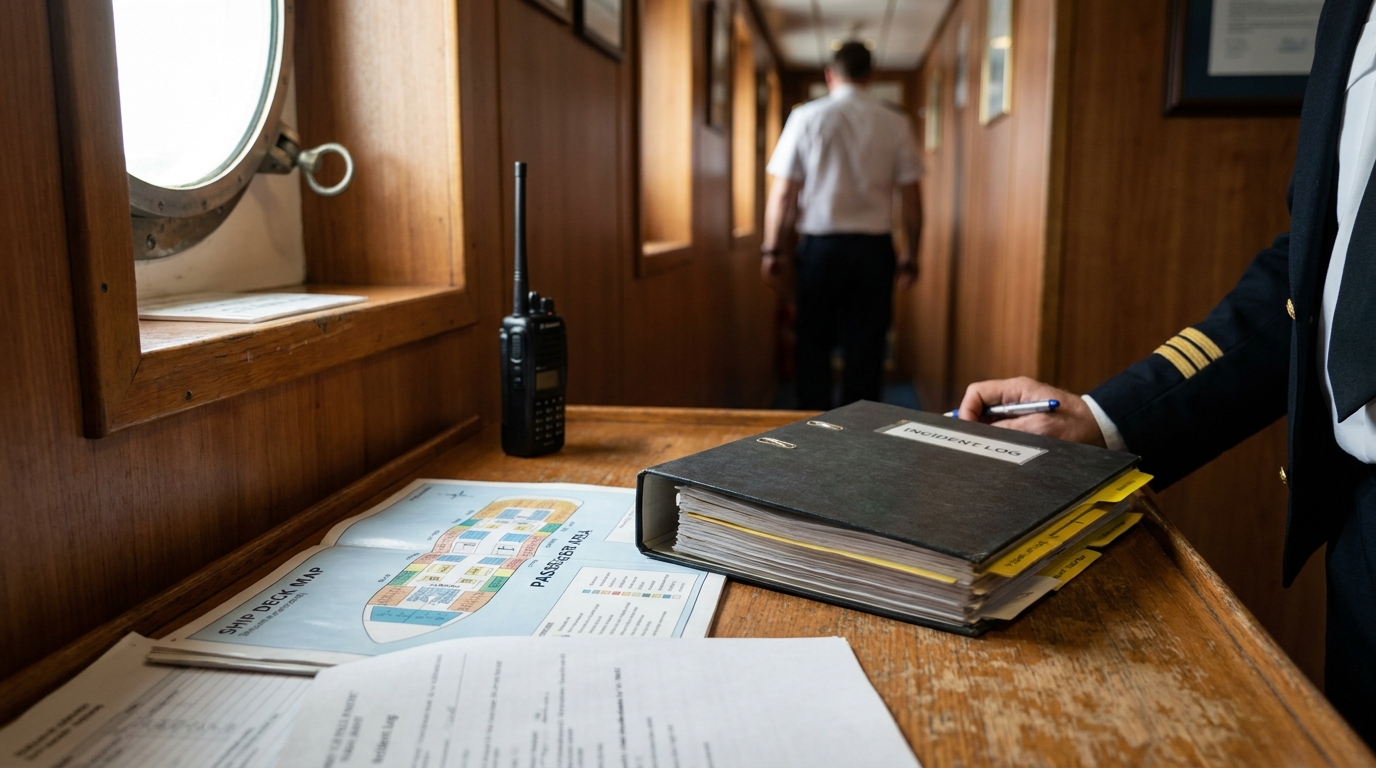
The Legal Foundation: How Maritime Law Governs Cruise Ship Injury Cases
Cruise operators are common carriers under maritime law, and courts apply a reasonable care standard accounting for responsibilities of carriers transporting passengers at sea. This means cruise lines must maintain reasonable safety standards, and when passengers are harmed due to failures, operators may be liable for negligence. However, proving negligence requires concrete evidence, surveillance footage, incident reports, medical records, crew files, all controlled by cruise lines.
Maritime law is particularly challenging due to legal protections cruise lines have built around themselves. The cruise industry enjoys more immunity from wrongdoing than virtually any other industry. Those protections extend to forum-selection clauses in tickets. In Carnival Cruise Lines, Inc. v. Shute, 499 U.S. 585 (1991), the Supreme Court held such clauses designating Florida courts are enforceable. Most cruise injury lawsuits must be filed in Florida, making South Florida federal courts the central battleground for evidence preservation disputes.
For passengers departing from Port Everglades in Fort Lauderdale, this creates direct connection to legal standards developed in Florida federal courts. Understanding those standards before sailing or immediately after incidents is essential to protecting your rights.
Evidence Is Disappearing While You Read This
The most pressing concern in cruise accident cases is rapid disappearance of surveillance footage. Under federal law (46 U.S.C. § 3507), cruise CCTV must be retained for at least 20 days, and some cruise lines have in practice overwritten footage in as little as 14 days. Whether injured in a slip and fall, pool incident, or assault, camera footage may be gone within weeks if no one demands preservation in writing. For passengers recovering far from home without representation, that window closes fast.
Common cruise injuries include slips and falls from dangerous deck conditions, pool drownings, medical malpractice, sexual assaults, and disease outbreaks. Each involves distinct evidence: incident reports, surveillance footage, medical logs, crew communications, and safety inspection records. All sit in cruise lines’ possession, and none is automatically preserved.
💡 Pro Tip: If still aboard after injury, request incident report copies before disembarking. Ask for names and contact information of crew members or witnesses present. This documentation may not be available after leaving the vessel.
What Courts Have Said About the Cruise Line’s Duty to Preserve
The legal question of whether cruise lines must investigate or preserve evidence has been addressed in federal court. In Doe v. Celebrity Cruises, 145 F. Supp. 2d 1337 (S.D. Fla. 2001), a passenger alleged Celebrity failed to preserve evidence following sexual assault aboard its vessel. The plaintiff alleged the ship physician failed to examine correctly, administer a rape kit, or properly collect evidence, and that Celebrity sought to shield itself by failing to investigate.
However, the court’s ruling highlights critical limitations in maritime evidence preservation law. The court found no authority for extending shipowner duty to aiding passengers in investigating assaults after they occur, and struck failure-to-investigate allegations. This illustrates difficult reality: cruise lines’ failure to investigate may not give rise to legal duty under current maritime law. Evidence spoliation has consequences, but plaintiffs’ teams must act quickly to force preservation before evidence vanishes.
💡 Pro Tip: Don’t assume cruise lines will preserve footage or reports. If seriously injured, contact a maritime attorney before the ship’s next port. Litigation hold processes must begin immediately.
How to Sue a Cruise Line: The Evidence You Need to Win
Understanding how to sue cruise lines begins with understanding what you must prove. To establish negligence under maritime law, passengers must show cruise lines knew or should have known about hazardous conditions and failed to act reasonably. Demonstrating that failure requires witness testimonies and evidence that operators didn’t uphold duty of care.
Core evidence categories typically include:
- CCTV footage from incident areas
- Incident reports completed by crew
- Ship medical records and physician notes
- Crew personnel files and training records
- Prior incident reports involving same conditions
- Maintenance and inspection logs
- Passenger and crew witness statements
When cruise lines conceal or fail to produce materials, courts may impose serious consequences. One jury verdict of over $21 million included evidence the cruise line suppressed documentation of 34 prior incidents involving the same hazard throughout its fleet over three years.
For guidance on immediate post-injury steps, review this resource on how to document injuries on a cruise ship.
💡 Pro Tip: Take photographs and video of hazardous conditions, injuries, surrounding areas, and signage as soon as safe. Your documentation may be irreplaceable if ship footage is overwritten.
The Litigation Hold Letter: Your Attorney’s Most Urgent Task
When retaining cruise injury attorneys, the first time-sensitive action is sending litigation hold letters to cruise lines. Typically issued within 30 days after injury, these letters formally demand cruise lines preserve all CCTV footage, incident reports, medical records, and crew personnel files. This puts cruise lines on formal notice that litigation is anticipated and evidence destruction could constitute spoliation.
Without litigation hold letters, cruise lines may argue footage was overwritten in ordinary business course, not bad faith. With timely letters on file, that argument becomes harder to sustain. Courts may draw adverse inferences against parties destroying evidence after receiving notice of pending claims, meaning juries may be told to assume missing footage would have supported your position.
The contractual one-year filing deadline adds urgency. Under general maritime law, the default statute of limitations is three years under 46 U.S.C. § 30106. However, 46 U.S.C. § 30526 permits cruise lines to contractually shorten that period to no less than one year, and most ticket contracts set it at that minimum. Many contracts also require written notice within six months. Courts enforce both deadlines. Missing either can bar claims entirely. The combination of short CCTV retention periods and strict limitation periods means delay is unaffordable.
💡 Pro Tip: Even if unsure about viable claims, contact maritime attorneys promptly. Consultation costs nothing compared to permanent loss of time-sensitive evidence.
Why Forum Matters: Fort Lauderdale, Florida, and Cruise Line Cases
Tickets contain forum-selection clauses requiring Florida federal court filing. Major cruise lines including Carnival are headquartered in the Fort Lauderdale and Miami area, and Southern District of Florida federal courts handle substantial maritime injury litigation. Legal standards applied in that district govern evidence preservation dispute resolution.
South Florida courts have extensive familiarity with cruise injury claims. Working with a cruise ship injury attorney in Fort Lauderdale who regularly practices in the Southern District can make meaningful differences in how effectively preservation demands are handled from day one.
Frequently Asked Questions
1. Is a cruise line legally required to preserve evidence after a passenger injury?
No single statute expressly requires cruise lines to preserve all evidence after every passenger injury. However, once cruise lines receive notice of pending claims, evidence destruction can constitute spoliation, and courts may sanction that conduct. Timely litigation hold letters are the most reliable mechanism for triggering formal preservation obligations.
2. How long does a cruise line keep CCTV footage after an incident?
Under federal law (46 U.S.C. § 3507), cruise surveillance footage must be retained for a minimum of 20 days, and in practice some cruise lines have overwritten footage in as little as 14 days. Without formal legal demands, footage may be erased before retaining attorneys. Contact maritime attorneys quickly after injuries to protect evidence.
3. What happens if the cruise line destroys evidence after I file a claim?
Cruise lines may face spoliation sanctions if destroying evidence after receiving notice. Sanctions can include adverse inference instructions, striking defense portions, or default judgment. Spoliation argument strength depends on whether cruise lines received timely, documented notice.
4. What is the deadline to file a cruise injury lawsuit in Florida?
Under general maritime law, the default statute of limitations is three years under 46 U.S.C. § 30106. However, 46 U.S.C. § 30526 permits cruise lines to contractually shorten filing periods to one year minimum, and most tickets set it there. Many contracts also require written notice within six months. Courts enforce both deadlines. Speaking with maritime attorneys as soon as possible after injuries ensures timely filing.
Protecting Your Case Starts the Moment You Are Injured
Evidence in cruise injury cases is not waiting. Surveillance footage is being overwritten. Incident reports are drafted by employees trained to minimize liability. Ship physicians may not document injuries accurately. Maritime evidence rules and cruise line data management practices mean every day without representation works against claims.
If injured aboard cruise ships departing from Fort Lauderdale, Miami, or any Florida port, Chalik & Chalik Injury Lawyers is ready to help you act before it’s too late. Call us today at 954-476-1000 or reach out to our team for confidential consultation. Your window to preserve evidence and protect rights may be closing now, don’t wait.

Can a Passenger Sue for a Balcony or Railing Injury on a Cruise? Yes, a cruise passenger who suffers a balcony or railing injury may have grounds to file a lawsuit against the cruise line under federal maritime law. These claims require proof that the cruise line knew or should have known about a dangerous...
 Royal Caribbean Passenger Dies Following Onboard Disruption
A Royal Caribbean cruise passenger tragically passed away following an onboard incident on December 17, 2024. Initial reports suggest the passenger was involved in a disturbance and was subdued by ship security using pepper spray and restraints. He later passed away while in custody, leaving his family devastated. This tragedy highlights critical concerns about onboard...

Understanding Duty of Care on Cruise Ships and What It Means for Passengers Every year, thousands of passengers board cruise ships from South Florida ports, trusting that the vessel operator will keep them safe. That trust is rooted in a legal concept called "duty of care," which requires cruise lines to take reasonable steps to...

Proving Negligence After a Cruise Ship Injury in Miami If you or a loved one suffered an injury aboard a cruise ship departing from Miami, understanding what evidence you need to prove negligence can make or break your claim. Cruise lines are classified as common carriers under maritime law, meaning they owe passengers a heightened...